The left side bookends the flight with genuine scenery: Jakarta Bay and its island chain at departure, and the iconic Mount Fuji-Tokyo Bay approach at arrival. The right side, facing the Philippine Sea for most of the route and open Pacific on approach, offers only brief island glimpses and no comparable landmark.
Flight Path
After crossing the Java Sea and South China Sea, the route passes near the Luzon Strait between the northern Philippines and southern Taiwan, then continues over the East China Sea past the Ryukyu Islands (Okinawa) before making landfall near Kyushu/Shikoku and tracking up Japan's Pacific coast toward Tokyo.
Great circle distance and headings ›


Phase by phase
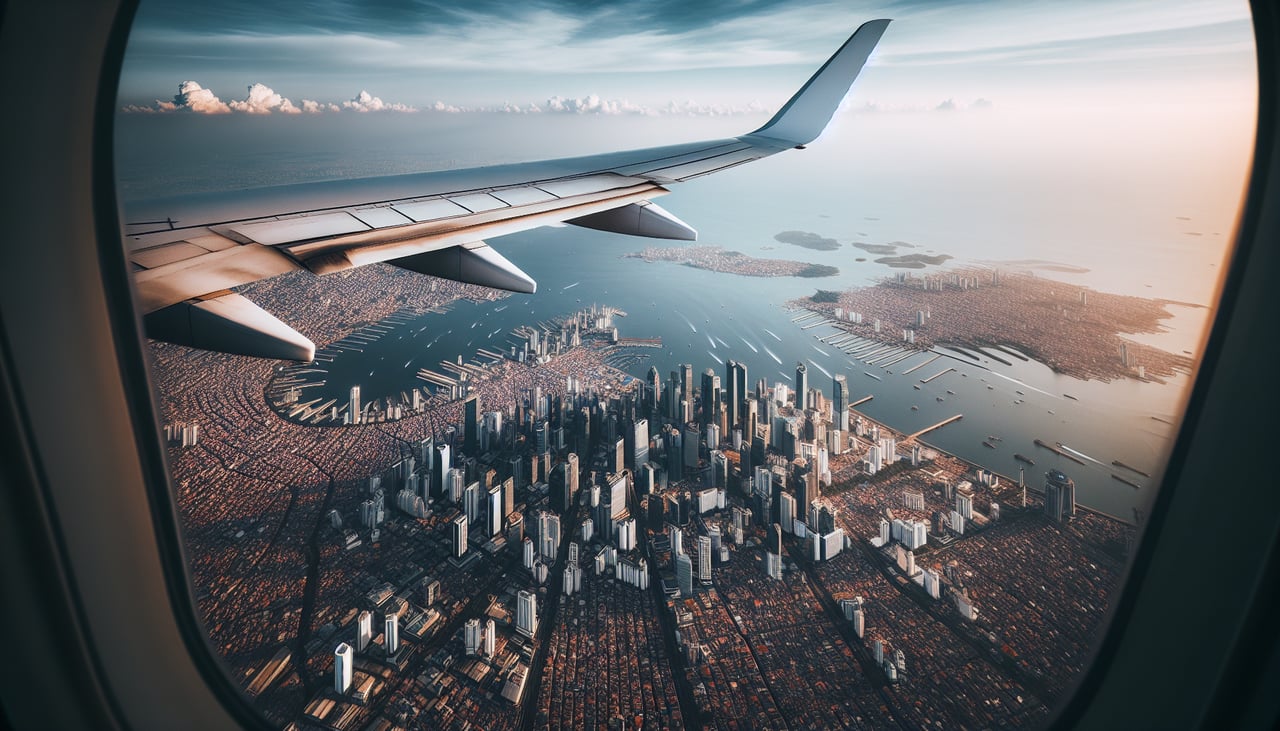
Takeoff from CGK
LEFTAs the aircraft climbs out from CGK and turns onto its northeast routing, the left side faces toward Jakarta Bay, giving a clear view of the small coral islands of the Thousand Islands archipelago and a receding glimpse of Jakarta's skyline with West Java's volcanic peaks on the horizon. The right side mostly looks out over featureless Java Sea.
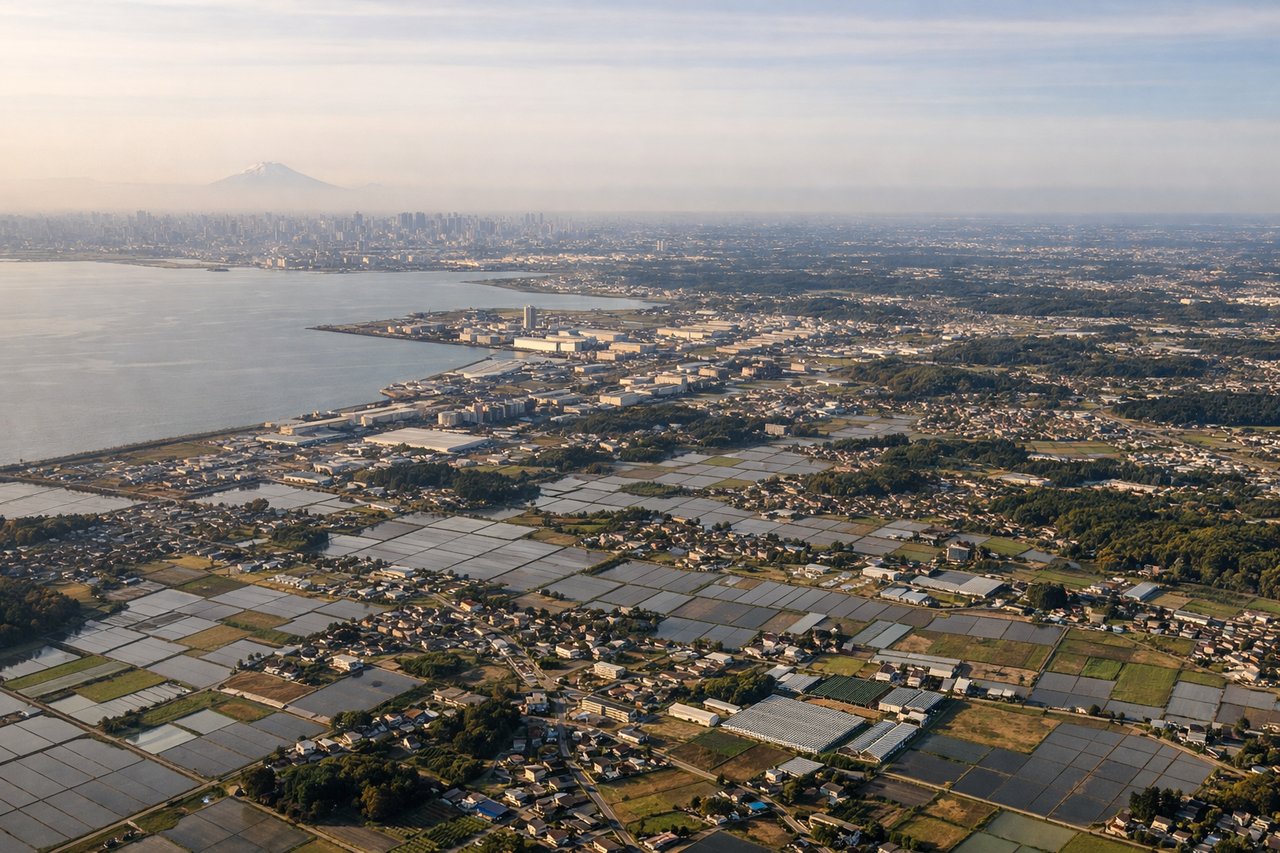
Landing at NRT
LEFTOn the typical southerly approach into Narita, the aircraft tracks north up the Boso Peninsula toward runway 34, putting Mount Fuji, the Izu Peninsula, and Tokyo Bay on the left side. The right side mainly faces the open Pacific with little to see.
Landmarks on this routeAll landmarks →
Will your flight be in sunlight?
See exactly which side of the plane gets sun and shade at your departure time.
About This Route
Which side of the plane should I sit on flying from Soekarno Hatta International (CGK) to New Tokyo International (NRT)?
Sit on the Left side of the plane for the best views on flights from Jakarta to Tokyo. The left side bookends the flight with genuine scenery: Jakarta Bay and its island chain at departure, and the iconic Mount Fuji-Tokyo Bay approach at arrival. The right side, facing the Philippine Sea for most of the route and open Pacific on approach, offers only brief island glimpses and no comparable landmark.
What can I see during takeoff from Soekarno Hatta International in Jakarta?
During takeoff from Soekarno Hatta International (CGK), sit on the Left side for the best views. As the aircraft climbs out from CGK and turns onto its northeast routing, the left side faces toward Jakarta Bay, giving a clear view of the small coral islands of the Thousand Islands archipelago and a receding glimpse of Jakarta's skyline with West Java's volcanic peaks on the horizon. The right side mostly looks out over featureless Java Sea. Notable sights include: Jakarta Bay, Kepulauan Seribu (Thousand Islands), Jakarta skyline, distant Salak/Gede-Pangrango volcanoes.
What can I see when landing at New Tokyo International in Tokyo?
When landing at New Tokyo International (NRT), sit on the Left side for the best views. On the typical southerly approach into Narita, the aircraft tracks north up the Boso Peninsula toward runway 34, putting Mount Fuji, the Izu Peninsula, and Tokyo Bay on the left side. The right side mainly faces the open Pacific with little to see. Notable sights include: Mount Fuji, Tokyo Bay, Boso Peninsula/Chiba coastline, Izu Peninsula.
How long is the flight from Jakarta to Tokyo?
The flight from Soekarno Hatta International (CGK) to New Tokyo International (NRT) takes 7h 05m.
What does the Jakarta to Tokyo flight path pass over?
After crossing the Java Sea and South China Sea, the route passes near the Luzon Strait between the northern Philippines and southern Taiwan, then continues over the East China Sea past the Ryukyu Islands (Okinawa) before making landfall near Kyushu/Shikoku and tracking up Japan's Pacific coast toward Tokyo.