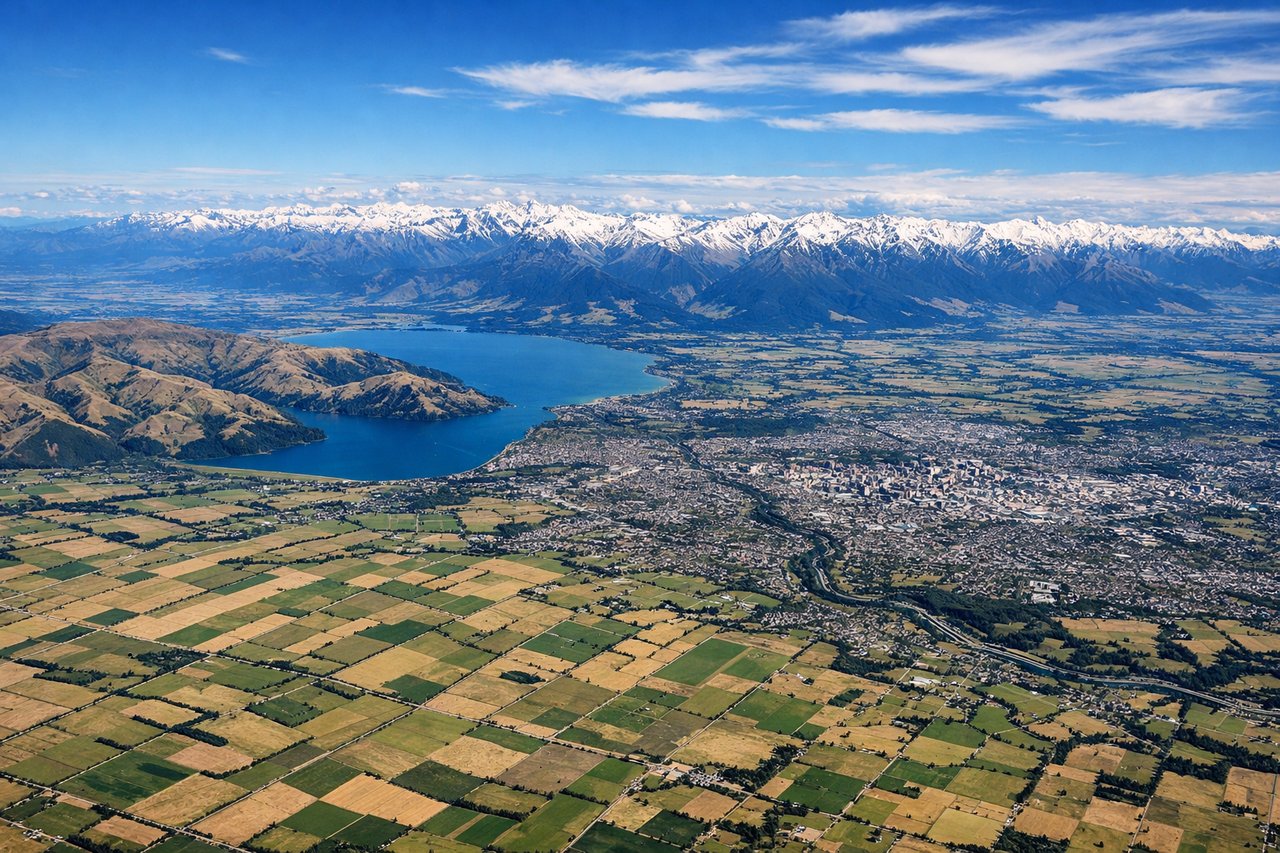
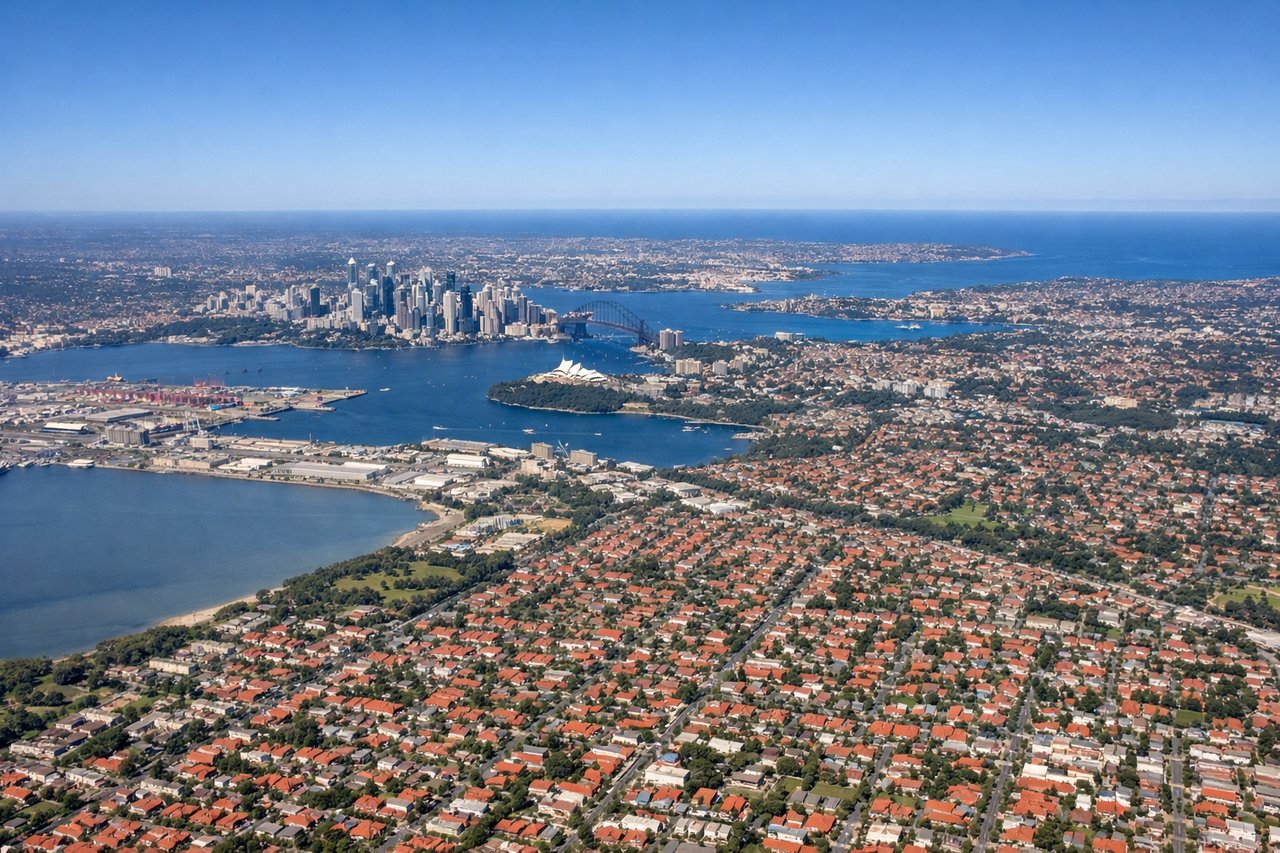
The left side wins mainly on the strength of the Southern Alps view during departure, a genuinely dramatic mountain skyline that the right side never matches; the right side's advantage is limited to a brief, distant glimpse of Sydney during descent, while most of the flight in between is open Tasman Sea offering nothing to either side.
Flight Path
The route crosses roughly 2,000 km of open Tasman Sea with no land, islands, or ships typically visible from cruising altitude for the bulk of the flight.
Great circle distance and headings ›.JPG?width=600)
.jpg?width=600)

Phase by phase
Takeoff from CHC
LEFTDeparting Christchurch and turning onto a northwest heading toward the Tasman, the left side looks southwest across the Canterbury Plains straight at the Southern Alps, including the peaks around Arthur's Pass and, on a clear day, the distant summit of Aoraki/Mount Cook further south. The right side only shows the flat plains fading into open Pacific horizon.
Landing at SYD
RIGHTOn the typical southerly approach into Sydney over Botany Bay, the right side faces north toward the city, giving a distant but clear look at the Sydney CBD skyline and Harbour Bridge beyond the bay before the final turn to land. The left side instead faces the quieter, less distinctive bushland of the Royal National Park.
Landmarks on this routeAll landmarks →
Will your flight be in sunlight?
See exactly which side of the plane gets sun and shade at your departure time.
About This Route
Which side of the plane should I sit on flying from Christchurch International (CHC) to Kingsford Smith International Airport (SYD)?
Sit on the Left side of the plane for the best views on flights from Christchurch to Sydney. The left side wins mainly on the strength of the Southern Alps view during departure, a genuinely dramatic mountain skyline that the right side never matches; the right side's advantage is limited to a brief, distant glimpse of Sydney during descent, while most of the flight in between is open Tasman Sea offering nothing to either side.
What can I see during takeoff from Christchurch International in Christchurch?
During takeoff from Christchurch International (CHC), sit on the Left side for the best views. Departing Christchurch and turning onto a northwest heading toward the Tasman, the left side looks southwest across the Canterbury Plains straight at the Southern Alps, including the peaks around Arthur's Pass and, on a clear day, the distant summit of Aoraki/Mount Cook further south. The right side only shows the flat plains fading into open Pacific horizon. Notable sights include: Southern Alps foothills near Arthur's Pass, snow-capped peaks toward Aoraki/Mount Cook, Canterbury Plains farmland, Christchurch city falling away below.
What can I see when landing at Kingsford Smith International Airport in Sydney?
When landing at Kingsford Smith International Airport (SYD), sit on the Right side for the best views. On the typical southerly approach into Sydney over Botany Bay, the right side faces north toward the city, giving a distant but clear look at the Sydney CBD skyline and Harbour Bridge beyond the bay before the final turn to land. The left side instead faces the quieter, less distinctive bushland of the Royal National Park. Notable sights include: Botany Bay, Sydney CBD skyline and Harbour Bridge in the distance, Kurnell Peninsula and Cronulla coastline, Royal National Park sandstone headlands.
How long is the flight from Christchurch to Sydney?
The flight from Christchurch International (CHC) to Kingsford Smith International Airport (SYD) takes 3h 15m.
What does the Christchurch to Sydney flight path pass over?
The route crosses roughly 2,000 km of open Tasman Sea with no land, islands, or ships typically visible from cruising altitude for the bulk of the flight.