While takeoff favors the right, the landing view from the left side—featuring the Potomac River, Arlington Cemetery, and the Washington Monument—is significantly more distinctive and memorable than the takeoff view. The landing experience outweighs the takeoff advantage.
Flown CMH to DCA? Did we get it right?
Flight Path
Columbus to Washington is 322 miles (519 km), a flight of about 1 hour 20 minutes.
The flight path crosses central Ohio farmland, then enters the Appalachian foothills around southeastern Ohio. The Appalachian plateau becomes visible around the West Virginia border with ridgelines running northeast-southwest. The New River Gorge area in West Virginia is often visible on the left (north) side during cruise. As the aircraft descends into the Washington area, the Shenandoah Valley appears to the west, and the Blue Ridge Mountains form a distant horizon feature. The Potomac River becomes visible well before landing, snaking through the Piedmont landscape.
Great circle distance and headings ›Phase by phase
Takeoff from CMH
RIGHTCMH typically departs runway 28L or 28R (westbound). Right-side seats face north during climb-out, giving direct views of downtown Columbus and the Scioto River valley. Left seats see only farmland and suburban sprawl to the south.
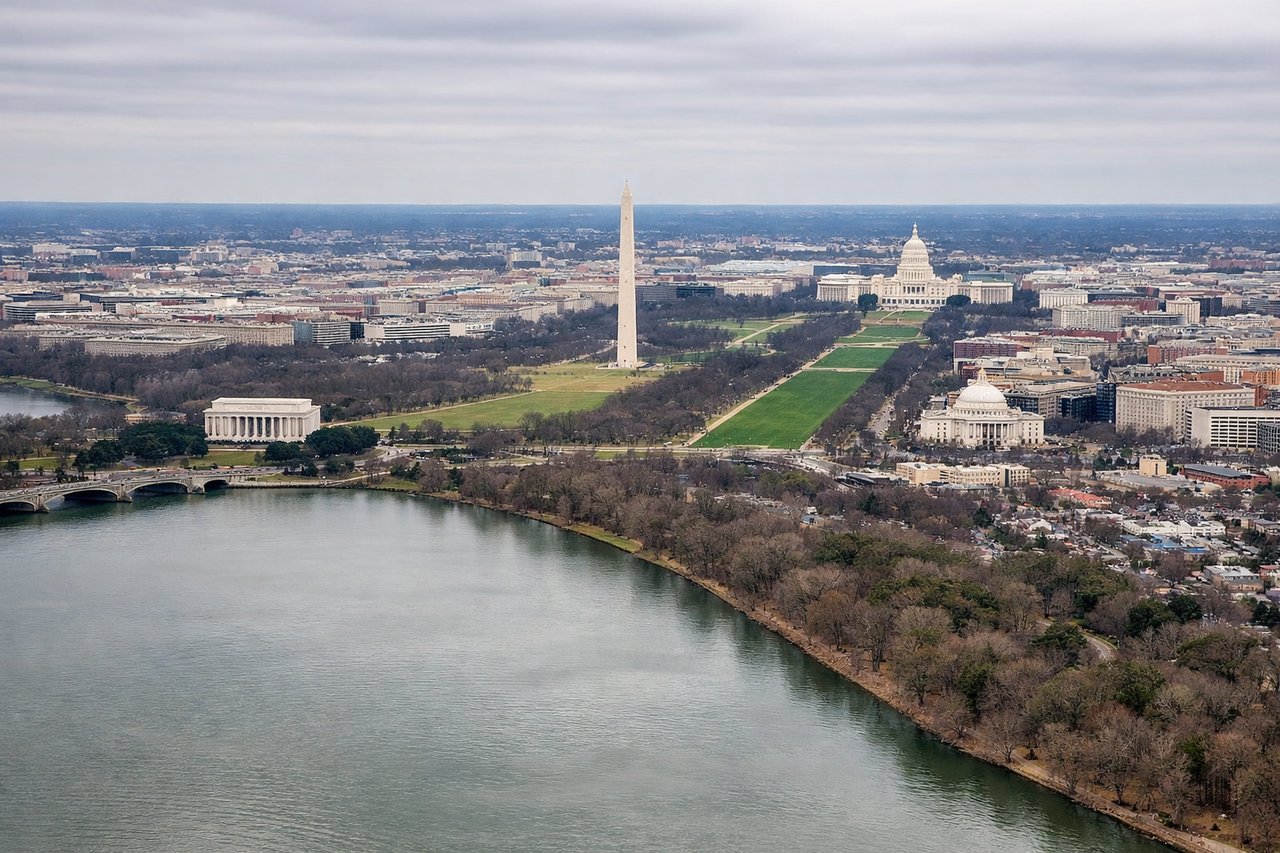
Landing at DCA
LEFTDCA uses runways 01/19 (north-south orientation). Approach from the north means left seats face east during descent, offering views of the Potomac River, Arlington, and the Washington Monument/Capitol area. Right seats see only Virginia suburbs and the Potomac's western bank.
Will your flight be in sunlight?
Pick a date and time in the Sun Map to watch the sun move across your whole flight.
About This Route
Which side of the plane should I sit on flying from Port Columbus International (CMH) to Ronald Reagan Washington National (DCA)?
Sit on the Left side of the plane for the best views on flights from Columbus to Washington. While takeoff favors the right, the landing view from the left side—featuring the Potomac River, Arlington Cemetery, and the Washington Monument—is significantly more distinctive and memorable than the takeoff view. The landing experience outweighs the takeoff advantage.
What can I see during takeoff from Port Columbus International in Columbus?
During takeoff from Port Columbus International (CMH), sit on the Right side for the best views. CMH typically departs runway 28L or 28R (westbound). Right-side seats face north during climb-out, giving direct views of downtown Columbus and the Scioto River valley. Left seats see only farmland and suburban sprawl to the south. Notable sights include: Downtown Columbus skyline, Scioto River, Ohio State University campus (north of downtown), Olentangy River confluence.
What can I see when landing at Ronald Reagan Washington National in Washington?
When landing at Ronald Reagan Washington National (DCA), sit on the Left side for the best views. DCA uses runways 01/19 (north-south orientation). Approach from the north means left seats face east during descent, offering views of the Potomac River, Arlington, and the Washington Monument/Capitol area. Right seats see only Virginia suburbs and the Potomac's western bank. Notable sights include: Potomac River, Arlington National Cemetery, Washington Monument and Capitol Building, Theodore Roosevelt Island.
How long is the flight from Columbus to Washington?
The flight from Port Columbus International (CMH) to Ronald Reagan Washington National (DCA) takes about 1 hour 20 minutes. The shortest flight path between them is 322 miles (519 km); winds and air traffic control usually add a few percent.
What does the Columbus to Washington flight path pass over?
The flight path crosses central Ohio farmland, then enters the Appalachian foothills around southeastern Ohio. The Appalachian plateau becomes visible around the West Virginia border with ridgelines running northeast-southwest. The New River Gorge area in West Virginia is often visible on the left (north) side during cruise. As the aircraft descends into the Washington area, the Shenandoah Valley appears to the west, and the Blue Ridge Mountains form a distant horizon feature. The Potomac River becomes visible well before landing, snaking through the Piedmont landscape.