Columbus to San Francisco is 2,115 miles (3,403 km), a flight of about 4 hours 45 minutes.
Left side wins both ends of the flight. During the cruise over the Rockies, left seats also get better views of the Colorado Rockies and Sierra Nevada on the southern exposure, making it the clear choice for the full journey.
Flight Path
The flight tracks roughly along 38-40N latitude westbound, crossing the flat Mississippi River valley near St. Louis, then the Great Plains of Kansas and Missouri, the Colorado Rockies including the Front Range and high peaks near Denver, the Utah high desert plateau and canyon country, the Nevada Basin and Range desert, and finally the Sierra Nevada before descending into the Bay Area.
Great circle distance and headings ›
.jpg?width=600)


Phase by phase
Takeoff from CMH
LEFTCMH typically departs westbound on runway 28L/28R, so a left (south-facing) window gives you a clear view back over downtown Columbus as you climb out. You'll see the Scioto River snaking through the city grid and the Ohio State campus to the northwest.
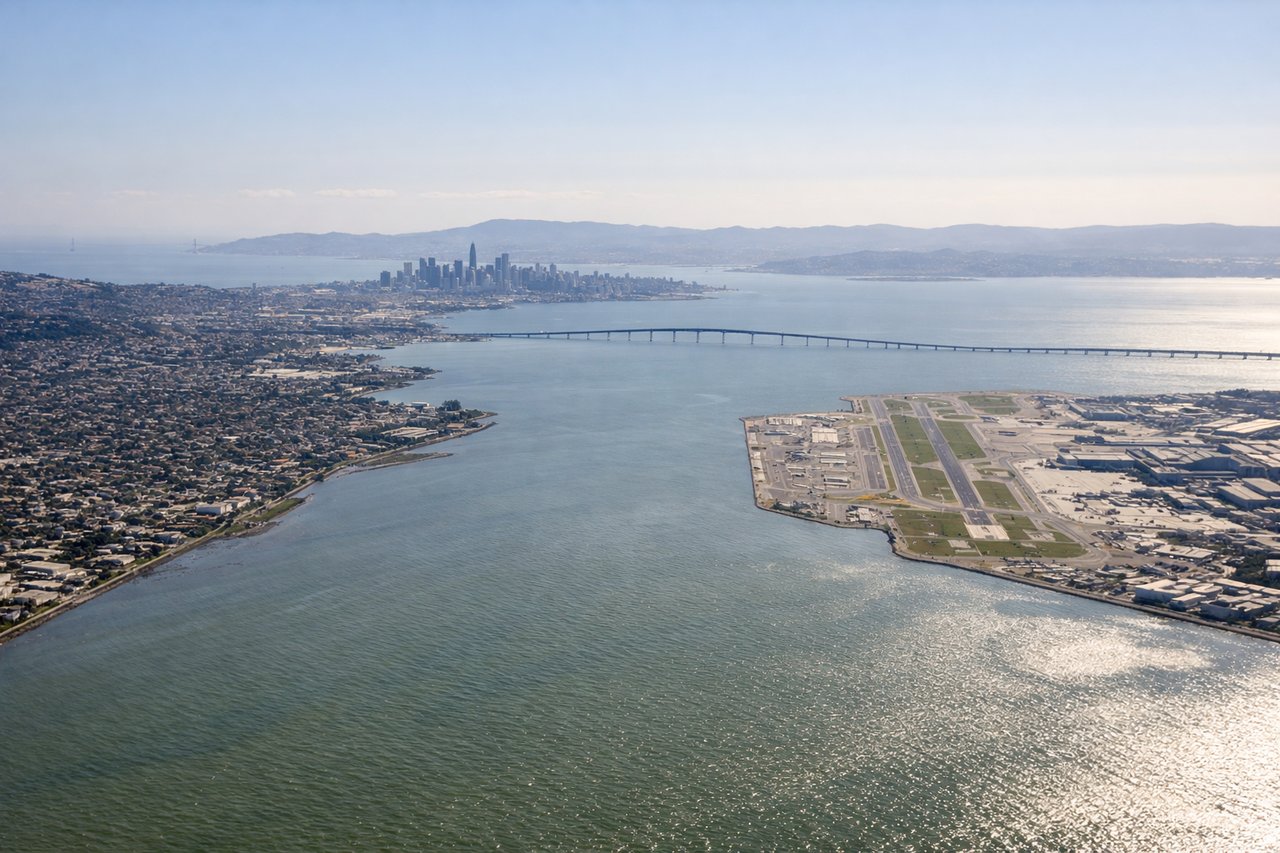
Landing at SFO
LEFTSFO typically lands on runways 28L/28R approaching from the east over the Bay, so a left (south-facing) window gives you the best view of the San Francisco Peninsula, the bay waters, and the city itself on final approach. Right seats face north toward the East Bay hills.
Landmarks on this routeAll landmarks →
Will your flight be in sunlight?
Pick a date and time in the Sun Map to watch the sun move across your whole flight.
About This Route
Which side of the plane should I sit on flying from Port Columbus International (CMH) to San Francisco International (SFO)?
Sit on the Left side of the plane for the best views on flights from Columbus to San Francisco. Left side wins both ends of the flight. During the cruise over the Rockies, left seats also get better views of the Colorado Rockies and Sierra Nevada on the southern exposure, making it the clear choice for the full journey.
What can I see during takeoff from Port Columbus International in Columbus?
During takeoff from Port Columbus International (CMH), sit on the Left side for the best views. CMH typically departs westbound on runway 28L/28R, so a left (south-facing) window gives you a clear view back over downtown Columbus as you climb out. You'll see the Scioto River snaking through the city grid and the Ohio State campus to the northwest. Notable sights include: Downtown Columbus skyline, Scioto River, Ohio State University campus, Rickenbacker area to the southeast.
What can I see when landing at San Francisco International in San Francisco?
When landing at San Francisco International (SFO), sit on the Left side for the best views. SFO typically lands on runways 28L/28R approaching from the east over the Bay, so a left (south-facing) window gives you the best view of the San Francisco Peninsula, the bay waters, and the city itself on final approach. Right seats face north toward the East Bay hills. Notable sights include: San Francisco Bay, San Francisco Peninsula and city skyline, San Mateo Bridge, Silicon Valley sprawl to the south.
How long is the flight from Columbus to San Francisco?
The flight from Port Columbus International (CMH) to San Francisco International (SFO) takes about 4 hours 45 minutes. The shortest flight path between them is 2,115 miles (3,403 km); winds and air traffic control usually add a few percent.
What does the Columbus to San Francisco flight path pass over?
The flight tracks roughly along 38-40N latitude westbound, crossing the flat Mississippi River valley near St. Louis, then the Great Plains of Kansas and Missouri, the Colorado Rockies including the Front Range and high peaks near Denver, the Utah high desert plateau and canyon country, the Nevada Basin and Range desert, and finally the Sierra Nevada before descending into the Bay Area.