Columbus to Dallas-Fort Worth is 925 miles (1,489 km), a flight of about 2 hours 30 minutes.
The left side captures the Columbus departure views more cleanly, and through the cruise portion heading southwest the left side tracks closer to the Missouri Ozarks terrain and the Red River valley crossing into Texas. The right side wins on landing but the departure and en-route advantage goes left overall.
Flight Path
The route crosses the Ohio River near Cincinnati, then tracks over the rolling terrain of southern Missouri and the Ozark Plateau, crosses the Arkansas River valley, passes over the Red River marking the Oklahoma-Texas border, then descends over the flat North Texas plains toward DFW. No major mountain ranges — terrain is predominantly flat to gently rolling throughout.
Great circle distance and headings ›Phase by phase
Takeoff from CMH
LEFTCMH typically departs southwest on runway 28L/28R, putting the left side facing south over downtown Columbus. You get a clear view of the Scioto River winding through downtown and the Ohio State campus to the northwest briefly before turning southwest.
Landing at DFW
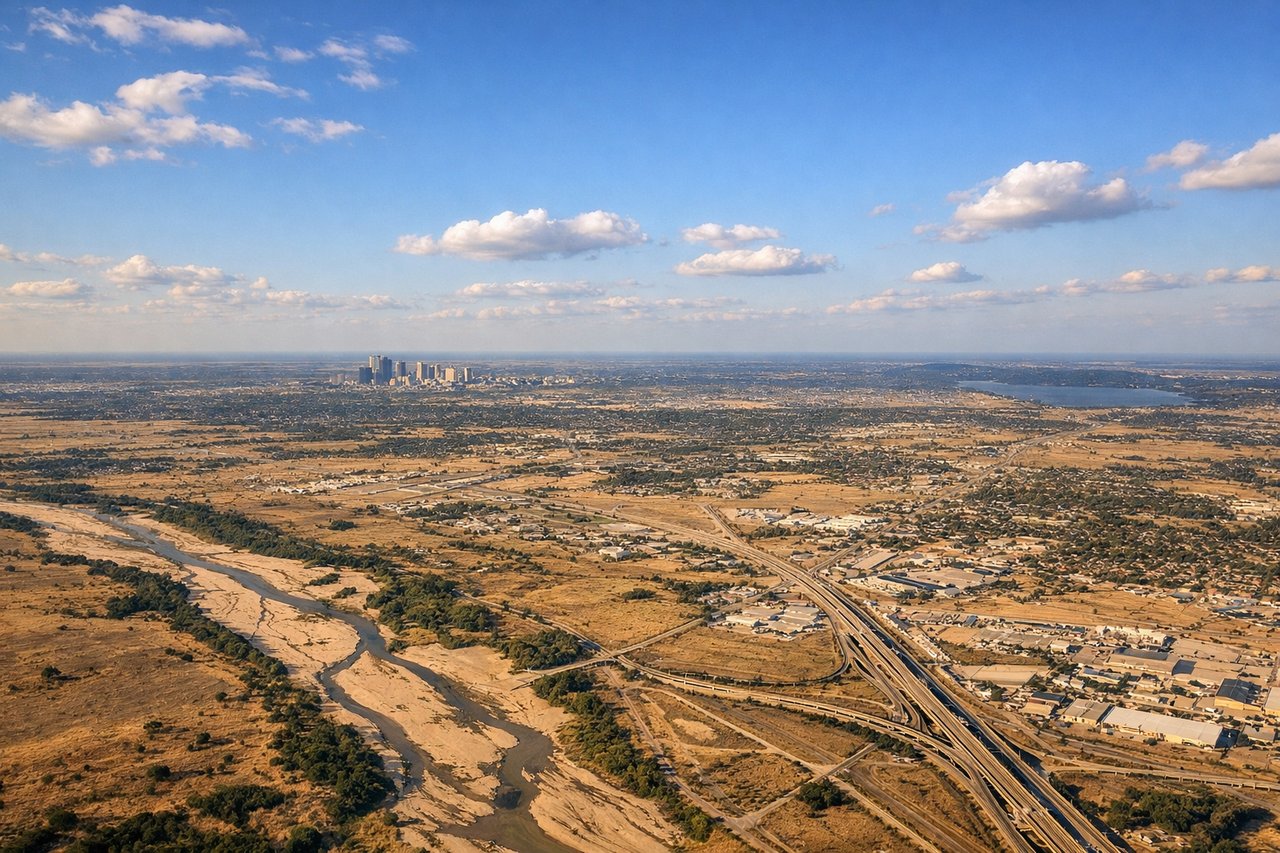
RIGHTDFW arrivals from the northeast typically use runways 17C/17R landing southbound, putting the right side facing west over Fort Worth. You get a clear view of the Fort Worth skyline and the sprawling DFW airport complex itself on approach.
Landmarks on this routeAll landmarks →
Will your flight be in sunlight?
Pick a date and time in the Sun Map to watch the sun move across your whole flight.
About This Route
Which side of the plane should I sit on flying from Port Columbus International (CMH) to Dallas Fort Worth International (DFW)?
Sit on the Left side of the plane for the best views on flights from Columbus to Dallas-Fort Worth. The left side captures the Columbus departure views more cleanly, and through the cruise portion heading southwest the left side tracks closer to the Missouri Ozarks terrain and the Red River valley crossing into Texas. The right side wins on landing but the departure and en-route advantage goes left overall.
What can I see during takeoff from Port Columbus International in Columbus?
During takeoff from Port Columbus International (CMH), sit on the Left side for the best views. CMH typically departs southwest on runway 28L/28R, putting the left side facing south over downtown Columbus. You get a clear view of the Scioto River winding through downtown and the Ohio State campus to the northwest briefly before turning southwest. Notable sights include: Downtown Columbus skyline, Scioto River corridor, Ohio State University campus, Rickenbacker area reservoirs.
What can I see when landing at Dallas Fort Worth International in Dallas-Fort Worth?
When landing at Dallas Fort Worth International (DFW), sit on the Right side for the best views. DFW arrivals from the northeast typically use runways 17C/17R landing southbound, putting the right side facing west over Fort Worth. You get a clear view of the Fort Worth skyline and the sprawling DFW airport complex itself on approach. Notable sights include: Fort Worth downtown skyline, DFW airport terminal complex, Lake Grapevine, Arlington urban sprawl.
How long is the flight from Columbus to Dallas-Fort Worth?
The flight from Port Columbus International (CMH) to Dallas Fort Worth International (DFW) takes about 2 hours 30 minutes. The shortest flight path between them is 925 miles (1,489 km); winds and air traffic control usually add a few percent.
What does the Columbus to Dallas-Fort Worth flight path pass over?
The route crosses the Ohio River near Cincinnati, then tracks over the rolling terrain of southern Missouri and the Ozark Plateau, crosses the Arkansas River valley, passes over the Red River marking the Oklahoma-Texas border, then descends over the flat North Texas plains toward DFW. No major mountain ranges — terrain is predominantly flat to gently rolling throughout.