The right side wins primarily because of the dramatic Front Range and Pikes Peak view during departure from Colorado Springs, an advantage the left side never matches since the rest of the route crosses flat plains with little variation.
Flight Path
Flat high plains of eastern Colorado transitioning into the rolling farmland of the Texas Panhandle and North Texas, with no major mountains, rivers, or urban landmarks along the mid-route cruise.
Great circle distance and headings ›Phase by phase
Takeoff from COS
RIGHTDeparting COS to the south before turning east toward Dallas puts the Front Range and Pikes Peak on the right side of the aircraft during the climb. This is the only real scenic payoff on this route, as the Rockies quickly fall behind once the plane turns onto its southeast heading.
Landing at DFW
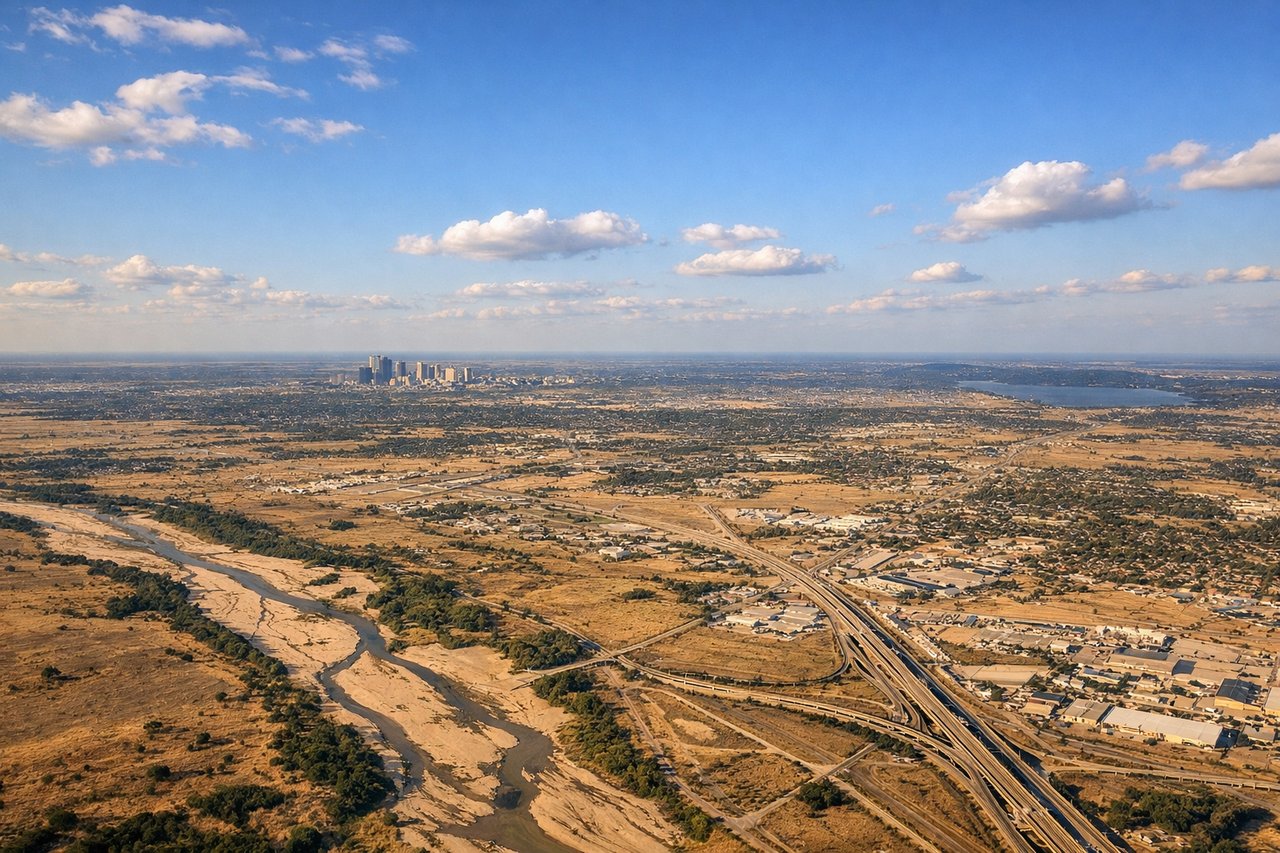
RIGHTArrivals into DFW from the north typically enter a pattern that brings the terminal complex and Fort Worth skyline into view on the right side during the final turn, though the terrain itself is flat and unremarkable. This gives a marginal edge over the left, which faces mostly featureless farmland.
Will your flight be in sunlight?
See exactly which side of the plane gets sun and shade at your departure time.
About This Route
Which side of the plane should I sit on flying from City Of Colorado Springs Muni (COS) to Dallas Fort Worth International (DFW)?
Sit on the Right side of the plane for the best views on flights from Colorado Springs to Dallas-Fort Worth. The right side wins primarily because of the dramatic Front Range and Pikes Peak view during departure from Colorado Springs, an advantage the left side never matches since the rest of the route crosses flat plains with little variation.
What can I see during takeoff from City Of Colorado Springs Muni in Colorado Springs?
During takeoff from City Of Colorado Springs Muni (COS), sit on the Right side for the best views. Departing COS to the south before turning east toward Dallas puts the Front Range and Pikes Peak on the right side of the aircraft during the climb. This is the only real scenic payoff on this route, as the Rockies quickly fall behind once the plane turns onto its southeast heading. Notable sights include: Pikes Peak, Front Range foothills, Garden of the Gods rock formations, Colorado Springs urban grid.
What can I see when landing at Dallas Fort Worth International in Dallas-Fort Worth?
When landing at Dallas Fort Worth International (DFW), sit on the Right side for the best views. Arrivals into DFW from the north typically enter a pattern that brings the terminal complex and Fort Worth skyline into view on the right side during the final turn, though the terrain itself is flat and unremarkable. This gives a marginal edge over the left, which faces mostly featureless farmland. Notable sights include: DFW terminal complex, Fort Worth skyline, Trinity River, flat North Texas farmland.
How long is the flight from Colorado Springs to Dallas-Fort Worth?
The flight from City Of Colorado Springs Muni (COS) to Dallas Fort Worth International (DFW) takes 1h 50m.
What does the Colorado Springs to Dallas-Fort Worth flight path pass over?
Flat high plains of eastern Colorado transitioning into the rolling farmland of the Texas Panhandle and North Texas, with no major mountains, rivers, or urban landmarks along the mid-route cruise.