Right side scores higher due to superior landing approach scenery at Haneda—Tokyo Bay, the Boso Peninsula, and the dramatic urban-waterfront transition provide far more visual interest than the inland Kanto Plain. Takeoff from CVG is also stronger on the right with the Ohio River and Cincinnati skyline. The cruise phase over the Pacific is equally featureless on both sides, but the landing experience tips the balance decisively rightward.
Flown CVG to HND? Did we get it right?
Flight Path
Cincinnati to Tokyo is 6,554 miles (10,548 km), a flight of about 11 hours 15 minutes.
North Pacific Ocean (featureless open water for approximately 8 hours of cruise); Aleutian Islands visible far to the north on clear days during mid-Pacific cruise; Japanese coastline approaching Honshu with Izu Peninsula and Mount Fuji visible on exceptionally clear days during descent into Tokyo airspace
Great circle distance and headings ›Phase by phase
Takeoff from CVG
RIGHTRight side captures the Ohio River valley and Cincinnati's urban landscape during initial climb. Left side faces inland toward flat farmland with minimal visual interest during departure.
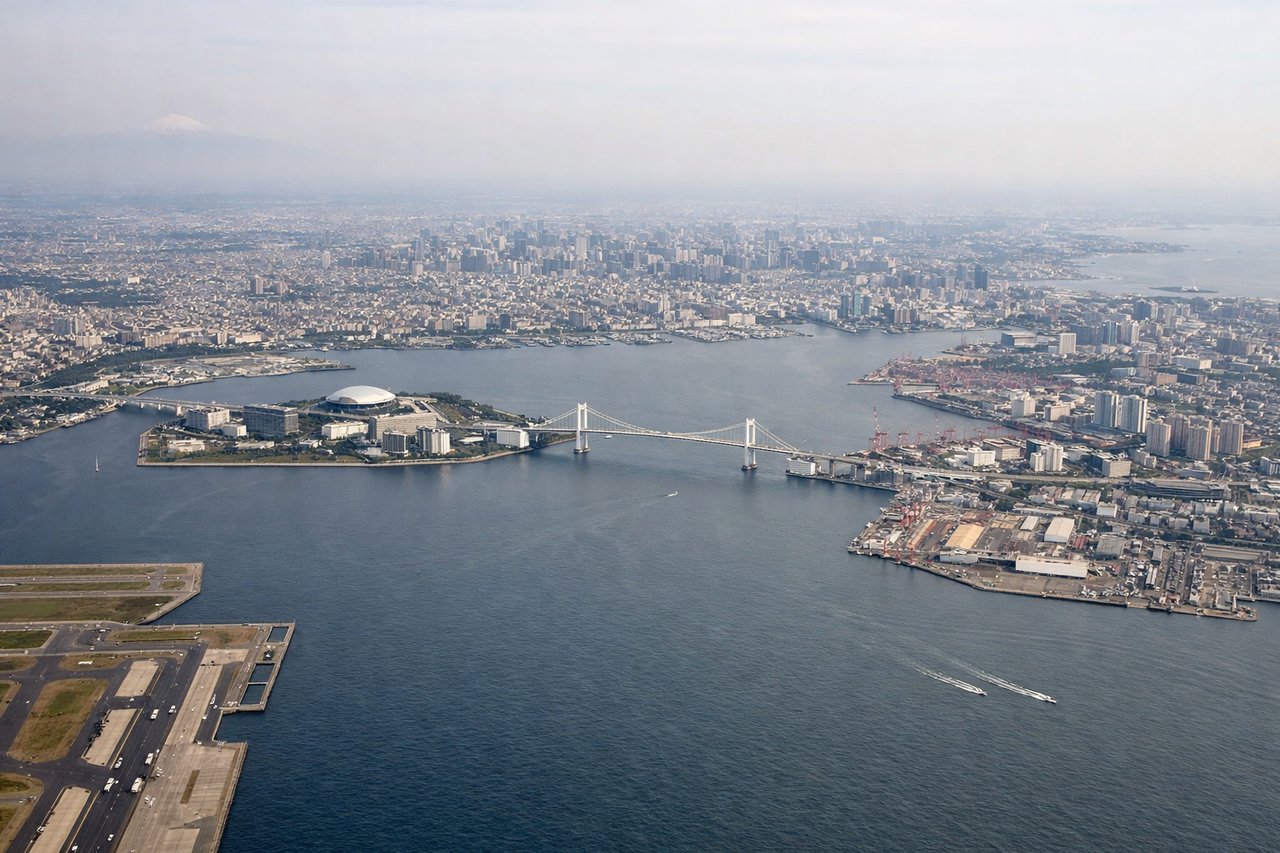
Landing at HND
RIGHTRight side offers the most dramatic approach into Tokyo Bay and Haneda's runway system. Passengers see Tokyo Bay's distinctive geography, the Boso Peninsula, and the city's waterfront during final descent. Left side faces inland toward Kanto Plain with less visual drama.
Will your flight be in sunlight?
Pick a date and time in the Sun Map to watch the sun move across your whole flight.
About This Route
Which side of the plane should I sit on flying from Cincinnati Northern Kentucky International (CVG) to Tokyo International (HND)?
Sit on the Right side of the plane for the best views on flights from Cincinnati to Tokyo. Right side scores higher due to superior landing approach scenery at Haneda—Tokyo Bay, the Boso Peninsula, and the dramatic urban-waterfront transition provide far more visual interest than the inland Kanto Plain. Takeoff from CVG is also stronger on the right with the Ohio River and Cincinnati skyline. The cruise phase over the Pacific is equally featureless on both sides, but the landing experience tips the balance decisively rightward.
What can I see during takeoff from Cincinnati Northern Kentucky International in Cincinnati?
During takeoff from Cincinnati Northern Kentucky International (CVG), sit on the Right side for the best views. Right side captures the Ohio River valley and Cincinnati's urban landscape during initial climb. Left side faces inland toward flat farmland with minimal visual interest during departure. Notable sights include: Ohio River winding through Cincinnati basin, downtown Cincinnati skyline, Northern Kentucky hills to the southeast.
What can I see when landing at Tokyo International in Tokyo?
When landing at Tokyo International (HND), sit on the Right side for the best views. Right side offers the most dramatic approach into Tokyo Bay and Haneda's runway system. Passengers see Tokyo Bay's distinctive geography, the Boso Peninsula, and the city's waterfront during final descent. Left side faces inland toward Kanto Plain with less visual drama. Notable sights include: Tokyo Bay with its industrial waterfront and harbor islands, Boso Peninsula to the southeast, Tokyo's urban sprawl extending inland, Haneda Airport's runway complex on reclaimed land.
How long is the flight from Cincinnati to Tokyo?
The flight from Cincinnati Northern Kentucky International (CVG) to Tokyo International (HND) takes about 11 hours 15 minutes. The shortest flight path between them is 6,554 miles (10,548 km); winds and air traffic control usually add a few percent.
What does the Cincinnati to Tokyo flight path pass over?
North Pacific Ocean (featureless open water for approximately 8 hours of cruise); Aleutian Islands visible far to the north on clear days during mid-Pacific cruise; Japanese coastline approaching Honshu with Izu Peninsula and Mount Fuji visible on exceptionally clear days during descent into Tokyo airspace