Both sides face a long, scenically quiet ocean crossing, but the left side gains a clear edge on arrival with sweeping views of Dublin Bay, the city, and the Wicklow Mountains, outweighing the brief Dallas skyline glimpse on the right during takeoff.
Flight Path
The route crosses the Mississippi River valley and Appalachian foothills, passes near the Great Lakes and Atlantic Canada (Newfoundland), then transitions into a long North Atlantic Ocean crossing before making landfall on the Irish coast.
Great circle distance and headings ›

Phase by phase

Takeoff from DAL
RIGHTLove Field's typical departure to the northwest is followed by a climbing right turn to establish the northeast heading toward the Atlantic, briefly swinging downtown Dallas's skyline into view on the right side before the flat Texas plains take over.
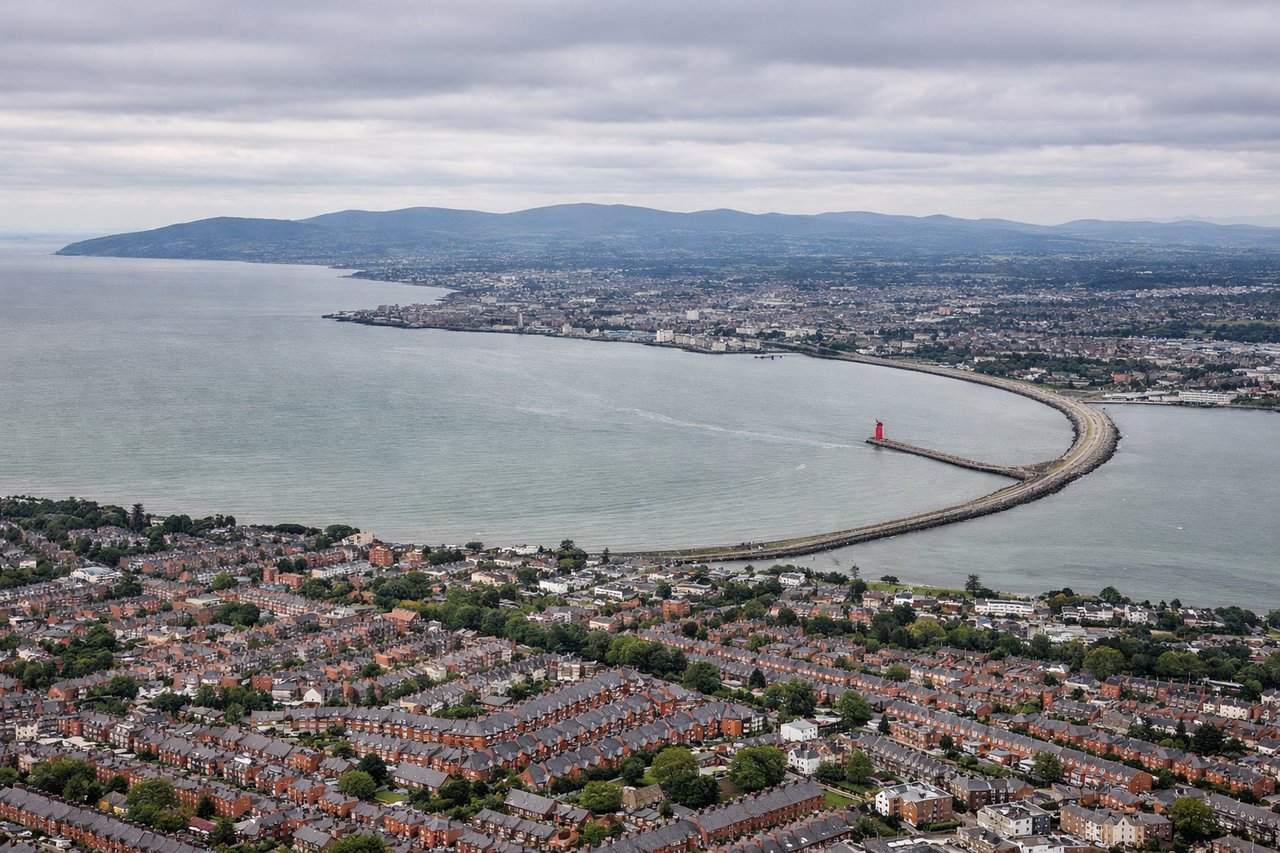
Landing at DUB
LEFTOn the common westerly approach into Dublin, the aircraft descends over Dublin Bay and the city before turning onto final for runway 28, putting Dublin's rooftops, the bay's southern shoreline, and the distant Wicklow Mountains on the left side of the cabin.
Landmarks on this routeAll landmarks →
Will your flight be in sunlight?
See exactly which side of the plane gets sun and shade at your departure time.
About This Route
Which side of the plane should I sit on flying from Dallas Love Fld (DAL) to Dublin (DUB)?
Sit on the Left side of the plane for the best views on flights from Dallas to Dublin. Both sides face a long, scenically quiet ocean crossing, but the left side gains a clear edge on arrival with sweeping views of Dublin Bay, the city, and the Wicklow Mountains, outweighing the brief Dallas skyline glimpse on the right during takeoff.
What can I see during takeoff from Dallas Love Fld in Dallas?
During takeoff from Dallas Love Fld (DAL), sit on the Right side for the best views. Love Field's typical departure to the northwest is followed by a climbing right turn to establish the northeast heading toward the Atlantic, briefly swinging downtown Dallas's skyline into view on the right side before the flat Texas plains take over. Notable sights include: Downtown Dallas skyline, Trinity River, flat North Texas prairie.
What can I see when landing at Dublin in Dublin?
When landing at Dublin (DUB), sit on the Left side for the best views. On the common westerly approach into Dublin, the aircraft descends over Dublin Bay and the city before turning onto final for runway 28, putting Dublin's rooftops, the bay's southern shoreline, and the distant Wicklow Mountains on the left side of the cabin. Notable sights include: Dublin Bay, Dublin city rooftops, Wicklow Mountains, Irish Sea coastline.
How long is the flight from Dallas to Dublin?
The flight from Dallas Love Fld (DAL) to Dublin (DUB) takes 8h 50m.
What does the Dallas to Dublin flight path pass over?
The route crosses the Mississippi River valley and Appalachian foothills, passes near the Great Lakes and Atlantic Canada (Newfoundland), then transitions into a long North Atlantic Ocean crossing before making landfall on the Irish coast.