While takeoff favors the right side for Rocky Mountain and Denver skyline views, the left side wins overall due to the more dynamic and sustained Hill Country and Austin approach, plus a partial view of the Rockies receding on climb if seated left during the turn south.
Flight Path
The route crosses the High Plains of eastern Colorado and the Texas Panhandle, flat agricultural land with occasional river valleys like the Canadian River and Red River, offering minimal terrain variation until the Hill Country appears near Austin.
Great circle distance and headings ›Phase by phase

Takeoff from DEN
RIGHTDeparting DEN to the south/southeast, the right side offers views back toward the Front Range and Rockies foothills as the plane climbs, including the distinctive Denver skyline. Left side faces the flat eastern plains with little to see.
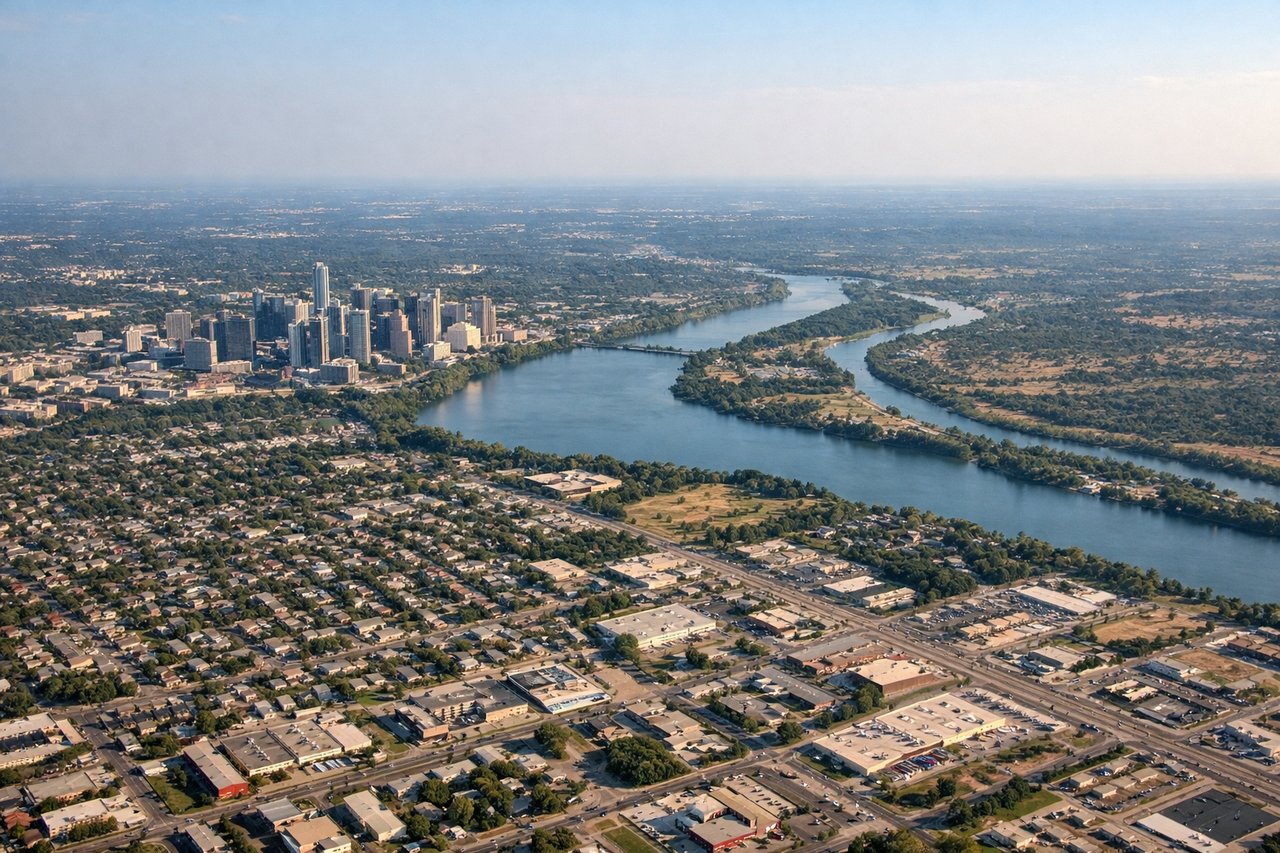
Landing at AUS
LEFTApproaching AUS from the north, the left side gives views over the Texas Hill Country's rolling limestone terrain and the Colorado River/Lake Travis area west of Austin. The right side shows mostly flat farmland with fewer distinguishing features.
Landmarks on this routeAll landmarks →
Will your flight be in sunlight?
See exactly which side of the plane gets sun and shade at your departure time.
About This Route
Which side of the plane should I sit on flying from Denver International (DEN) to Austin Bergstrom International (AUS)?
Sit on the Left side of the plane for the best views on flights from Denver to Austin. While takeoff favors the right side for Rocky Mountain and Denver skyline views, the left side wins overall due to the more dynamic and sustained Hill Country and Austin approach, plus a partial view of the Rockies receding on climb if seated left during the turn south.
What can I see during takeoff from Denver International in Denver?
During takeoff from Denver International (DEN), sit on the Right side for the best views. Departing DEN to the south/southeast, the right side offers views back toward the Front Range and Rockies foothills as the plane climbs, including the distinctive Denver skyline. Left side faces the flat eastern plains with little to see. Notable sights include: Front Range foothills, Rocky Mountains skyline, Denver downtown skyline, South Platte River valley.
What can I see when landing at Austin Bergstrom International in Austin?
When landing at Austin Bergstrom International (AUS), sit on the Left side for the best views. Approaching AUS from the north, the left side gives views over the Texas Hill Country's rolling limestone terrain and the Colorado River/Lake Travis area west of Austin. The right side shows mostly flat farmland with fewer distinguishing features. Notable sights include: Texas Hill Country hills, Lake Travis and Colorado River, Austin downtown skyline, Balcones Escarpment.
How long is the flight from Denver to Austin?
The flight from Denver International (DEN) to Austin Bergstrom International (AUS) takes 2h 45m.
What does the Denver to Austin flight path pass over?
The route crosses the High Plains of eastern Colorado and the Texas Panhandle, flat agricultural land with occasional river valleys like the Canadian River and Red River, offering minimal terrain variation until the Hill Country appears near Austin.