The right side wins on both ends of the flight: Texas Hill Country and Lake Travis during the climb out of Austin, and a dramatic first look at the Front Range of the Rockies during the descent into Denver. The left side offers mostly featureless plains for the entire route.
Flight Path
The cruise phase crosses the flat high plains of West Texas and the Texas/Oklahoma Panhandle region before entering the short-grass prairie of eastern Colorado, with the Arkansas River valley crossing visible below before the terrain begins rising toward the Front Range near Denver.
Great circle distance and headings ›Phase by phase
Takeoff from AUS
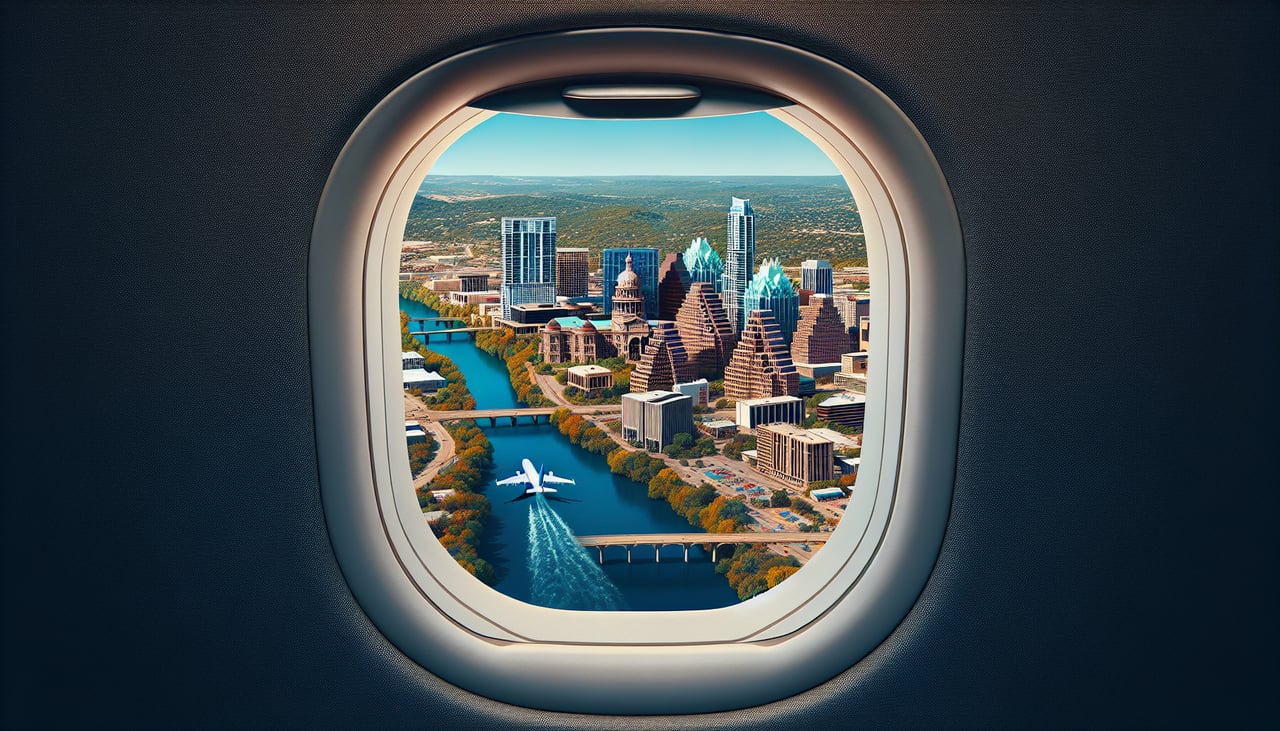
RIGHTDeparting AUS to the south before banking right toward the northwest, the right side faces west across the Texas Hill Country, with the Balcones Escarpment ridgelines and Lake Travis catching the afternoon light. The left side only shows the flatter Blackland Prairie east of Austin, which is far less distinctive.

Landing at DEN
RIGHTDEN's south winds typically favor landings to the south, meaning the final approach faces south with the Front Range mountains sitting off to the right. Passengers get a clear view of the Rockies rising abruptly from the plains just before touchdown, while the left side only shows flat eastern Colorado prairie.
Landmarks on this routeAll landmarks →
Will your flight be in sunlight?
See exactly which side of the plane gets sun and shade at your departure time.
About This Route
Which side of the plane should I sit on flying from Austin Bergstrom International (AUS) to Denver International (DEN)?
Sit on the Right side of the plane for the best views on flights from Austin to Denver. The right side wins on both ends of the flight: Texas Hill Country and Lake Travis during the climb out of Austin, and a dramatic first look at the Front Range of the Rockies during the descent into Denver. The left side offers mostly featureless plains for the entire route.
What can I see during takeoff from Austin Bergstrom International in Austin?
During takeoff from Austin Bergstrom International (AUS), sit on the Right side for the best views. Departing AUS to the south before banking right toward the northwest, the right side faces west across the Texas Hill Country, with the Balcones Escarpment ridgelines and Lake Travis catching the afternoon light. The left side only shows the flatter Blackland Prairie east of Austin, which is far less distinctive. Notable sights include: Texas Hill Country, Lake Travis, Balcones Escarpment, downtown Austin skyline in the distance.
What can I see when landing at Denver International in Denver?
When landing at Denver International (DEN), sit on the Right side for the best views. DEN's south winds typically favor landings to the south, meaning the final approach faces south with the Front Range mountains sitting off to the right. Passengers get a clear view of the Rockies rising abruptly from the plains just before touchdown, while the left side only shows flat eastern Colorado prairie. Notable sights include: Front Range of the Rocky Mountains, Longs Peak, Mount Evans, Denver metro skyline.
How long is the flight from Austin to Denver?
The flight from Austin Bergstrom International (AUS) to Denver International (DEN) takes 2h 15m.
What does the Austin to Denver flight path pass over?
The cruise phase crosses the flat high plains of West Texas and the Texas/Oklahoma Panhandle region before entering the short-grass prairie of eastern Colorado, with the Arkansas River valley crossing visible below before the terrain begins rising toward the Front Range near Denver.