The right side delivers a stronger scenic package end to end: dramatic Front Range mountain views on departure from Denver and a close-up view of Haleakala's volcanic crater during the Maui approach, while the left side spends most of the flight over featureless desert and open ocean.
Flight Path
Great Basin desert of Utah and Nevada, arid basin-and-range terrain, then several hours of open Pacific Ocean with no visible landmarks until the Hawaiian Islands appear near the coast of Maui.
Great circle distance and headings ›.jpg?width=600)

.jpg?width=600)
Phase by phase

Takeoff from DEN
RIGHTDeparting DEN westbound, the climb-out gives right-side passengers a clear view of the Front Range foothills and peaks like Longs Peak and the Indian Peaks Wilderness as the aircraft turns southwest toward Utah. Left-side passengers mostly see the flat eastern plains falling away.
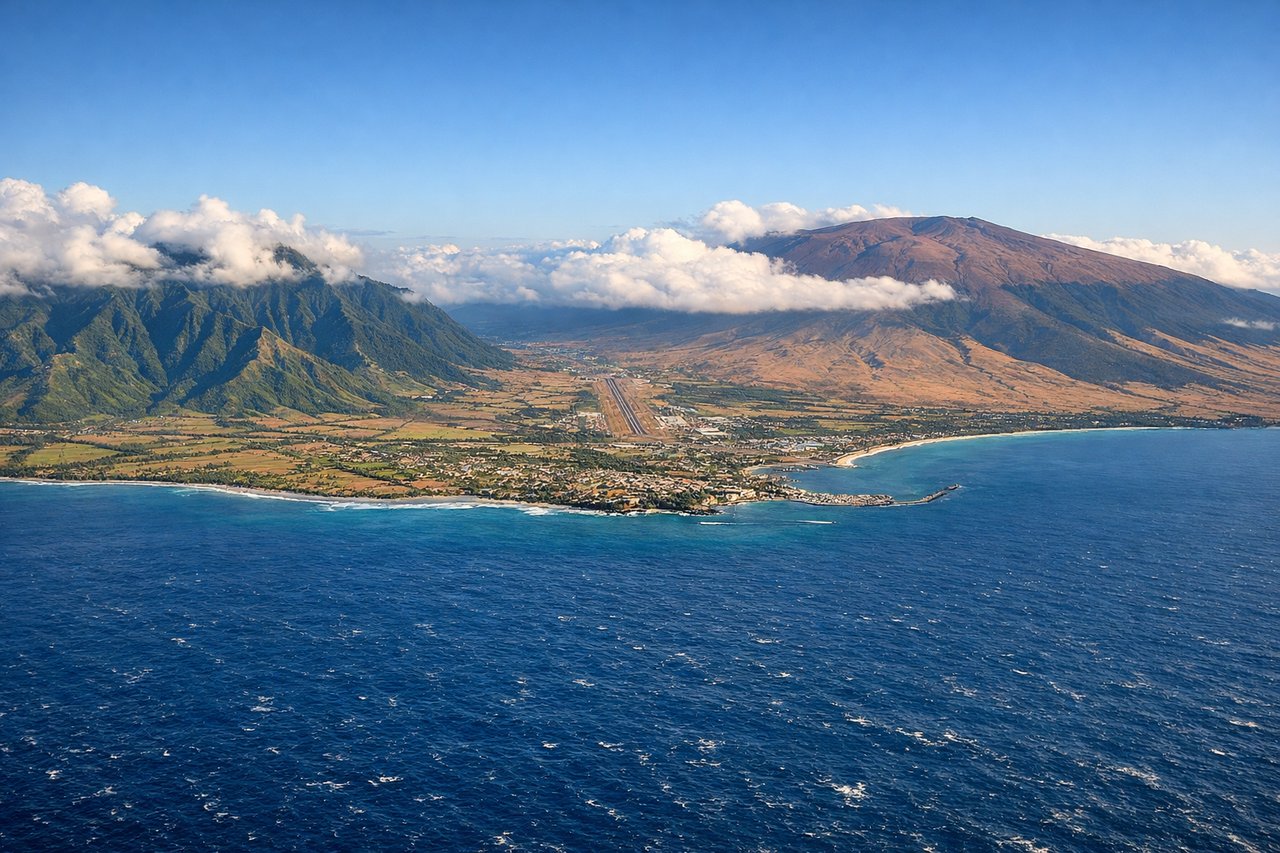
Landing at OGG
RIGHTOn approach to OGG's runway 02 from the south, the aircraft tracks up the isthmus between Maui's two volcanic massifs, and the right side faces Haleakala's massive shield volcano and crater rim looming close as the plane descends. The left side mainly shows open ocean and the smaller West Maui Mountains further away.
Landmarks on this routeAll landmarks →
Will your flight be in sunlight?
See exactly which side of the plane gets sun and shade at your departure time.
About This Route
Which side of the plane should I sit on flying from Denver International (DEN) to Kahului (OGG)?
Sit on the Right side of the plane for the best views on flights from Denver to Kahului. The right side delivers a stronger scenic package end to end: dramatic Front Range mountain views on departure from Denver and a close-up view of Haleakala's volcanic crater during the Maui approach, while the left side spends most of the flight over featureless desert and open ocean.
What can I see during takeoff from Denver International in Denver?
During takeoff from Denver International (DEN), sit on the Right side for the best views. Departing DEN westbound, the climb-out gives right-side passengers a clear view of the Front Range foothills and peaks like Longs Peak and the Indian Peaks Wilderness as the aircraft turns southwest toward Utah. Left-side passengers mostly see the flat eastern plains falling away. Notable sights include: Front Range foothills, Longs Peak, Indian Peaks Wilderness, Denver's northern suburbs.
What can I see when landing at Kahului in Kahului?
When landing at Kahului (OGG), sit on the Right side for the best views. On approach to OGG's runway 02 from the south, the aircraft tracks up the isthmus between Maui's two volcanic massifs, and the right side faces Haleakala's massive shield volcano and crater rim looming close as the plane descends. The left side mainly shows open ocean and the smaller West Maui Mountains further away. Notable sights include: Haleakala volcano and crater rim, Maui's central isthmus, Kahului Harbor, sugarcane fields below.
How long is the flight from Denver to Kahului?
The flight from Denver International (DEN) to Kahului (OGG) takes 6h 35m.
What does the Denver to Kahului flight path pass over?
Great Basin desert of Utah and Nevada, arid basin-and-range terrain, then several hours of open Pacific Ocean with no visible landmarks until the Hawaiian Islands appear near the coast of Maui.