Left side wins both ends of the flight. At takeoff you get the West Maui Mountains and Haleakala; at landing you get the full Front Range panorama and Denver. Over the Pacific and Nevada the views are comparable on both sides, but the left side edges ahead on the approach over Colorado.
Flight Path
After leaving Maui the route crosses open Pacific Ocean for roughly the first hour, then passes over the Big Island of Hawaii briefly on some routings. The flight then crosses the Nevada desert with the Basin and Range topography visible — parallel north-south mountain ranges separated by flat valleys. Over Utah you may see the Wasatch Range and the Great Salt Lake as a pale flat expanse. Crossing into Colorado the terrain rises through the Colorado Plateau and the Rockies before descending onto the Front Range plains toward Denver.
Great circle distance and headings ›.jpg?width=600)

.jpg?width=600)
Phase by phase
Takeoff from OGG
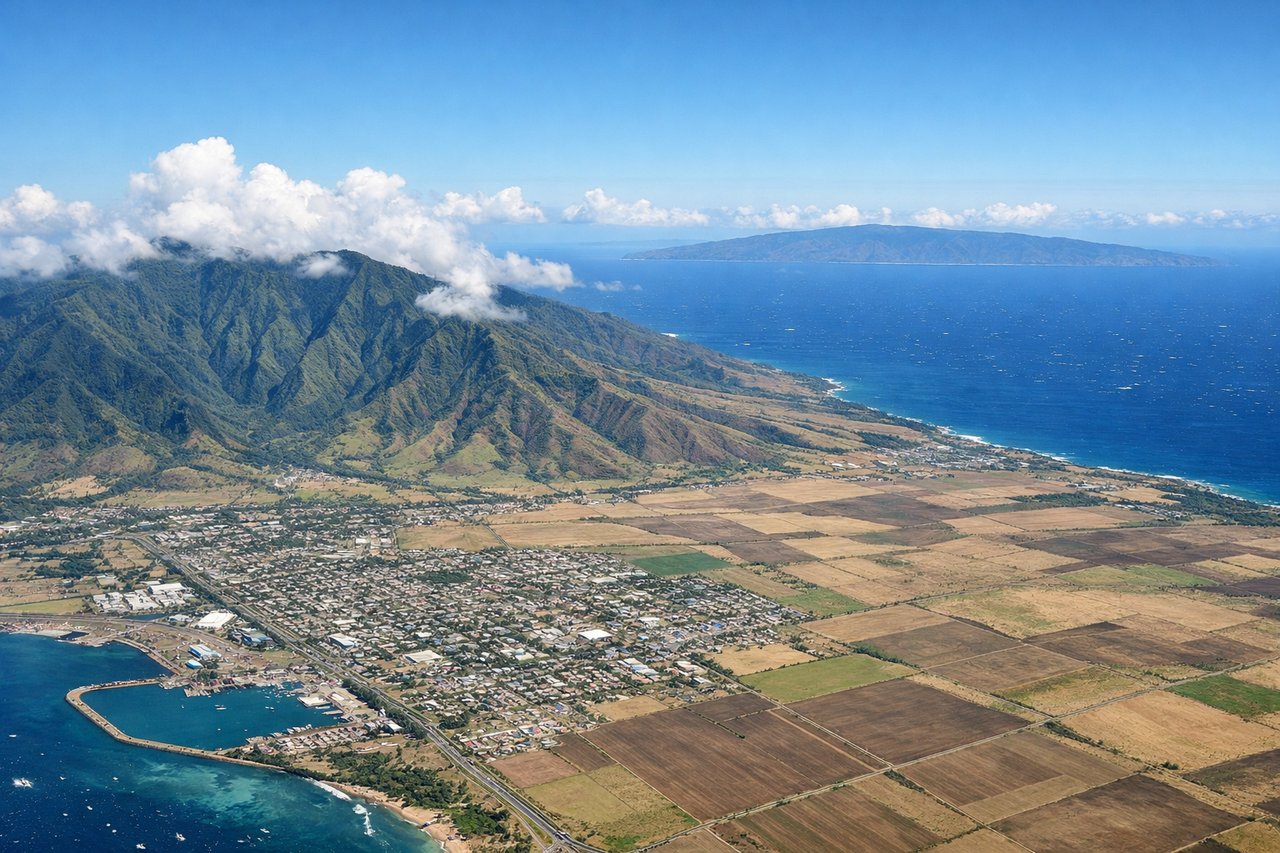
LEFTDeparting Kahului, flights typically use Runway 2 heading northeast, then turn east-northeast toward the mainland. The left (north) side gives you a clear view back over the West Maui Mountains and the Pailolo Channel toward Molokai. You also get a strong look at the isthmus and the flanks of Haleakala as the plane banks.
Landing at DEN
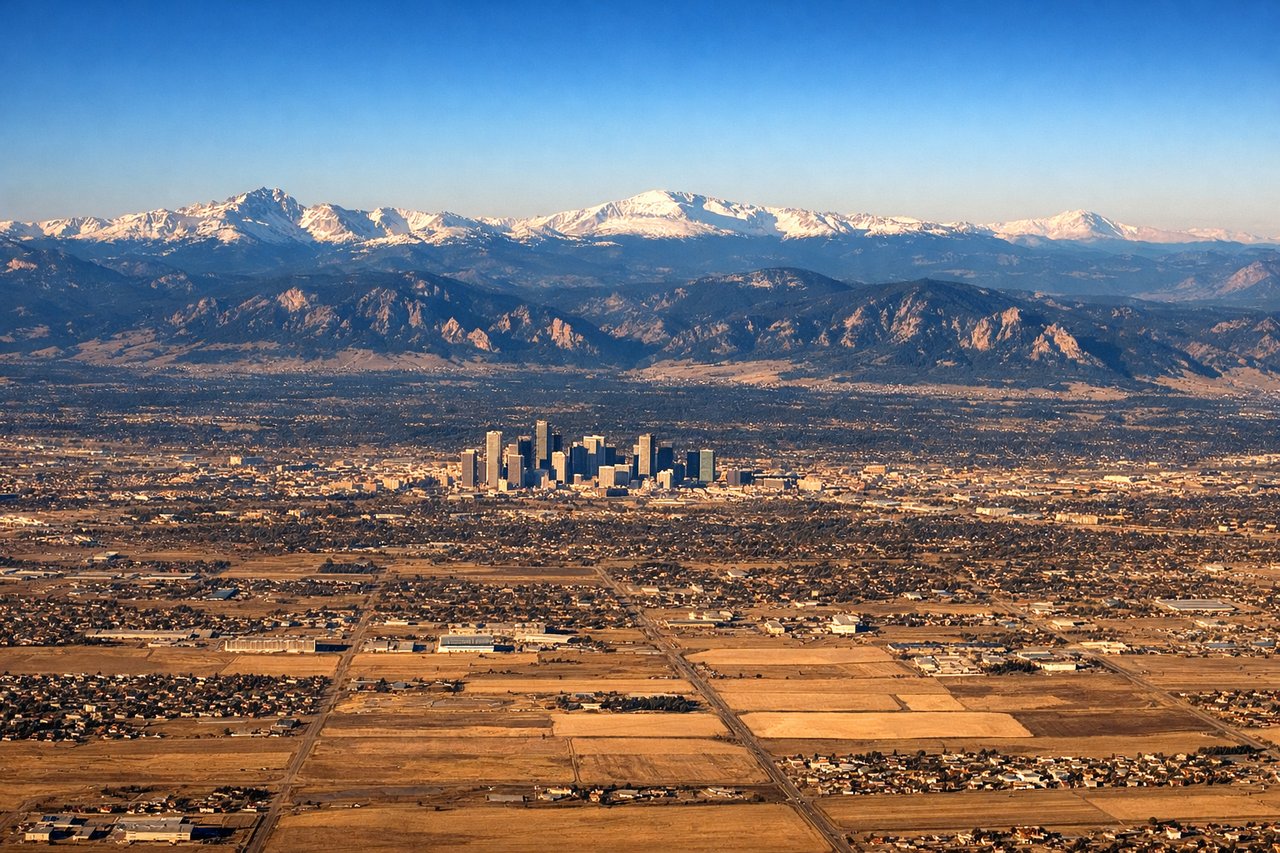
LEFTDenver International sits east of the city, and most arrivals from the west approach from the northwest or west. The left (south) side gives you the best view of downtown Denver, the Front Range of the Rockies including Longs Peak and Mount Evans, and the sprawling Denver metro grid as you descend over the plains.
Landmarks on this routeAll landmarks →
Will your flight be in sunlight?
See exactly which side of the plane gets sun and shade at your departure time.
About This Route
Which side of the plane should I sit on flying from Kahului (OGG) to Denver International (DEN)?
Sit on the Left side of the plane for the best views on flights from Kahului to Denver. Left side wins both ends of the flight. At takeoff you get the West Maui Mountains and Haleakala; at landing you get the full Front Range panorama and Denver. Over the Pacific and Nevada the views are comparable on both sides, but the left side edges ahead on the approach over Colorado.
What can I see during takeoff from Kahului in Kahului?
During takeoff from Kahului (OGG), sit on the Left side for the best views. Departing Kahului, flights typically use Runway 2 heading northeast, then turn east-northeast toward the mainland. The left (north) side gives you a clear view back over the West Maui Mountains and the Pailolo Channel toward Molokai. You also get a strong look at the isthmus and the flanks of Haleakala as the plane banks. Notable sights include: West Maui Mountains (Mauna Kahalawai), Haleakala volcano summit, Pailolo Channel, Kahului Harbor and isthmus.
What can I see when landing at Denver International in Denver?
When landing at Denver International (DEN), sit on the Left side for the best views. Denver International sits east of the city, and most arrivals from the west approach from the northwest or west. The left (south) side gives you the best view of downtown Denver, the Front Range of the Rockies including Longs Peak and Mount Evans, and the sprawling Denver metro grid as you descend over the plains. Notable sights include: Front Range Rocky Mountains (Longs Peak, Mount Evans), downtown Denver skyline, Denver metro grid, Rocky Mountain Arsenal area.
How long is the flight from Kahului to Denver?
The flight from Kahului (OGG) to Denver International (DEN) takes Approximately 6 hours 15 minutes.
What does the Kahului to Denver flight path pass over?
After leaving Maui the route crosses open Pacific Ocean for roughly the first hour, then passes over the Big Island of Hawaii briefly on some routings. The flight then crosses the Nevada desert with the Basin and Range topography visible — parallel north-south mountain ranges separated by flat valleys. Over Utah you may see the Wasatch Range and the Great Salt Lake as a pale flat expanse. Crossing into Colorado the terrain rises through the Colorado Plateau and the Rockies before descending onto the Front Range plains toward Denver.