While the left offers good views during departure, the right side dominates the approach to Denver with unobstructed views of the Front Range—the most dramatic and visually rewarding feature of this route. The Rocky Mountains are the signature landmark of this flight.
Flown DFW to BJC? Did we get it right?
Flight Path
Dallas-Fort Worth to Denver is 660 miles (1,062 km), a flight of about 2 hours.
Oklahoma panhandle and Texas Panhandle high plains, Canadian River valley, New Mexico-Colorado border region with the Raton Pass area, transition from High Plains to the foothills of the Front Range
Great circle distance and headings ›Phase by phase
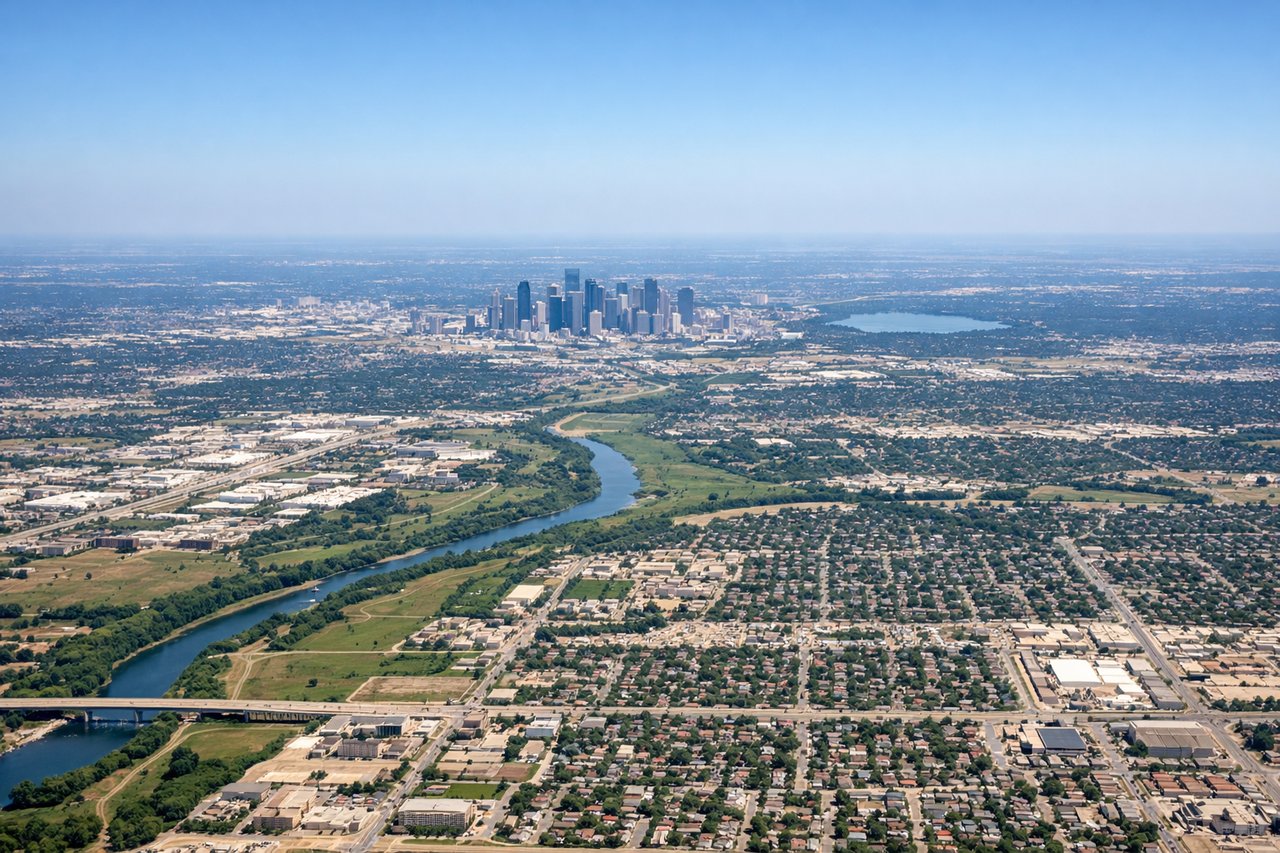
Takeoff from DFW
LEFTLeft side captures the northwestward climb-out path over the Fort Worth metropolitan area and the beginning of the transition toward the Red River basin and Oklahoma panhandle terrain. You'll see the urban sprawl give way to rolling prairie and the early stages of the High Plains.
Landing at BJC
RIGHTRight side provides the best views during the descent into Denver. As you approach from the southeast, the right wing reveals the Front Range of the Rocky Mountains in dramatic detail, with Pikes Peak and the Colorado Springs area visible to the south, and the Denver metro area spreading across the plains below.
Will your flight be in sunlight?
Pick a date and time in the Sun Map to watch the sun move across your whole flight.
About This Route
Which side of the plane should I sit on flying from Dallas Fort Worth International (DFW) to Rocky Mountain Metropolitan Airport (BJC)?
Sit on the Right side of the plane for the best views on flights from Dallas-Fort Worth to Denver. While the left offers good views during departure, the right side dominates the approach to Denver with unobstructed views of the Front Range—the most dramatic and visually rewarding feature of this route. The Rocky Mountains are the signature landmark of this flight.
What can I see during takeoff from Dallas Fort Worth International in Dallas-Fort Worth?
During takeoff from Dallas Fort Worth International (DFW), sit on the Left side for the best views. Left side captures the northwestward climb-out path over the Fort Worth metropolitan area and the beginning of the transition toward the Red River basin and Oklahoma panhandle terrain. You'll see the urban sprawl give way to rolling prairie and the early stages of the High Plains. Notable sights include: Fort Worth downtown skyline, Lake Worth (visible as a bright water body northeast of the city), the Red River valley to the north, early High Plains terrain.
What can I see when landing at Rocky Mountain Metropolitan Airport in Denver?
When landing at Rocky Mountain Metropolitan Airport (BJC), sit on the Right side for the best views. Right side provides the best views during the descent into Denver. As you approach from the southeast, the right wing reveals the Front Range of the Rocky Mountains in dramatic detail, with Pikes Peak and the Colorado Springs area visible to the south, and the Denver metro area spreading across the plains below. Notable sights include: Front Range of the Rocky Mountains, Denver metropolitan area sprawl, South Platte River valley, Pikes Peak (visible to the south on clear days).
How long is the flight from Dallas-Fort Worth to Denver?
The flight from Dallas Fort Worth International (DFW) to Rocky Mountain Metropolitan Airport (BJC) takes about 2 hours. The shortest flight path between them is 660 miles (1,062 km); winds and air traffic control usually add a few percent.
What does the Dallas-Fort Worth to Denver flight path pass over?
Oklahoma panhandle and Texas Panhandle high plains, Canadian River valley, New Mexico-Colorado border region with the Raton Pass area, transition from High Plains to the foothills of the Front Range