The left side wins because it captures the most distinctive landmark of the entire flight — the Paris skyline with the Eiffel Tower and La Defense during the westbound landing turn — while the right side's advantage is limited to a brief glimpse of Dallas at takeoff; both sides share the same largely featureless plains-to-ocean cruise.
Flight Path
The route crosses the Mississippi Valley and Appalachians, then Quebec and Atlantic Canada before a long North Atlantic Ocean crossing, with possible distant views of Newfoundland's coastline and, on clear days, the southern edge of Greenland's ice sheet, before making landfall over southwest Ireland en route to France.
Great circle distance and headings ›

.jpg?width=600)
Phase by phase
Takeoff from DFW
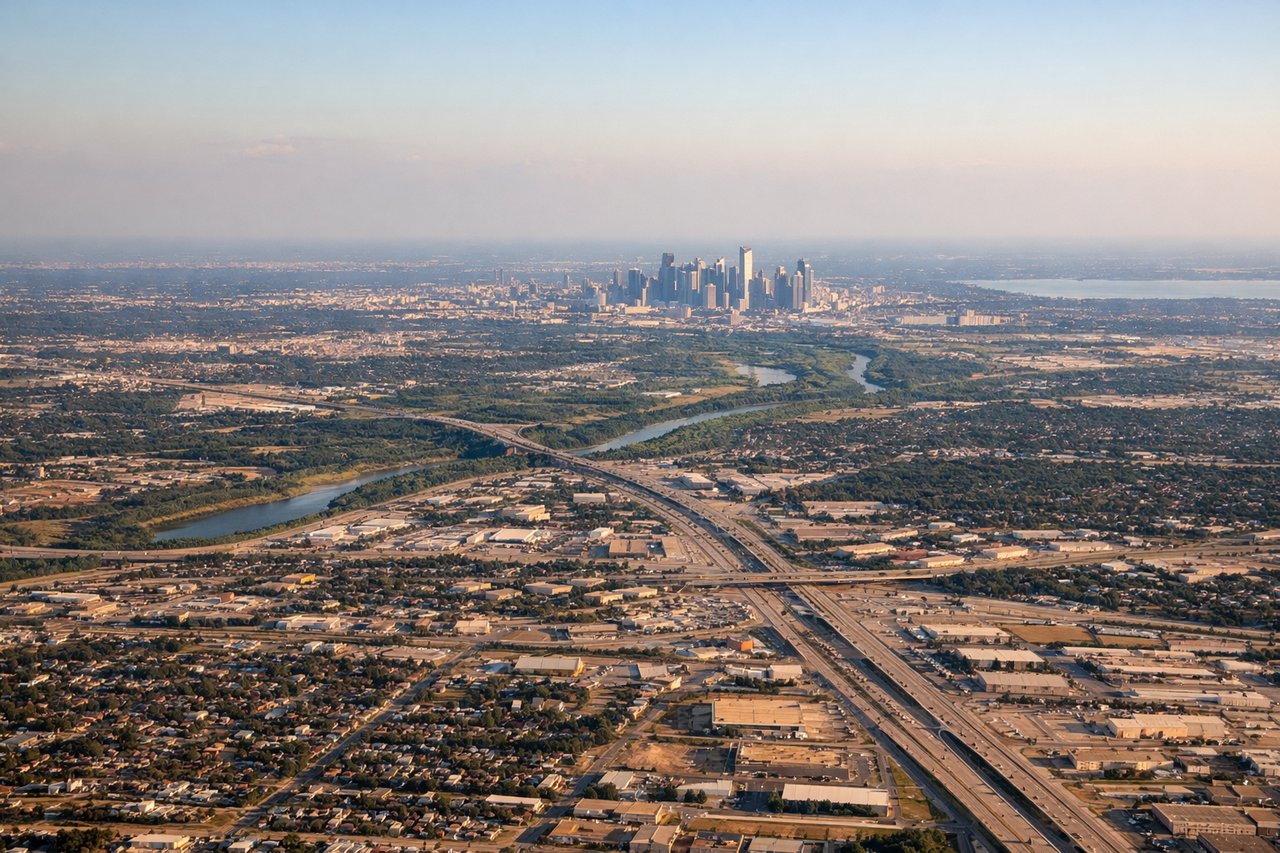
RIGHTDeparting DFW in the typical south-flow configuration, the climb-out and turn toward the northeast puts the Dallas skyline and Trinity River on the right side of the cabin, giving a brief but genuine urban view before the flat Blackland Prairie takes over. The left side mostly sees Fort Worth's lower-rise sprawl and open plains.
Landing at CDG
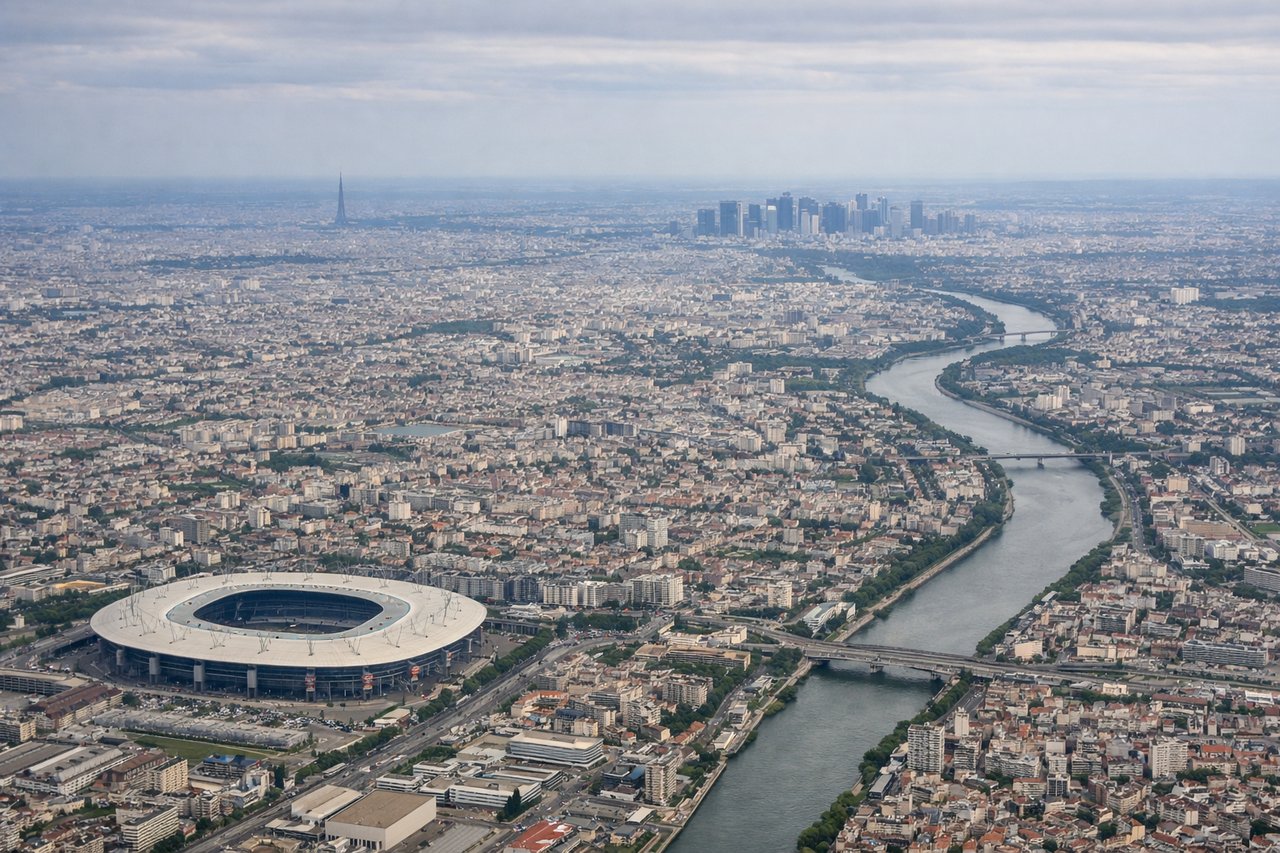
LEFTWith CDG's prevailing westerly operations, arrivals typically loop south of the airport before turning onto final approach heading west, which places central Paris on the left side of the aircraft during the turn. Passengers get a genuine, if brief, view of the Eiffel Tower and La Defense skyline before the runway threshold.
Landmarks on this routeAll landmarks →
Will your flight be in sunlight?
See exactly which side of the plane gets sun and shade at your departure time.
About This Route
Which side of the plane should I sit on flying from Dallas Fort Worth International (DFW) to Charles De Gaulle (CDG)?
Sit on the Left side of the plane for the best views on flights from Dallas-Fort Worth to Paris. The left side wins because it captures the most distinctive landmark of the entire flight — the Paris skyline with the Eiffel Tower and La Defense during the westbound landing turn — while the right side's advantage is limited to a brief glimpse of Dallas at takeoff; both sides share the same largely featureless plains-to-ocean cruise.
What can I see during takeoff from Dallas Fort Worth International in Dallas-Fort Worth?
During takeoff from Dallas Fort Worth International (DFW), sit on the Right side for the best views. Departing DFW in the typical south-flow configuration, the climb-out and turn toward the northeast puts the Dallas skyline and Trinity River on the right side of the cabin, giving a brief but genuine urban view before the flat Blackland Prairie takes over. The left side mostly sees Fort Worth's lower-rise sprawl and open plains. Notable sights include: Downtown Dallas skyline (Reunion Tower, Bank of America Plaza), Trinity River, Las Colinas towers in Irving.
What can I see when landing at Charles De Gaulle in Paris?
When landing at Charles De Gaulle (CDG), sit on the Left side for the best views. With CDG's prevailing westerly operations, arrivals typically loop south of the airport before turning onto final approach heading west, which places central Paris on the left side of the aircraft during the turn. Passengers get a genuine, if brief, view of the Eiffel Tower and La Defense skyline before the runway threshold. Notable sights include: Eiffel Tower, La Defense skyscraper district, Seine River bends, Bois de Boulogne park.
How long is the flight from Dallas-Fort Worth to Paris?
The flight from Dallas Fort Worth International (DFW) to Charles De Gaulle (CDG) takes 8h 50m.
What does the Dallas-Fort Worth to Paris flight path pass over?
The route crosses the Mississippi Valley and Appalachians, then Quebec and Atlantic Canada before a long North Atlantic Ocean crossing, with possible distant views of Newfoundland's coastline and, on clear days, the southern edge of Greenland's ice sheet, before making landfall over southwest Ireland en route to France.