While the right side offers a brief Fort Worth glimpse at takeoff, the left side wins overall thanks to the dramatic Front Range mountain backdrop and Denver skyline during the descent and approach, which outweighs the otherwise flat, featureless plains crossed during cruise.
Flight Path
High plains of the Texas and Oklahoma panhandles, including the Llano Estacado escarpment and scattered farmland near the Canadian River valley, transitioning to the shortgrass prairie of eastern Colorado before the terrain rises toward the Front Range.
Great circle distance and headings ›Phase by phase
Takeoff from DFW
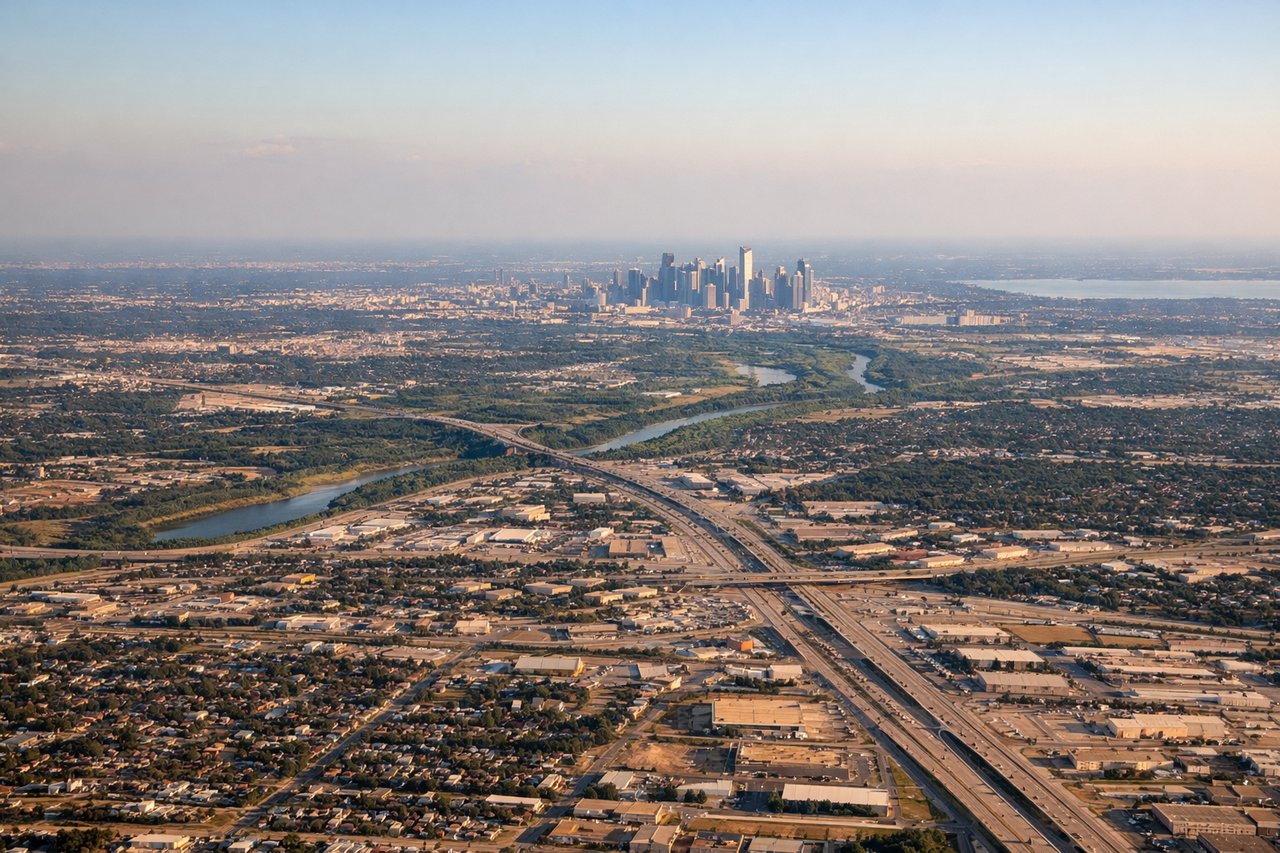
RIGHTDFW's south-flow departures send aircraft climbing due south initially, putting Fort Worth's downtown skyline, Lake Worth, and the Trinity River briefly in view on the right before the jet banks onto its northwest heading toward Denver.
Landing at DEN
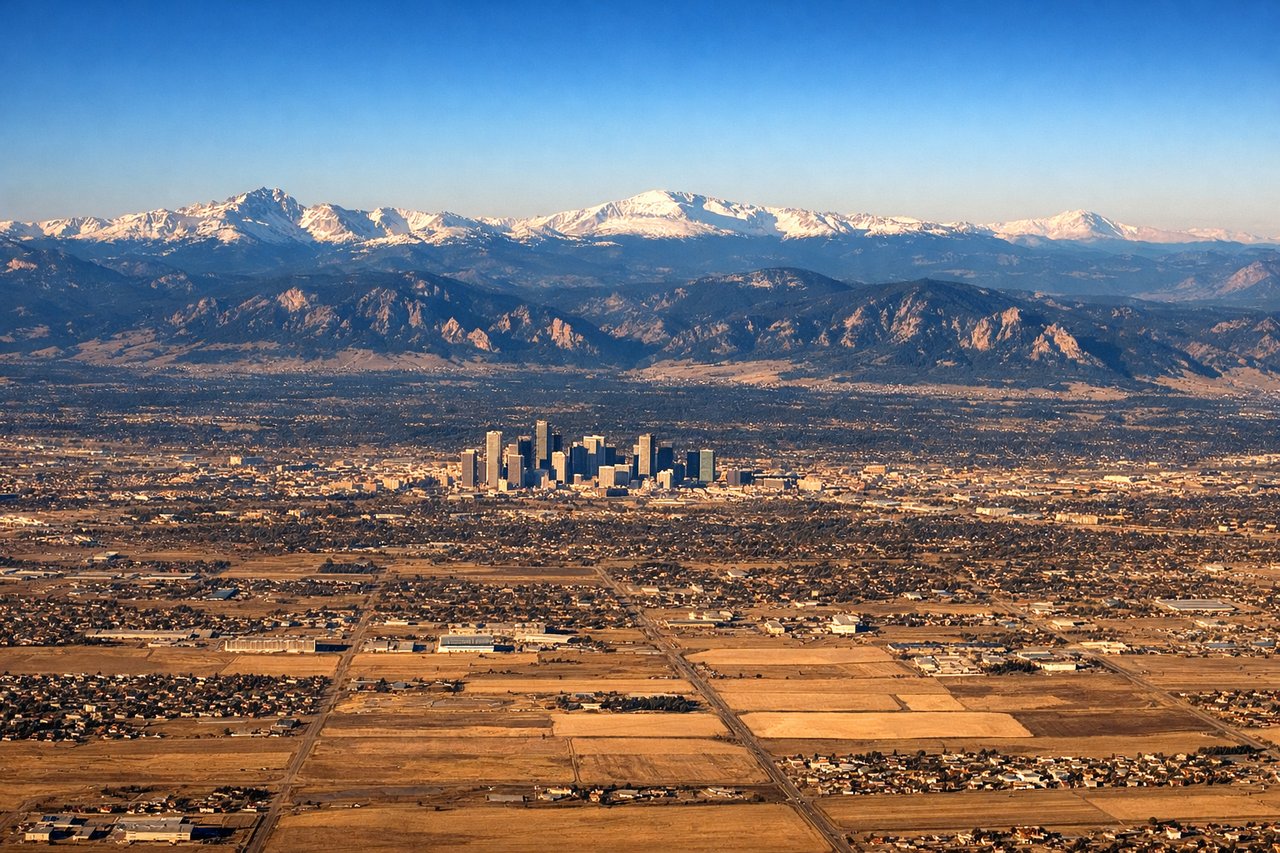
LEFTOn approach into Denver from the southeast, the Front Range of the Rockies rises dramatically on the left side of the aircraft, with downtown Denver's skyline sitting at the foothills' base, offering the flight's best scenic payoff.
Landmarks on this routeAll landmarks →
Will your flight be in sunlight?
See exactly which side of the plane gets sun and shade at your departure time.
About This Route
Which side of the plane should I sit on flying from Dallas Fort Worth International (DFW) to Denver International (DEN)?
Sit on the Left side of the plane for the best views on flights from Dallas-Fort Worth to Denver. While the right side offers a brief Fort Worth glimpse at takeoff, the left side wins overall thanks to the dramatic Front Range mountain backdrop and Denver skyline during the descent and approach, which outweighs the otherwise flat, featureless plains crossed during cruise.
What can I see during takeoff from Dallas Fort Worth International in Dallas-Fort Worth?
During takeoff from Dallas Fort Worth International (DFW), sit on the Right side for the best views. DFW's south-flow departures send aircraft climbing due south initially, putting Fort Worth's downtown skyline, Lake Worth, and the Trinity River briefly in view on the right before the jet banks onto its northwest heading toward Denver. Notable sights include: Fort Worth downtown skyline, Trinity River, Lake Worth reservoir.
What can I see when landing at Denver International in Denver?
When landing at Denver International (DEN), sit on the Left side for the best views. On approach into Denver from the southeast, the Front Range of the Rockies rises dramatically on the left side of the aircraft, with downtown Denver's skyline sitting at the foothills' base, offering the flight's best scenic payoff. Notable sights include: Front Range of the Rocky Mountains, Denver downtown skyline, Longs Peak area foothills.
How long is the flight from Dallas-Fort Worth to Denver?
The flight from Dallas Fort Worth International (DFW) to Denver International (DEN) takes 2h 10m.
What does the Dallas-Fort Worth to Denver flight path pass over?
High plains of the Texas and Oklahoma panhandles, including the Llano Estacado escarpment and scattered farmland near the Canadian River valley, transitioning to the shortgrass prairie of eastern Colorado before the terrain rises toward the Front Range.