Both sides score equally at 2.0 due to the flight's geography: DFW-to-GRB traverses flat to gently rolling terrain across Texas and the Midwest with no mountains, coastlines, or dramatic features. However, the right side edges ahead slightly for landing approach scenery—Green Bay's waterfront and the bay itself provide more visual interest than left-side inland forest and farmland. The takeoff from DFW favors the left side (urban sprawl), but the landing advantage on the right outweighs this marginal difference over a 2.5-hour flight dominated by featureless prairie and agricultural land.
Flown DFW to GRB? Did we get it right?
Flight Path
Dallas-Fort Worth to Green Bay is 932 miles (1,500 km), a flight of about 2 hours 35 minutes.
Illinois prairie and agricultural landscape, scattered small towns and county roads, transition from Texas plains through Oklahoma and Kansas into the Mississippi River valley region, Wisconsin's transition from agricultural land to mixed forest and lake country as approach to Green Bay begins
Great circle distance and headings ›Phase by phase
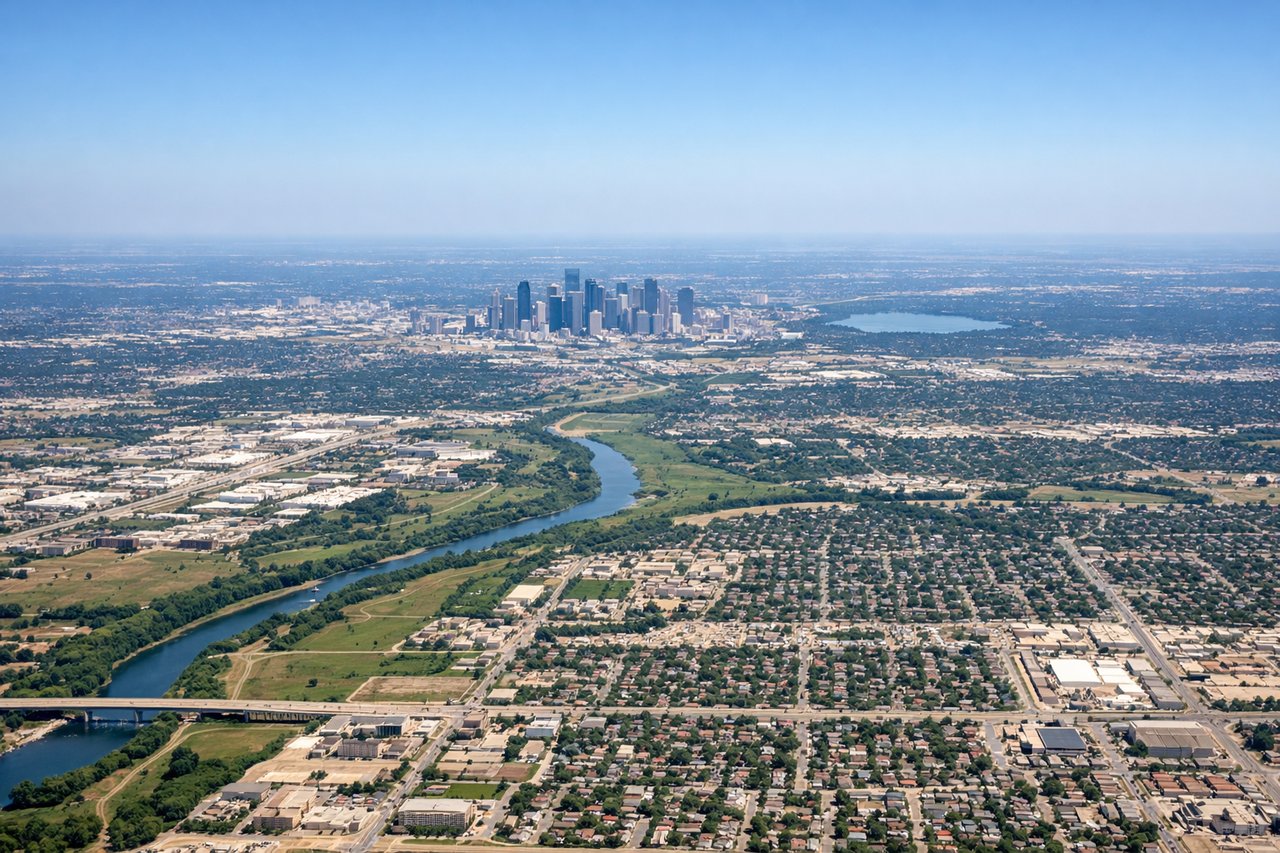
Takeoff from DFW
LEFTLeft side offers brief views of the Dallas-Fort Worth urban sprawl and surrounding suburban development during initial climb. Right side faces open prairie with minimal landmarks during departure.
Landing at GRB
RIGHTRight side captures the approach over Green Bay's urban core and the western shore of Green Bay (the water body), providing water and city scenery during descent. Left side faces inland Wisconsin farmland and forest with minimal visual interest.
Will your flight be in sunlight?
Pick a date and time in the Sun Map to watch the sun move across your whole flight.
About This Route
Which side of the plane should I sit on flying from Dallas Fort Worth International (DFW) to Austin Straubel International (GRB)?
Sit on the Right side of the plane for the best views on flights from Dallas-Fort Worth to Green Bay. Both sides score equally at 2.0 due to the flight's geography: DFW-to-GRB traverses flat to gently rolling terrain across Texas and the Midwest with no mountains, coastlines, or dramatic features. However, the right side edges ahead slightly for landing approach scenery—Green Bay's waterfront and the bay itself provide more visual interest than left-side inland forest and farmland. The takeoff from DFW favors the left side (urban sprawl), but the landing advantage on the right outweighs this marginal difference over a 2.5-hour flight dominated by featureless prairie and agricultural land.
What can I see during takeoff from Dallas Fort Worth International in Dallas-Fort Worth?
During takeoff from Dallas Fort Worth International (DFW), sit on the Left side for the best views. Left side offers brief views of the Dallas-Fort Worth urban sprawl and surrounding suburban development during initial climb. Right side faces open prairie with minimal landmarks during departure. Notable sights include: Dallas-Fort Worth metropolitan area, Trinity River valley, suburban grid patterns extending north and east.
What can I see when landing at Austin Straubel International in Green Bay?
When landing at Austin Straubel International (GRB), sit on the Right side for the best views. Right side captures the approach over Green Bay's urban core and the western shore of Green Bay (the water body), providing water and city scenery during descent. Left side faces inland Wisconsin farmland and forest with minimal visual interest. Notable sights include: Green Bay city waterfront, Green Bay (the water body) western shoreline, Fox River valley, surrounding Wisconsin forest and agricultural land.
How long is the flight from Dallas-Fort Worth to Green Bay?
The flight from Dallas Fort Worth International (DFW) to Austin Straubel International (GRB) takes about 2 hours 35 minutes. The shortest flight path between them is 932 miles (1,500 km); winds and air traffic control usually add a few percent.
What does the Dallas-Fort Worth to Green Bay flight path pass over?
Illinois prairie and agricultural landscape, scattered small towns and county roads, transition from Texas plains through Oklahoma and Kansas into the Mississippi River valley region, Wisconsin's transition from agricultural land to mixed forest and lake country as approach to Green Bay begins