Dallas-Fort Worth to Memphis is 431 miles (693 km), a flight of about 1 hour 15 minutes.
Left side wins at both ends of this short flight. You get the Dallas urban panorama on departure and the Mississippi River — one of the most visually striking geographic features in the American South — on approach into Memphis. The right side offers flat East Texas pine forest for most of the cruise, which is considerably less interesting.
Flight Path
The flight crosses East Texas pine and hardwood forest, the Red River valley near Texarkana, and the Arkansas Delta lowlands — flat agricultural terrain with the occasional river drainage visible. Near the Arkansas-Tennessee border, the landscape transitions to the broad Mississippi Alluvial Plain with its characteristic rectangular field patterns and bayous.
Great circle distance and headings ›Phase by phase
Takeoff from DFW
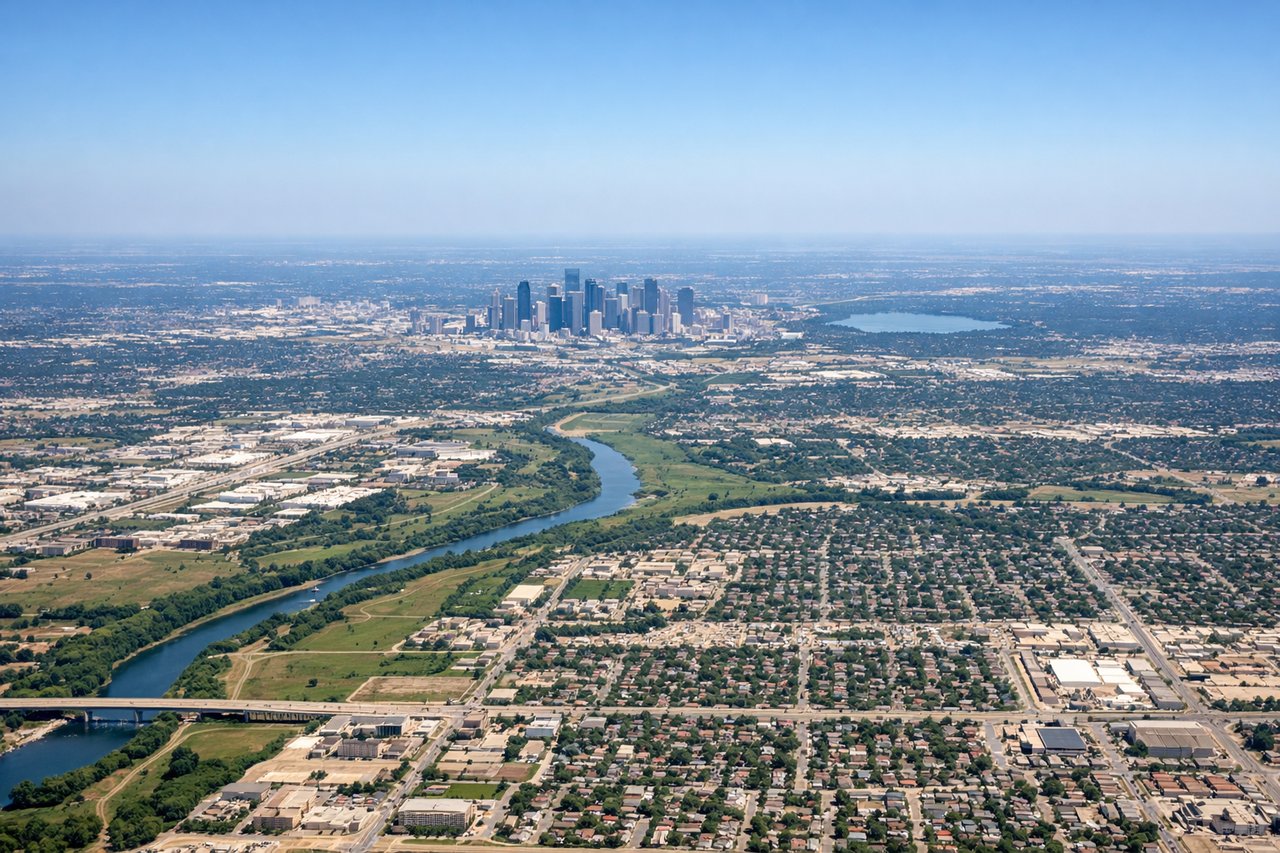
LEFTDFW departures heading east typically use runways 17L/17R or 18L/18R, meaning a left-side seat gives you a northward view over the Dallas metro as you climb out. You'll see downtown Dallas skyline, White Rock Lake, and the sprawling DFW urban grid clearly from the left side during the initial climb and turn eastward.
Landing at MEM
LEFTMemphis International sits south of the city, and aircraft typically approach from the west or southwest on runways 18L/18R or 36L/36R. A left-side seat on approach gives you a view over the Mississippi River, which is the defining geographic feature here — the river's wide, brown, meandering channel with its oxbow lakes and sandbars is unmistakable on final approach.
Landmarks on this routeAll landmarks →
Will your flight be in sunlight?
Pick a date and time in the Sun Map to watch the sun move across your whole flight.
About This Route
Which side of the plane should I sit on flying from Dallas Fort Worth International (DFW) to Memphis International (MEM)?
Sit on the Left side of the plane for the best views on flights from Dallas-Fort Worth to Memphis. Left side wins at both ends of this short flight. You get the Dallas urban panorama on departure and the Mississippi River — one of the most visually striking geographic features in the American South — on approach into Memphis. The right side offers flat East Texas pine forest for most of the cruise, which is considerably less interesting.
What can I see during takeoff from Dallas Fort Worth International in Dallas-Fort Worth?
During takeoff from Dallas Fort Worth International (DFW), sit on the Left side for the best views. DFW departures heading east typically use runways 17L/17R or 18L/18R, meaning a left-side seat gives you a northward view over the Dallas metro as you climb out. You'll see downtown Dallas skyline, White Rock Lake, and the sprawling DFW urban grid clearly from the left side during the initial climb and turn eastward. Notable sights include: Downtown Dallas skyline, White Rock Lake, Lake Ray Hubbard, DFW airport complex itself.
What can I see when landing at Memphis International in Memphis?
When landing at Memphis International (MEM), sit on the Left side for the best views. Memphis International sits south of the city, and aircraft typically approach from the west or southwest on runways 18L/18R or 36L/36R. A left-side seat on approach gives you a view over the Mississippi River, which is the defining geographic feature here — the river's wide, brown, meandering channel with its oxbow lakes and sandbars is unmistakable on final approach. Notable sights include: Mississippi River and its oxbow lakes, downtown Memphis skyline, Mud Island, Arkansas lowlands across the river.
How long is the flight from Dallas-Fort Worth to Memphis?
The flight from Dallas Fort Worth International (DFW) to Memphis International (MEM) takes about 1 hour 15 minutes. The shortest flight path between them is 431 miles (693 km); winds and air traffic control usually add a few percent.
What does the Dallas-Fort Worth to Memphis flight path pass over?
The flight crosses East Texas pine and hardwood forest, the Red River valley near Texarkana, and the Arkansas Delta lowlands — flat agricultural terrain with the occasional river drainage visible. Near the Arkansas-Tennessee border, the landscape transitions to the broad Mississippi Alluvial Plain with its characteristic rectangular field patterns and bayous.