The left side bookends the flight with two genuine skyline views — Dallas at takeoff and Miami with Biscayne Bay at landing — while the right side offers mostly flat farmland and generic suburban sprawl with little variation.
Flight Path
Louisiana bayous and the Mississippi River delta region, Gulf Coast lowlands near Mobile Bay, forested Florida Panhandle, and the lake-dotted terrain of central Florida near Ocala before descending toward South Florida.
Great circle distance and headings ›

Phase by phase
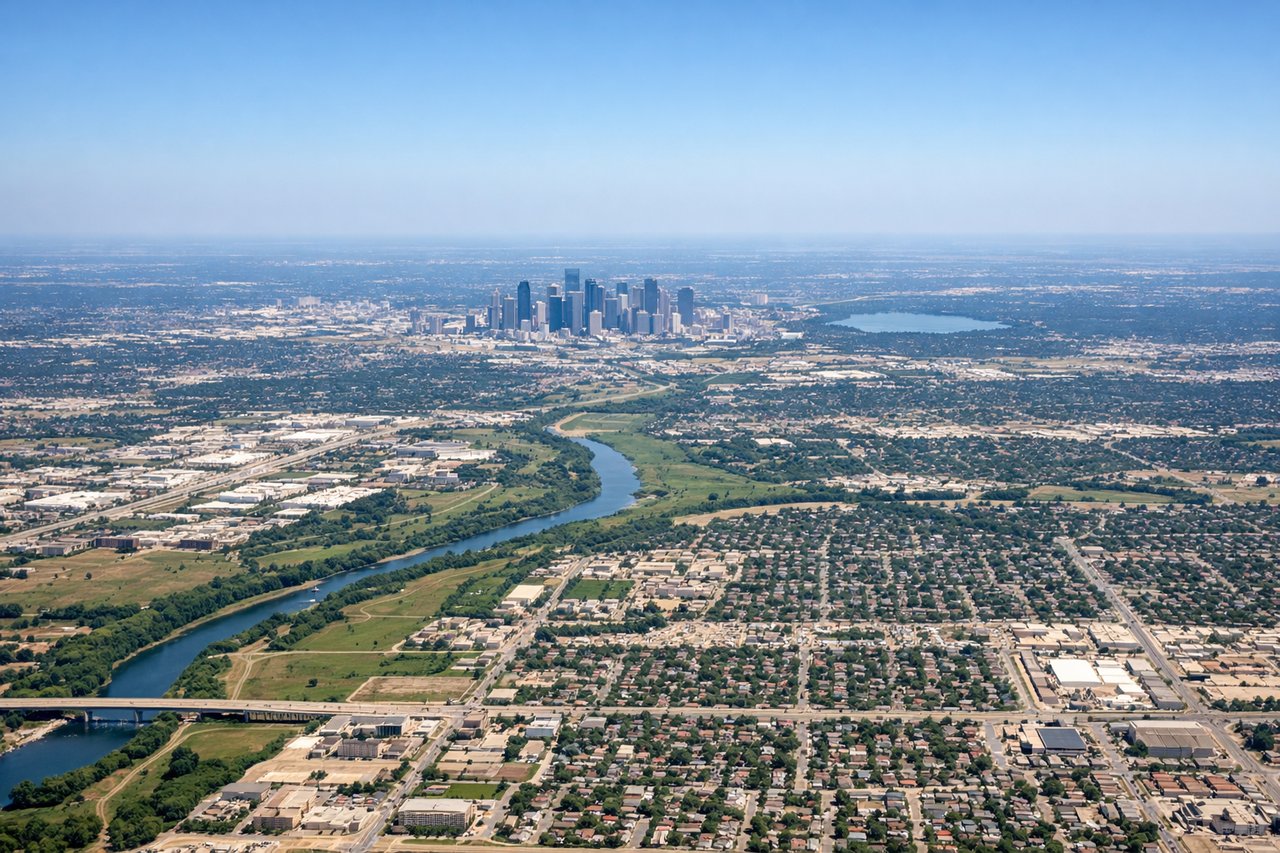
Takeoff from DFW
LEFTDeparting DFW to the south before curving east-southeast toward Louisiana puts downtown Dallas and the Trinity River in view on the left side during the initial turn. The right side mostly shows Fort Worth's western suburbs fading into flat farmland.
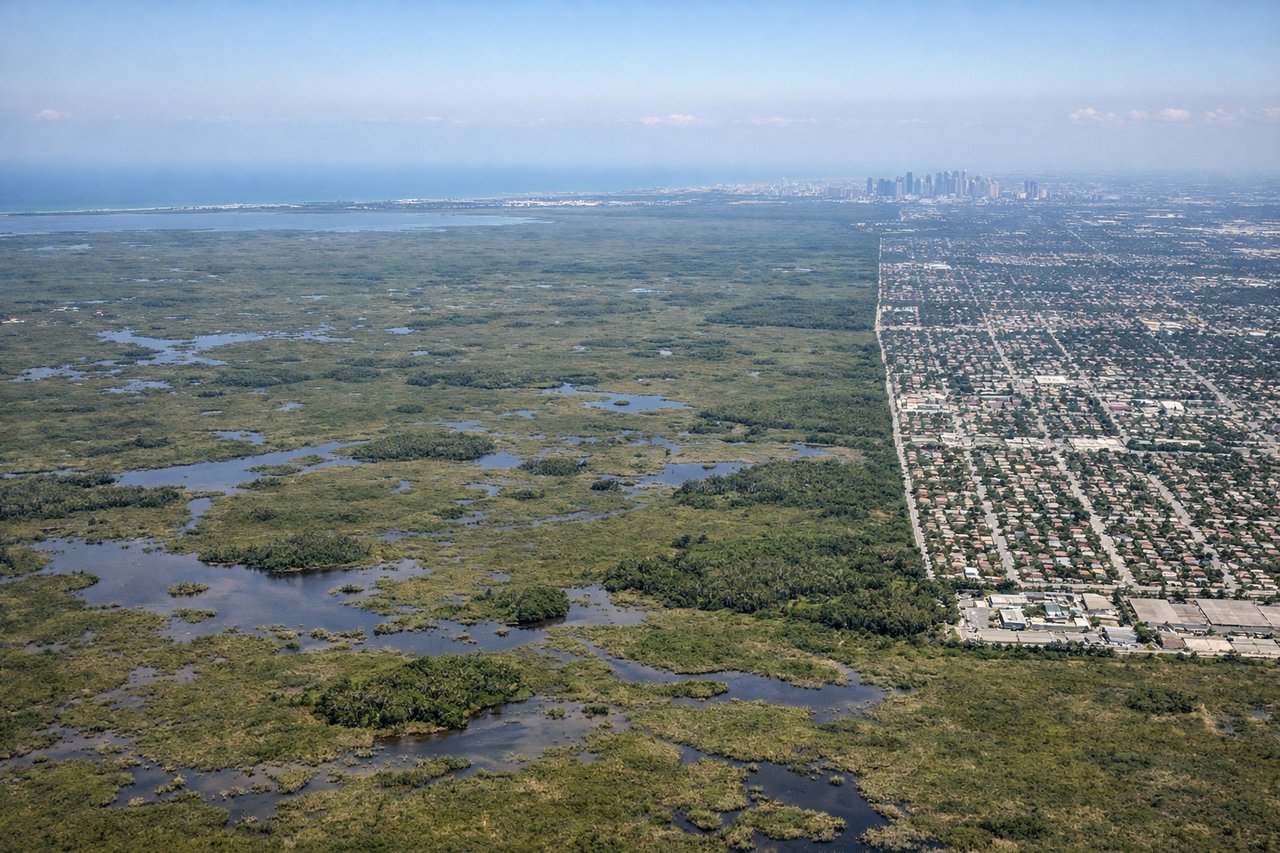
Landing at MIA
LEFTOn final approach to MIA from the west, most arrivals land eastbound on runway 09 after crossing the Everglades, putting downtown Miami, Biscayne Bay, and the Port of Miami in view to the north (left side). The right side instead shows lower-density suburbs like Kendall with less visual interest.
Landmarks on this routeAll landmarks →
Will your flight be in sunlight?
See exactly which side of the plane gets sun and shade at your departure time.
About This Route
Which side of the plane should I sit on flying from Dallas Fort Worth International (DFW) to Miami International (MIA)?
Sit on the Left side of the plane for the best views on flights from Dallas-Fort Worth to Miami. The left side bookends the flight with two genuine skyline views — Dallas at takeoff and Miami with Biscayne Bay at landing — while the right side offers mostly flat farmland and generic suburban sprawl with little variation.
What can I see during takeoff from Dallas Fort Worth International in Dallas-Fort Worth?
During takeoff from Dallas Fort Worth International (DFW), sit on the Left side for the best views. Departing DFW to the south before curving east-southeast toward Louisiana puts downtown Dallas and the Trinity River in view on the left side during the initial turn. The right side mostly shows Fort Worth's western suburbs fading into flat farmland. Notable sights include: Downtown Dallas skyline, Trinity River, DFW airport complex, flat North Texas farmland.
What can I see when landing at Miami International in Miami?
When landing at Miami International (MIA), sit on the Left side for the best views. On final approach to MIA from the west, most arrivals land eastbound on runway 09 after crossing the Everglades, putting downtown Miami, Biscayne Bay, and the Port of Miami in view to the north (left side). The right side instead shows lower-density suburbs like Kendall with less visual interest. Notable sights include: Everglades wetlands, downtown Miami skyline, Biscayne Bay, Port of Miami.
How long is the flight from Dallas-Fort Worth to Miami?
The flight from Dallas Fort Worth International (DFW) to Miami International (MIA) takes 2h 55m.
What does the Dallas-Fort Worth to Miami flight path pass over?
Louisiana bayous and the Mississippi River delta region, Gulf Coast lowlands near Mobile Bay, forested Florida Panhandle, and the lake-dotted terrain of central Florida near Ocala before descending toward South Florida.