While the right side has a decent Dallas metro view on departure, the left side delivers the spectacular Mediterranean coastal arrival into Nice with Monaco, the Maritime Alps, and the Côte d'Azur all visible simultaneously. The left side also tracks the Atlantic crossing and picks up the Pyrenees and southern French coast on approach.
Flight Path
The route crosses the Gulf of Mexico or southeastern US coast, then the North Atlantic. Over Europe it tracks across the Iberian Peninsula or northern Spain, crosses the Pyrenees visible as a distinct mountain chain, then passes over southern France including the Rhône valley and Provence before descending toward the Mediterranean coast at Nice.
Great circle distance and headings ›

.jpeg?width=600)

Phase by phase
Takeoff from DFW
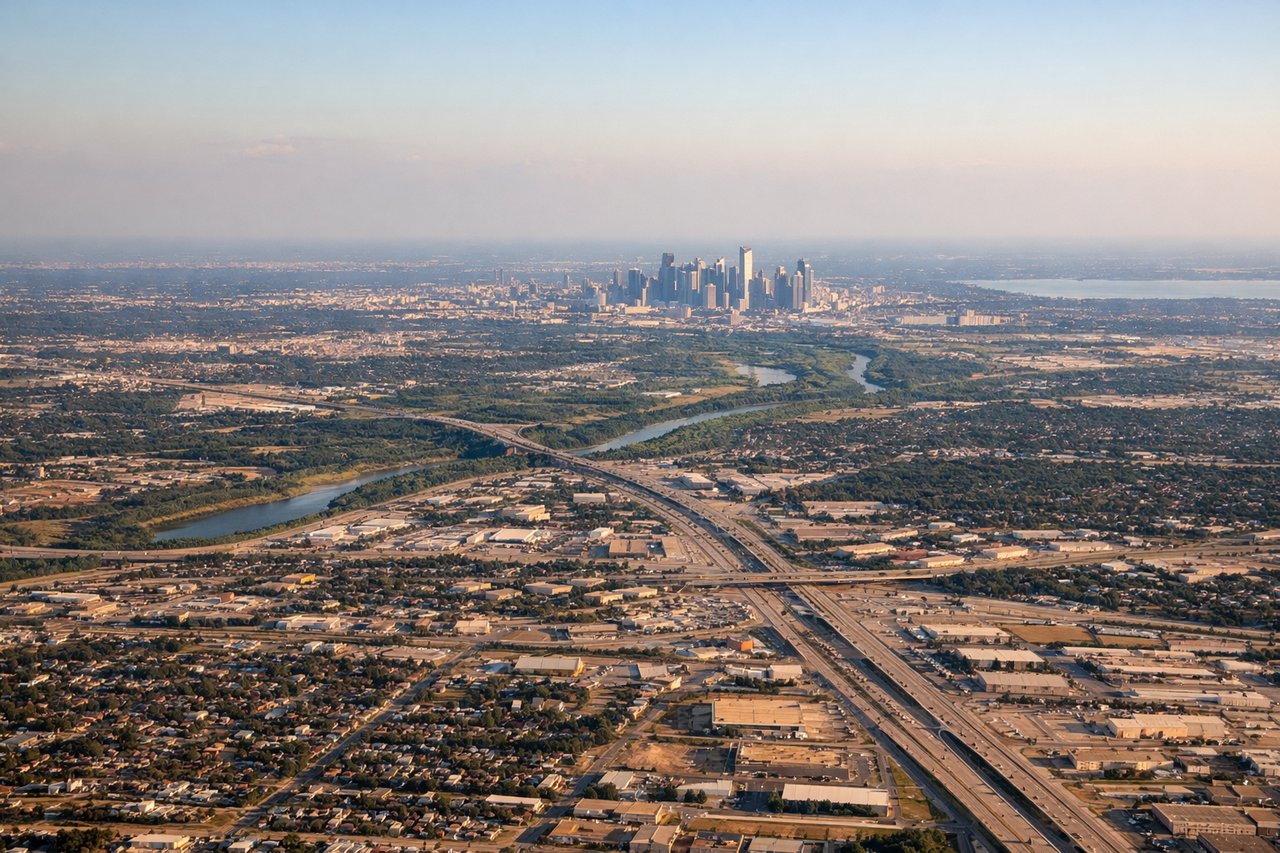
RIGHTDFW departures heading northeast on runways 17L/17R or 18L/18R typically swing left over the metroplex, putting the Dallas skyline and downtown Fort Worth on the right side. The right seat gets a clear look at the urban core and the sprawling DFW suburban grid before the aircraft climbs out eastward.
Landing at NCE
LEFTNCE typically uses runway 04R/22L aligned along the coast. Arrivals from the west on runway 04 approach over the sea and swing along the Côte d'Azur coastline, giving the left side a direct view of the Mediterranean, the Nice waterfront, Monaco, and the Maritime Alps rising immediately behind the coast.
Landmarks on this routeAll landmarks →
Will your flight be in sunlight?
See exactly which side of the plane gets sun and shade at your departure time.
About This Route
Which side of the plane should I sit on flying from Dallas Fort Worth International (DFW) to Cote D Azur (NCE)?
Sit on the Left side of the plane for the best views on flights from Dallas-Fort Worth to Nice. While the right side has a decent Dallas metro view on departure, the left side delivers the spectacular Mediterranean coastal arrival into Nice with Monaco, the Maritime Alps, and the Côte d'Azur all visible simultaneously. The left side also tracks the Atlantic crossing and picks up the Pyrenees and southern French coast on approach.
What can I see during takeoff from Dallas Fort Worth International in Dallas-Fort Worth?
During takeoff from Dallas Fort Worth International (DFW), sit on the Right side for the best views. DFW departures heading northeast on runways 17L/17R or 18L/18R typically swing left over the metroplex, putting the Dallas skyline and downtown Fort Worth on the right side. The right seat gets a clear look at the urban core and the sprawling DFW suburban grid before the aircraft climbs out eastward. Notable sights include: Downtown Dallas skyline, Downtown Fort Worth, Lake Grapevine, Texas Motor Speedway.
What can I see when landing at Cote D Azur in Nice?
When landing at Cote D Azur (NCE), sit on the Left side for the best views. NCE typically uses runway 04R/22L aligned along the coast. Arrivals from the west on runway 04 approach over the sea and swing along the Côte d'Azur coastline, giving the left side a direct view of the Mediterranean, the Nice waterfront, Monaco, and the Maritime Alps rising immediately behind the coast. Notable sights include: Nice Promenade des Anglais, Monaco and Monte Carlo, Maritime Alps, Cap d'Antibes.
How long is the flight from Dallas-Fort Worth to Nice?
The flight from Dallas Fort Worth International (DFW) to Cote D Azur (NCE) takes Approximately 10 to 11 hours.
What does the Dallas-Fort Worth to Nice flight path pass over?
The route crosses the Gulf of Mexico or southeastern US coast, then the North Atlantic. Over Europe it tracks across the Iberian Peninsula or northern Spain, crosses the Pyrenees visible as a distinct mountain chain, then passes over southern France including the Rhône valley and Provence before descending toward the Mediterranean coast at Nice.