Dallas-Fort Worth to Pensacola is 603 miles (970 km), a flight of about 1 hour 50 minutes.
The right side wins because it faces the Gulf of Mexico corridor, offering coastal bays, barrier islands, and the scenic Pensacola Bay approach, while the left side over this route stays over flat, featureless interior terrain the entire flight.
Flight Path
Mississippi River crossing near the Louisiana-Mississippi border, Pearl River basin, and the pine forests of southern Mississippi before descending toward the Gulf coast
Great circle distance and headings ›Phase by phase
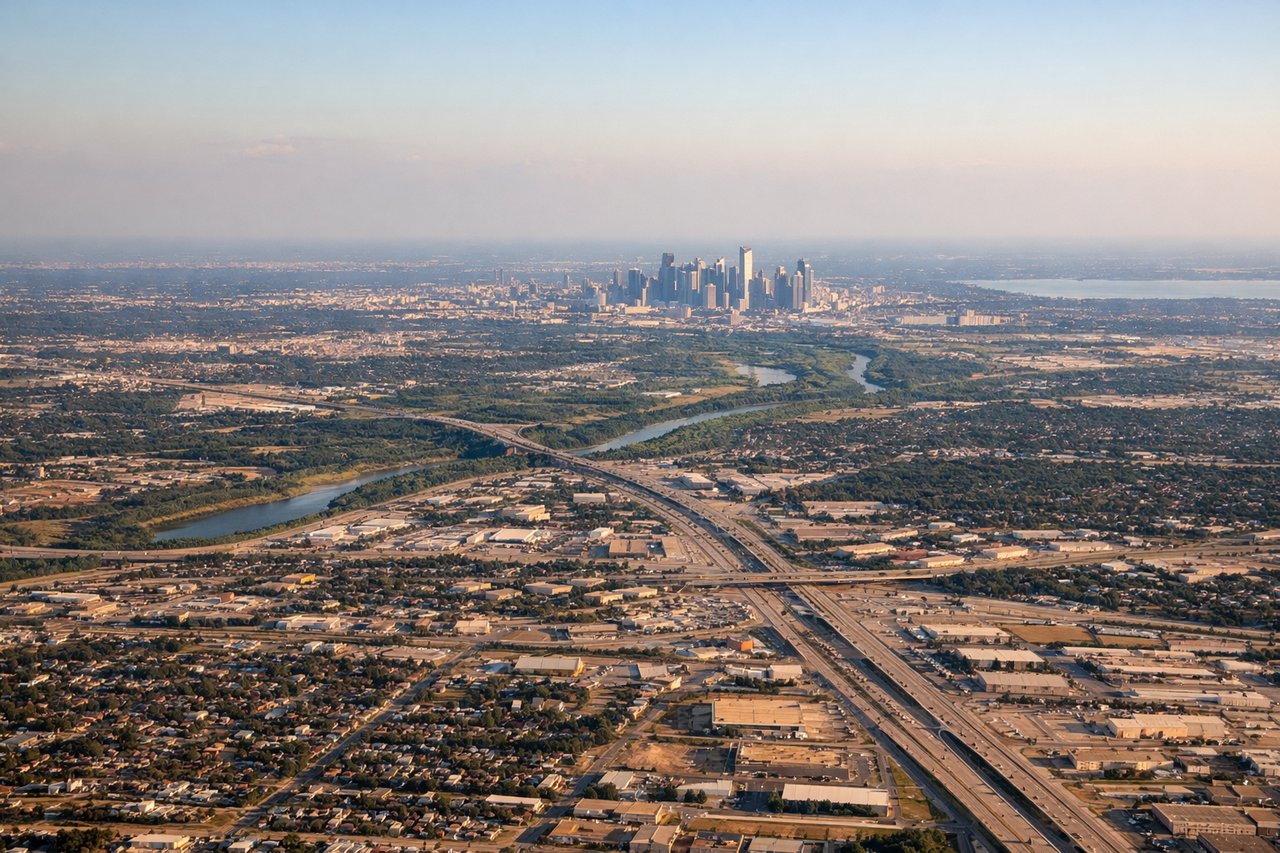
Takeoff from DFW
RIGHTDeparting DFW to the southeast, the right side offers a brief glimpse of the Dallas-Fort Worth urban sprawl and Joe Pool Lake before the plane settles into cruise over the Piney Woods of East Texas, while the left side shows only flat farmland.
Landing at PNS
RIGHTOn approach into Pensacola, the right side of the aircraft faces south toward Pensacola Bay, Santa Rosa Sound, and the barrier islands along the Gulf of Mexico, offering a striking coastal view during the final descent.
Landmarks on this routeAll landmarks →
Will your flight be in sunlight?
Pick a date and time in the Sun Map to watch the sun move across your whole flight.
About This Route
Which side of the plane should I sit on flying from Dallas Fort Worth International (DFW) to Pensacola Rgnl (PNS)?
Sit on the Right side of the plane for the best views on flights from Dallas-Fort Worth to Pensacola. The right side wins because it faces the Gulf of Mexico corridor, offering coastal bays, barrier islands, and the scenic Pensacola Bay approach, while the left side over this route stays over flat, featureless interior terrain the entire flight.
What can I see during takeoff from Dallas Fort Worth International in Dallas-Fort Worth?
During takeoff from Dallas Fort Worth International (DFW), sit on the Right side for the best views. Departing DFW to the southeast, the right side offers a brief glimpse of the Dallas-Fort Worth urban sprawl and Joe Pool Lake before the plane settles into cruise over the Piney Woods of East Texas, while the left side shows only flat farmland. Notable sights include: Dallas-Fort Worth metro skyline, Joe Pool Lake, East Texas Piney Woods.
What can I see when landing at Pensacola Rgnl in Pensacola?
When landing at Pensacola Rgnl (PNS), sit on the Right side for the best views. On approach into Pensacola, the right side of the aircraft faces south toward Pensacola Bay, Santa Rosa Sound, and the barrier islands along the Gulf of Mexico, offering a striking coastal view during the final descent. Notable sights include: Pensacola Bay, Santa Rosa Island, Gulf of Mexico coastline, Perdido Key.
How long is the flight from Dallas-Fort Worth to Pensacola?
The flight from Dallas Fort Worth International (DFW) to Pensacola Rgnl (PNS) takes about 1 hour 50 minutes. The shortest flight path between them is 603 miles (970 km); winds and air traffic control usually add a few percent.
What does the Dallas-Fort Worth to Pensacola flight path pass over?
Mississippi River crossing near the Louisiana-Mississippi border, Pearl River basin, and the pine forests of southern Mississippi before descending toward the Gulf coast