Both sides score equally for the full flight due to the route's geography: the right side wins on departure with coastal scenery, but the left side wins decisively on arrival with Nashville's urban landscape and Cumberland River. The left side's landing experience provides more concentrated visual interest and recognizable landmarks, making it the better overall choice for a passenger prioritizing scenic value across the entire flight.
Flown DJT to BNA? Did we get it right?
Flight Path
West Palm Beach to Nashville is 759 miles (1,221 km), a flight of about 2 hours 15 minutes.
Georgia-Tennessee border region with the Appalachian foothills, including the Blue Ridge Mountains to the east; the Tennessee River valley and its reservoirs (Watts Bar Lake, Chickamauga Lake); transition from coastal Florida terrain through the flat to gently rolling Piedmont and into the Cumberland Plateau region of middle Tennessee
Great circle distance and headings ›Phase by phase
Takeoff from DJT
RIGHTRight side captures the Atlantic coastline and barrier islands of southeast Florida during initial climb, including the developed beachfront of West Palm Beach and the Indian River Lagoon system. Left side faces inland over flat, featureless terrain immediately after departure.
Landing at BNA
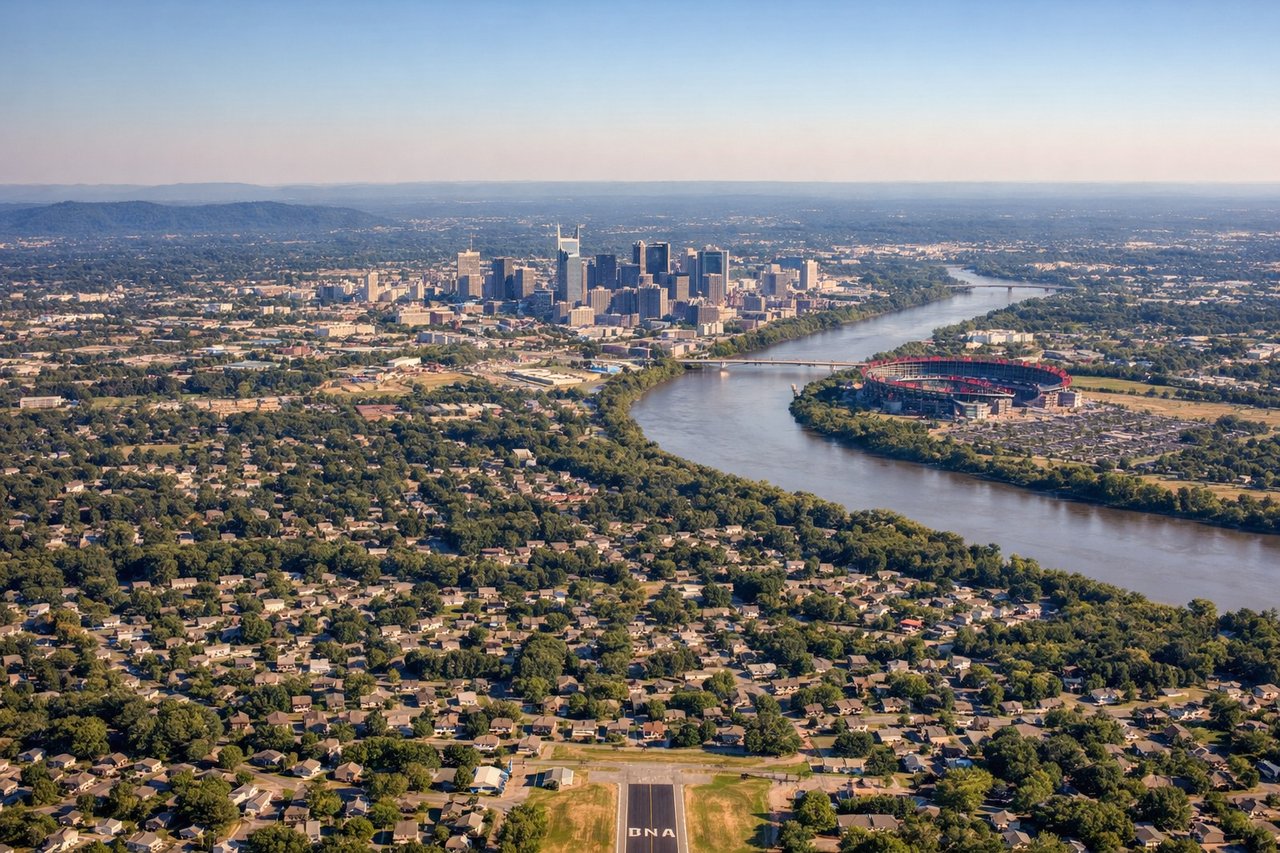
LEFTLeft side provides views of Nashville's urban landscape and the Cumberland River during approach and descent. The city skyline, river bends, and surrounding terrain offer more visual interest than the right side's approach over suburban sprawl and open countryside.
Will your flight be in sunlight?
Pick a date and time in the Sun Map to watch the sun move across your whole flight.
About This Route
Which side of the plane should I sit on flying from President Donald J. Trump International Airport (DJT) to Nashville International (BNA)?
Sit on the Left side of the plane for the best views on flights from West Palm Beach to Nashville. Both sides score equally for the full flight due to the route's geography: the right side wins on departure with coastal scenery, but the left side wins decisively on arrival with Nashville's urban landscape and Cumberland River. The left side's landing experience provides more concentrated visual interest and recognizable landmarks, making it the better overall choice for a passenger prioritizing scenic value across the entire flight.
What can I see during takeoff from President Donald J. Trump International Airport in West Palm Beach?
During takeoff from President Donald J. Trump International Airport (DJT), sit on the Right side for the best views. Right side captures the Atlantic coastline and barrier islands of southeast Florida during initial climb, including the developed beachfront of West Palm Beach and the Indian River Lagoon system. Left side faces inland over flat, featureless terrain immediately after departure. Notable sights include: Atlantic Ocean and Florida coastline, Indian River Lagoon barrier islands, West Palm Beach urban development, Lake Okeechobee (visible at higher altitude during northwestward climb).
What can I see when landing at Nashville International in Nashville?
When landing at Nashville International (BNA), sit on the Left side for the best views. Left side provides views of Nashville's urban landscape and the Cumberland River during approach and descent. The city skyline, river bends, and surrounding terrain offer more visual interest than the right side's approach over suburban sprawl and open countryside. Notable sights include: Nashville downtown skyline and Broadway district, Cumberland River with distinctive meanders, Shelby Park and urban green spaces, suburban development and rolling terrain of middle Tennessee.
How long is the flight from West Palm Beach to Nashville?
The flight from President Donald J. Trump International Airport (DJT) to Nashville International (BNA) takes about 2 hours 15 minutes. The shortest flight path between them is 759 miles (1,221 km); winds and air traffic control usually add a few percent.
What does the West Palm Beach to Nashville flight path pass over?
Georgia-Tennessee border region with the Appalachian foothills, including the Blue Ridge Mountains to the east; the Tennessee River valley and its reservoirs (Watts Bar Lake, Chickamauga Lake); transition from coastal Florida terrain through the flat to gently rolling Piedmont and into the Cumberland Plateau region of middle Tennessee