Right side scores higher due to superior landing scenery—the San Gabriel Mountains provide dramatic terrain variety and visual interest during descent into LAX, while the Moscow departure from the right side offers modest urban interest. The takeoff from DME is relatively flat on both sides, but the landing approach into LAX on the right side is substantially more scenic than the left, which faces open ocean. Right side captures the geographic transition from mountains to basin to coast.
Flown DME to LAX? Did we get it right?
Flight Path
Moscow to Los Angeles is 6,106 miles (9,827 km), a flight of about 10 hours 15 minutes.
Arctic Ocean coastline (Barents Sea region), Ural Mountains (distant, northern route), Siberian taiga forests, Bering Strait region, Aleutian Islands (far north of typical routing), Canadian Arctic archipelago, Rocky Mountains (Alberta/British Columbia), Great Basin desert (Nevada/Utah), Sierra Nevada range
Great circle distance and headings ›


Phase by phase
Takeoff from DME
RIGHTRight side captures Moscow's urban sprawl and the Moskva River valley during departure. Left side faces open steppe with minimal landmarks during the initial climb-out from Domodedovo.
Landing at LAX
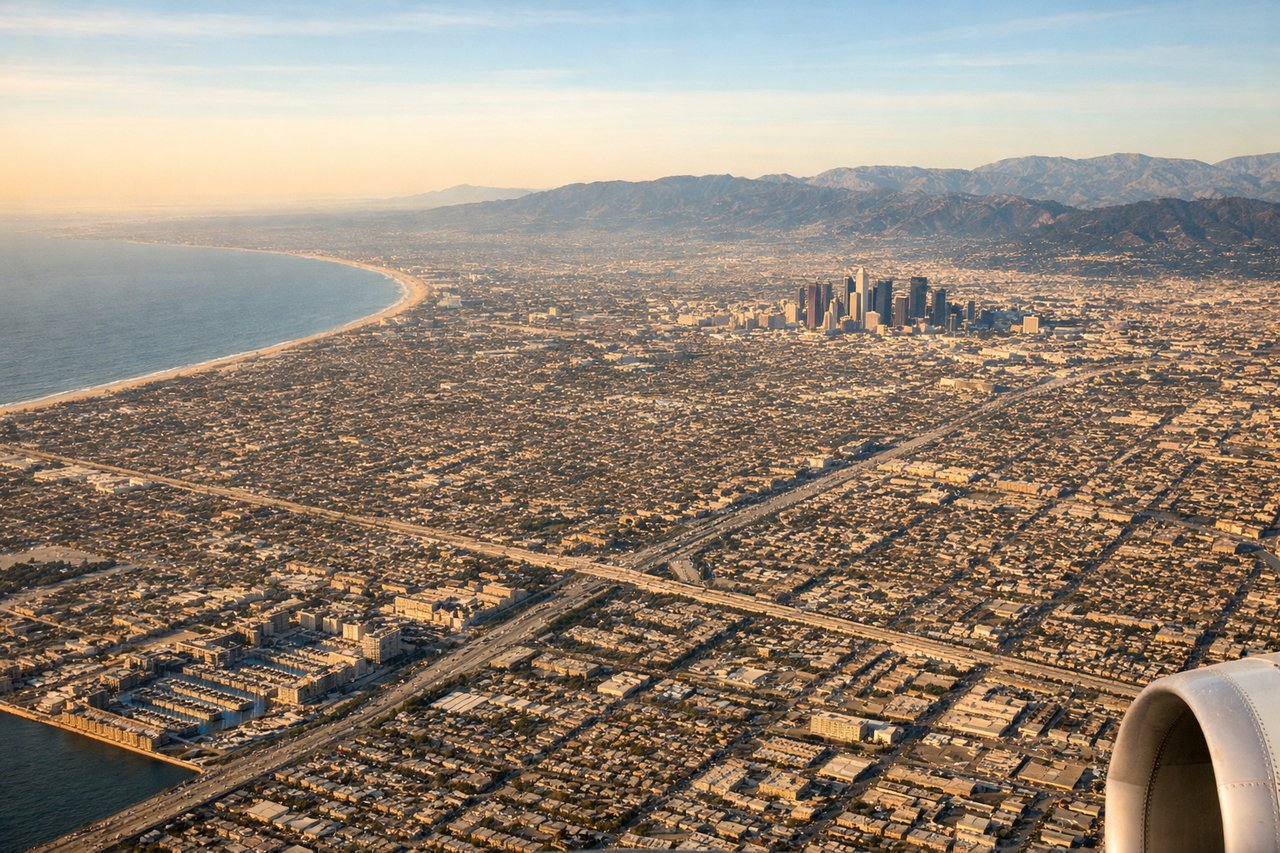
RIGHTRight side offers the dramatic Sierra Nevada and San Gabriel Mountains as the aircraft descends into the Los Angeles basin, plus the sprawling urban grid of greater Los Angeles. Left side faces the Pacific Ocean for most of the approach, with only the coastal plain visible near landing.
Will your flight be in sunlight?
Pick a date and time in the Sun Map to watch the sun move across your whole flight.
About This Route
Which side of the plane should I sit on flying from Domodedovo International Airport (DME) to Los Angeles International (LAX)?
Sit on the Right side of the plane for the best views on flights from Moscow to Los Angeles. Right side scores higher due to superior landing scenery—the San Gabriel Mountains provide dramatic terrain variety and visual interest during descent into LAX, while the Moscow departure from the right side offers modest urban interest. The takeoff from DME is relatively flat on both sides, but the landing approach into LAX on the right side is substantially more scenic than the left, which faces open ocean. Right side captures the geographic transition from mountains to basin to coast.
What can I see during takeoff from Domodedovo International Airport in Moscow?
During takeoff from Domodedovo International Airport (DME), sit on the Right side for the best views. Right side captures Moscow's urban sprawl and the Moskva River valley during departure. Left side faces open steppe with minimal landmarks during the initial climb-out from Domodedovo. Notable sights include: Moskva River meanders, Moscow city center skyline (distant), suburban ring roads, Domodedovo airport infrastructure.
What can I see when landing at Los Angeles International in Los Angeles?
When landing at Los Angeles International (LAX), sit on the Right side for the best views. Right side offers the dramatic Sierra Nevada and San Gabriel Mountains as the aircraft descends into the Los Angeles basin, plus the sprawling urban grid of greater Los Angeles. Left side faces the Pacific Ocean for most of the approach, with only the coastal plain visible near landing. Notable sights include: San Gabriel Mountains (snow-capped peaks visible on clear days), Los Angeles basin urban grid, Pacific coastline near Santa Monica, LAX airport and Long Beach harbor.
How long is the flight from Moscow to Los Angeles?
The flight from Domodedovo International Airport (DME) to Los Angeles International (LAX) takes about 10 hours 15 minutes. The shortest flight path between them is 6,106 miles (9,827 km); winds and air traffic control usually add a few percent.
What does the Moscow to Los Angeles flight path pass over?
Arctic Ocean coastline (Barents Sea region), Ural Mountains (distant, northern route), Siberian taiga forests, Bering Strait region, Aleutian Islands (far north of typical routing), Canadian Arctic archipelago, Rocky Mountains (Alberta/British Columbia), Great Basin desert (Nevada/Utah), Sierra Nevada range