Dammam to Colombo is 2,383 miles (3,835 km), a flight of about 5 hours 10 minutes.
Left seats capture the most dramatic geography: the Persian Gulf departure, the Arabian Sea crossing, and the Indian Ocean approach with Colombo's harbor and coastal features. The route's southwesterly track favors left-side views of major water bodies and coastal landmarks.
Flight Path
The flight crosses the Arabian Sea in a southwest direction. At cruise altitude, the Oman coast (Muscat region) may be visible to the left on clear days during the first hour. The vast open Arabian Sea dominates the mid-flight segment with no significant landmarks. As the aircraft approaches Sri Lanka, the island's northern coast becomes visible, with the Jaffna Peninsula and Mullaitivu region appearing first, followed by the central highlands (Kandy plateau) visible as elevated terrain inland from the western approach path.
Great circle distance and headings ›


.jpeg?width=600)
Phase by phase
Takeoff from DMM
RIGHTDMM typically departs to the east or northeast. Right-side seats offer views of the Persian Gulf coastline and the shallow waters extending toward Bahrain, with the industrial port facilities of Dammam visible below during initial climb.
Landing at CMB
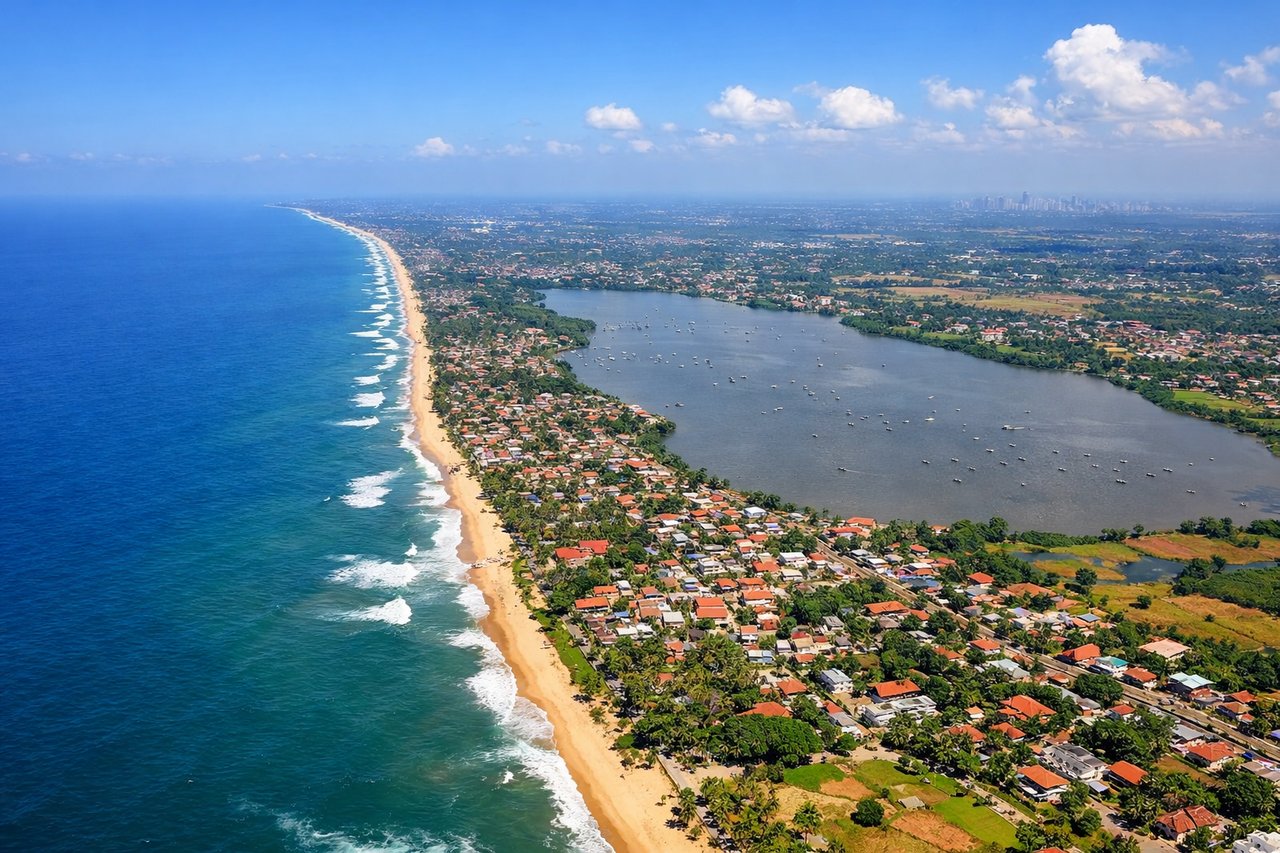
LEFTCMB typically lands from the west on runway 04. Left-side seats provide excellent views of the Indian Ocean approach, the Colombo harbor with its breakwaters, and the city's western coastal districts during descent. The Negombo Lagoon and surrounding wetlands are also visible on approach.
Landmarks on this routeAll landmarks →
Will your flight be in sunlight?
Pick a date and time in the Sun Map to watch the sun move across your whole flight.
About This Route
Which side of the plane should I sit on flying from King Fahd International (DMM) to Bandaranaike International (CMB)?
Sit on the Left side of the plane for the best views on flights from Dammam to Colombo. Left seats capture the most dramatic geography: the Persian Gulf departure, the Arabian Sea crossing, and the Indian Ocean approach with Colombo's harbor and coastal features. The route's southwesterly track favors left-side views of major water bodies and coastal landmarks.
What can I see during takeoff from King Fahd International in Dammam?
During takeoff from King Fahd International (DMM), sit on the Right side for the best views. DMM typically departs to the east or northeast. Right-side seats offer views of the Persian Gulf coastline and the shallow waters extending toward Bahrain, with the industrial port facilities of Dammam visible below during initial climb. Notable sights include: Persian Gulf (immediate offshore waters), Dammam port and industrial zone, Khobar skyline to the south, shallow Gulf bathymetry with visible sandbars.
What can I see when landing at Bandaranaike International in Colombo?
When landing at Bandaranaike International (CMB), sit on the Left side for the best views. CMB typically lands from the west on runway 04. Left-side seats provide excellent views of the Indian Ocean approach, the Colombo harbor with its breakwaters, and the city's western coastal districts during descent. The Negombo Lagoon and surrounding wetlands are also visible on approach. Notable sights include: Indian Ocean, Colombo harbor and breakwaters, Negombo Lagoon to the north, Colombo city skyline and western suburbs.
How long is the flight from Dammam to Colombo?
The flight from King Fahd International (DMM) to Bandaranaike International (CMB) takes about 5 hours 10 minutes. The shortest flight path between them is 2,383 miles (3,835 km); winds and air traffic control usually add a few percent.
What does the Dammam to Colombo flight path pass over?
The flight crosses the Arabian Sea in a southwest direction. At cruise altitude, the Oman coast (Muscat region) may be visible to the left on clear days during the first hour. The vast open Arabian Sea dominates the mid-flight segment with no significant landmarks. As the aircraft approaches Sri Lanka, the island's northern coast becomes visible, with the Jaffna Peninsula and Mullaitivu region appearing first, followed by the central highlands (Kandy plateau) visible as elevated terrain inland from the western approach path.