Legazpi to Manila is 203 miles (326 km), a flight of about 50 minutes.
While takeoff offers dramatic volcanic scenery, the landing approach provides more varied and extensive views—Laguna de Bay is a massive, unmissable feature, and the Sierra Madre backdrop adds significant visual interest. Left seats capture the most geographically diverse segment of this short flight.
Flight Path
Tayabas Bay (Lamon Bay) lies roughly midway along the northwestward flight path; the Caraballo Mountains form a distant backdrop to the west; the transition from Bicol's volcanic terrain to the Calabarzon's lowland plains occurs over the central portion of the route.
Great circle distance and headings ›Phase by phase
Takeoff from DRP
RIGHTRight-side seats capture the immediate volcanic landscape east of Legazpi. The aircraft departs northwestward, and right-side windows frame Mayon Volcano's distinctive cone and the Bicol Peninsula's eastern coastline as you climb out.
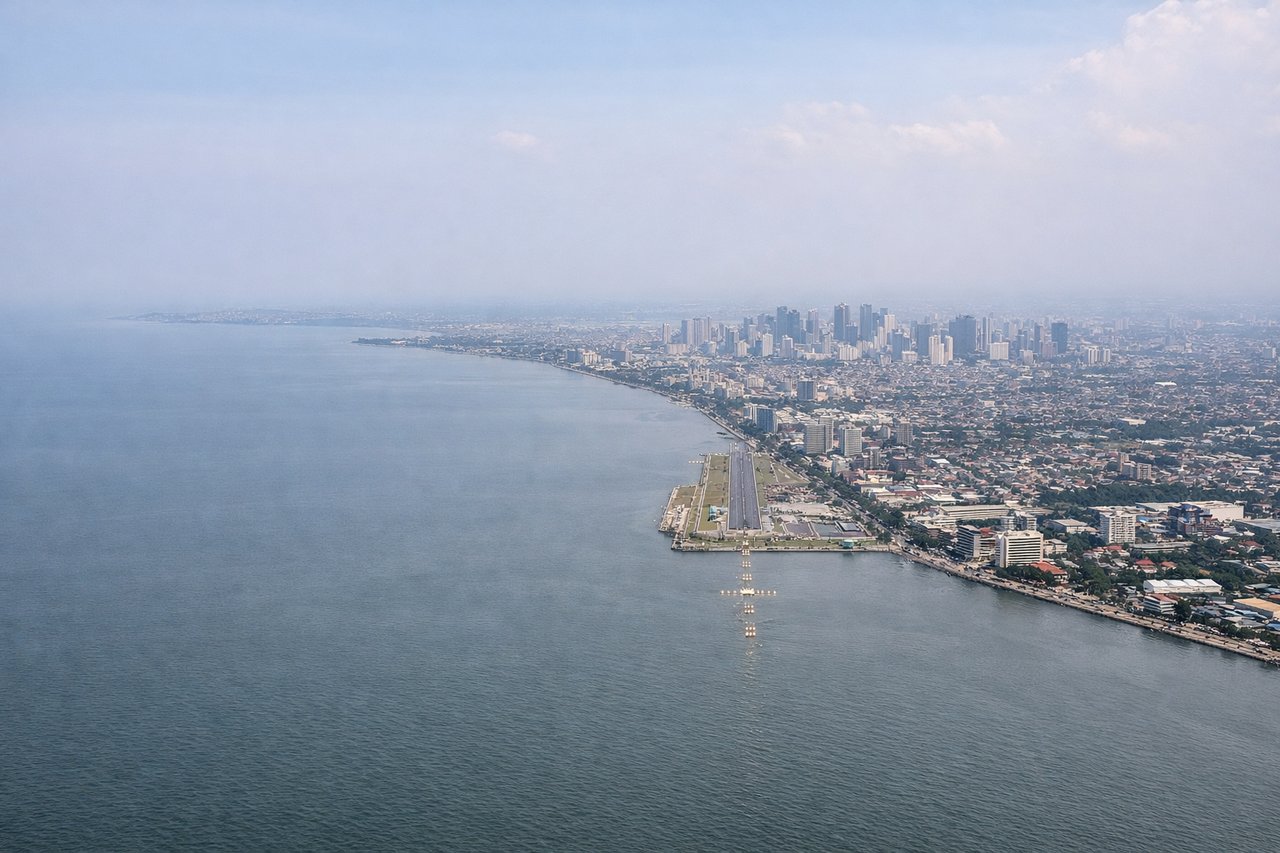
Landing at MNL
LEFTLeft-side seats offer the best views during descent into Manila. The aircraft approaches from the southeast, and left windows frame Laguna de Bay (Southeast Asia's largest freshwater lake), the Calabarzon industrial region, and the Sierra Madre mountain range before final approach over Manila Bay.
Landmarks on this routeAll landmarks →
Will your flight be in sunlight?
Pick a date and time in the Sun Map to watch the sun move across your whole flight.
About This Route
Which side of the plane should I sit on flying from Bicol International Airport (DRP) to Ninoy Aquino International (MNL)?
Sit on the Left side of the plane for the best views on flights from Legazpi to Manila. While takeoff offers dramatic volcanic scenery, the landing approach provides more varied and extensive views—Laguna de Bay is a massive, unmissable feature, and the Sierra Madre backdrop adds significant visual interest. Left seats capture the most geographically diverse segment of this short flight.
What can I see during takeoff from Bicol International Airport in Legazpi?
During takeoff from Bicol International Airport (DRP), sit on the Right side for the best views. Right-side seats capture the immediate volcanic landscape east of Legazpi. The aircraft departs northwestward, and right-side windows frame Mayon Volcano's distinctive cone and the Bicol Peninsula's eastern coastline as you climb out. Notable sights include: Mayon Volcano (2,462 m, symmetrical cinder cone), Albay Gulf (Lagonoy Gulf to the east), Cagraray Island, Bicol Peninsula ridgeline.
What can I see when landing at Ninoy Aquino International in Manila?
When landing at Ninoy Aquino International (MNL), sit on the Left side for the best views. Left-side seats offer the best views during descent into Manila. The aircraft approaches from the southeast, and left windows frame Laguna de Bay (Southeast Asia's largest freshwater lake), the Calabarzon industrial region, and the Sierra Madre mountain range before final approach over Manila Bay. Notable sights include: Laguna de Bay (largest freshwater lake in the Philippines), Sierra Madre mountain range (eastern backdrop), Calabarzon industrial corridor (Cavite-Laguna-Quezon provinces), Manila Bay coastline.
How long is the flight from Legazpi to Manila?
The flight from Bicol International Airport (DRP) to Ninoy Aquino International (MNL) takes about 50 minutes. The shortest flight path between them is 203 miles (326 km); winds and air traffic control usually add a few percent.
What does the Legazpi to Manila flight path pass over?
Tayabas Bay (Lamon Bay) lies roughly midway along the northwestward flight path; the Caraballo Mountains form a distant backdrop to the west; the transition from Bicol's volcanic terrain to the Calabarzon's lowland plains occurs over the central portion of the route.