Right-side seats dominate both departure and arrival with superior scenic value. Takeoff offers the Detroit River and lakes; landing showcases the unique Everglades wetlands and Biscayne Bay—two distinctly different and visually compelling landscapes.
Flown DTW to MIA? Did we get it right?
Flight Path
Detroit to Miami is 1,148 miles (1,847 km), a flight of about 3 hours 15 minutes.
Georgia-Florida border region with the Chattahoochee River valley, central Florida's lake district and citrus farmland, and the transition from temperate deciduous forest to subtropical wetlands and coastal plain
Great circle distance and headings ›

Phase by phase
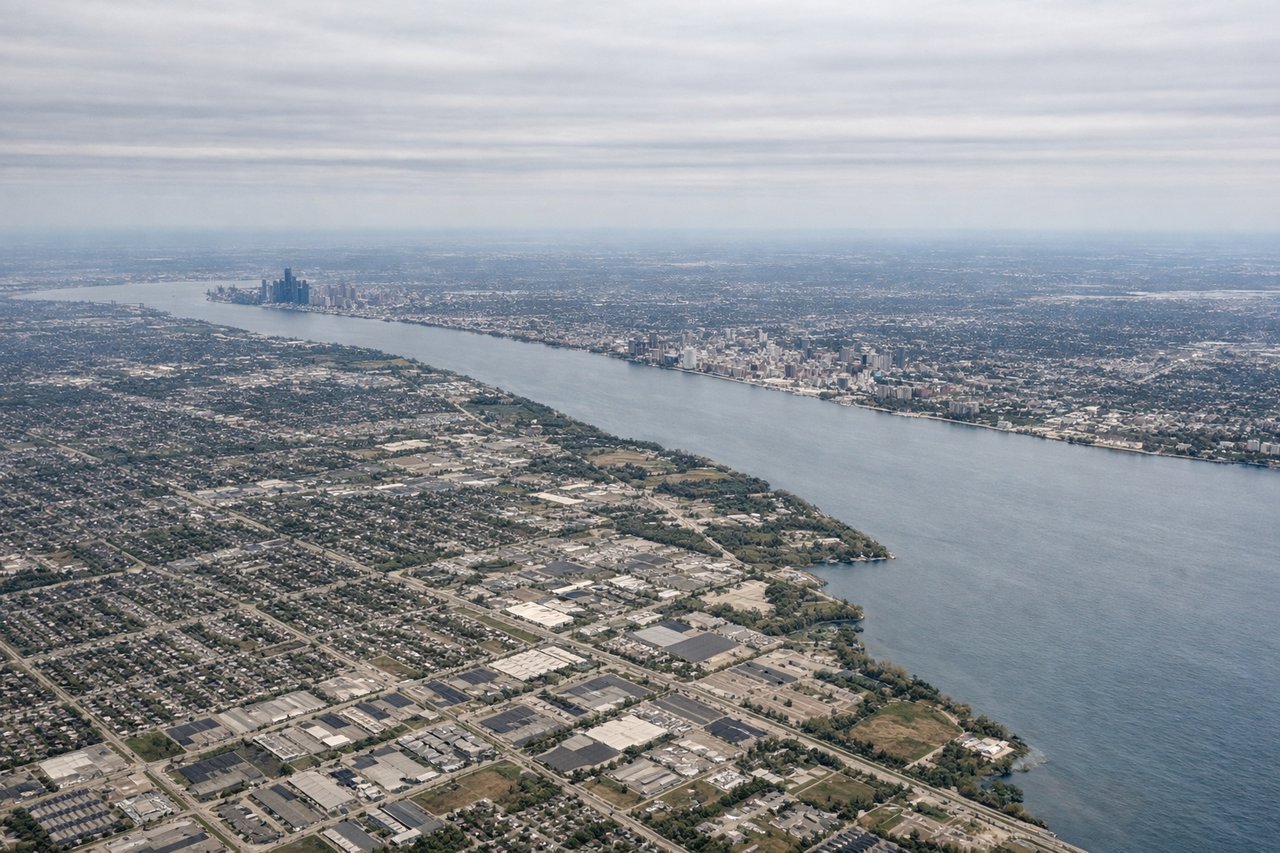
Takeoff from DTW
RIGHTRight-side seats offer views of the Detroit River, Lake St. Clair, and the sprawling suburban landscape east of the airport during the initial climb. The river and lakes provide clear visual contrast against the urban grid.
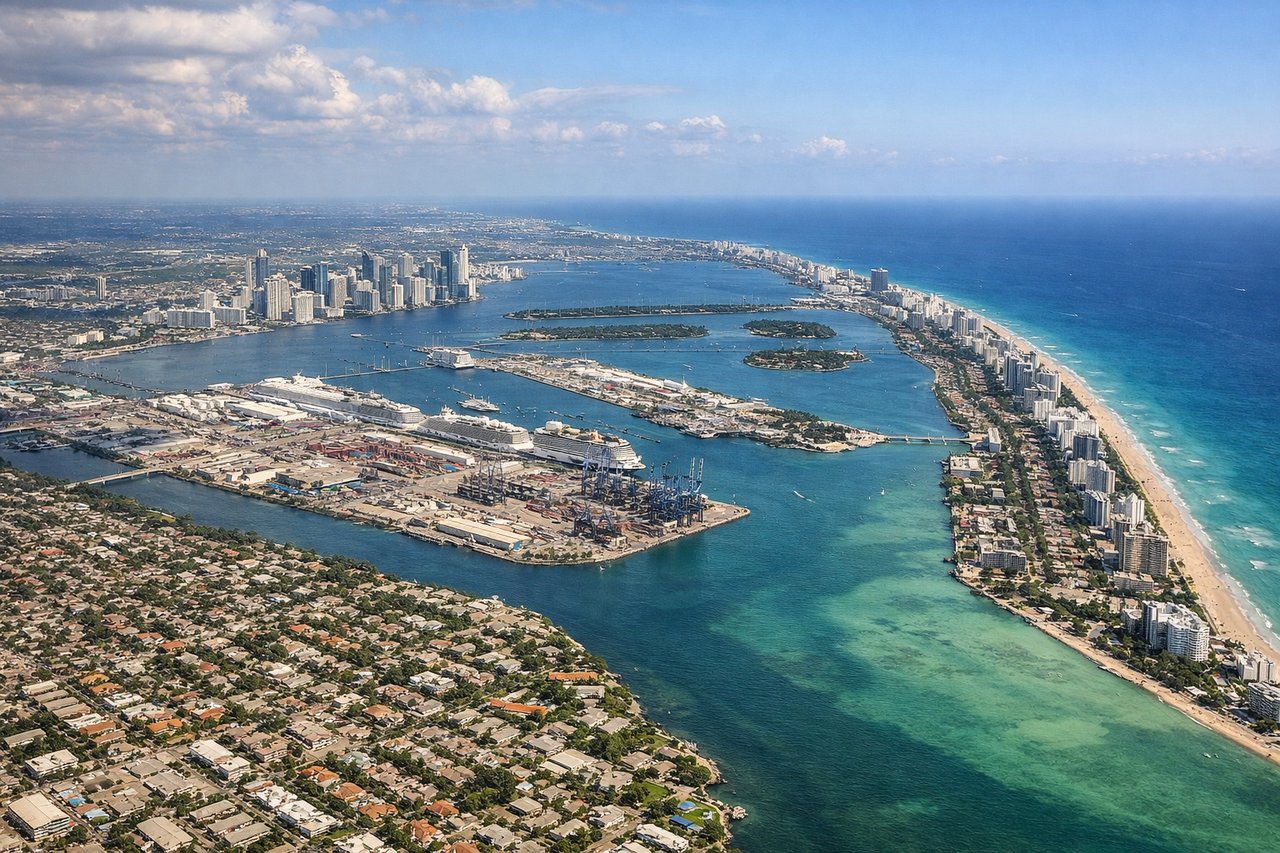
Landing at MIA
RIGHTRight-side seats provide excellent views of the Everglades wetlands, Biscayne Bay, and the Miami coastline during descent. The contrast between dark mangrove channels and shallow turquoise water is visually striking and unique to this region.
Will your flight be in sunlight?
Pick a date and time in the Sun Map to watch the sun move across your whole flight.
About This Route
Which side of the plane should I sit on flying from Detroit Metro Wayne Co (DTW) to Miami International (MIA)?
Sit on the Right side of the plane for the best views on flights from Detroit to Miami. Right-side seats dominate both departure and arrival with superior scenic value. Takeoff offers the Detroit River and lakes; landing showcases the unique Everglades wetlands and Biscayne Bay—two distinctly different and visually compelling landscapes.
What can I see during takeoff from Detroit Metro Wayne Co in Detroit?
During takeoff from Detroit Metro Wayne Co (DTW), sit on the Right side for the best views. Right-side seats offer views of the Detroit River, Lake St. Clair, and the sprawling suburban landscape east of the airport during the initial climb. The river and lakes provide clear visual contrast against the urban grid. Notable sights include: Detroit River, Lake St. Clair, Lake Erie (distant), suburban Detroit sprawl.
What can I see when landing at Miami International in Miami?
When landing at Miami International (MIA), sit on the Right side for the best views. Right-side seats provide excellent views of the Everglades wetlands, Biscayne Bay, and the Miami coastline during descent. The contrast between dark mangrove channels and shallow turquoise water is visually striking and unique to this region. Notable sights include: Everglades wetlands, Biscayne Bay, Miami Beach barrier island, downtown Miami skyline.
How long is the flight from Detroit to Miami?
The flight from Detroit Metro Wayne Co (DTW) to Miami International (MIA) takes about 3 hours 15 minutes. The shortest flight path between them is 1,148 miles (1,847 km); winds and air traffic control usually add a few percent.
What does the Detroit to Miami flight path pass over?
Georgia-Florida border region with the Chattahoochee River valley, central Florida's lake district and citrus farmland, and the transition from temperate deciduous forest to subtropical wetlands and coastal plain