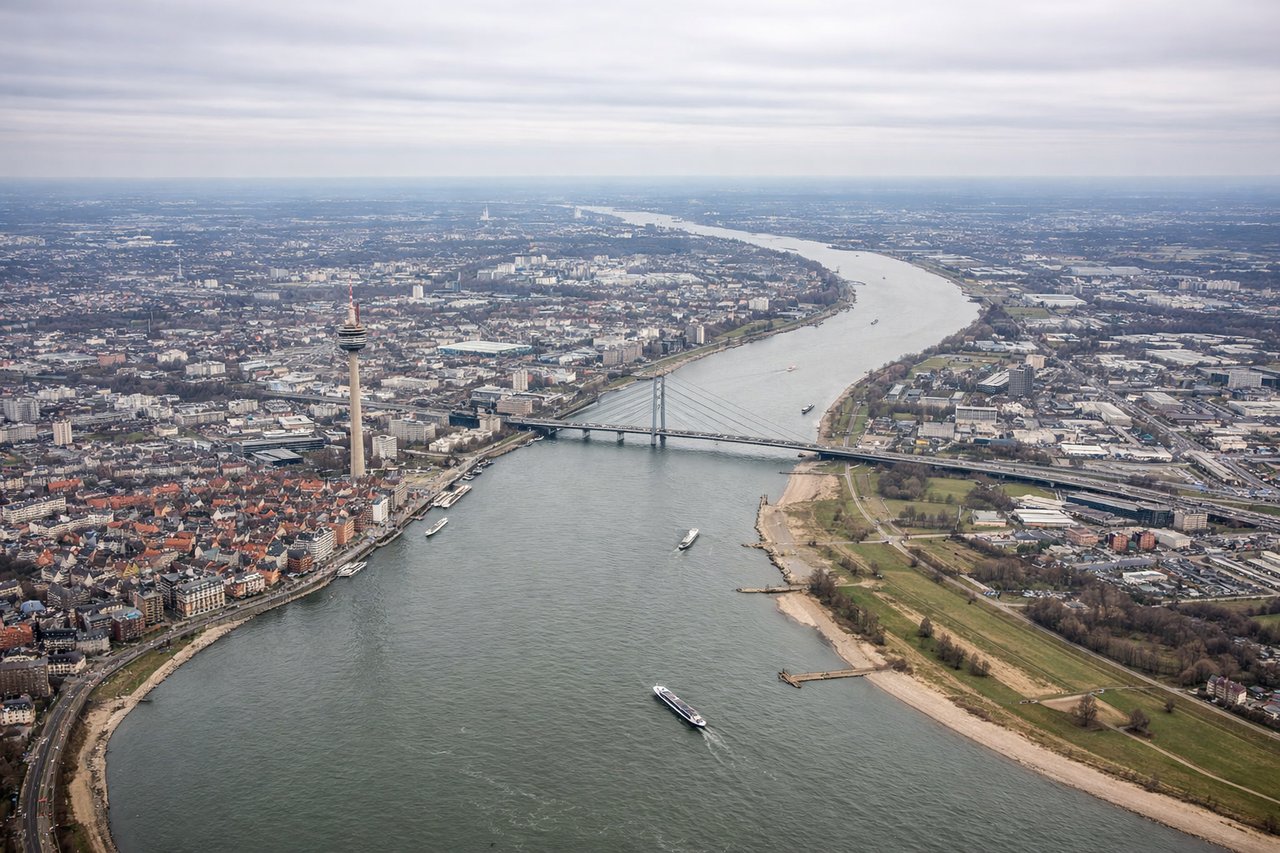
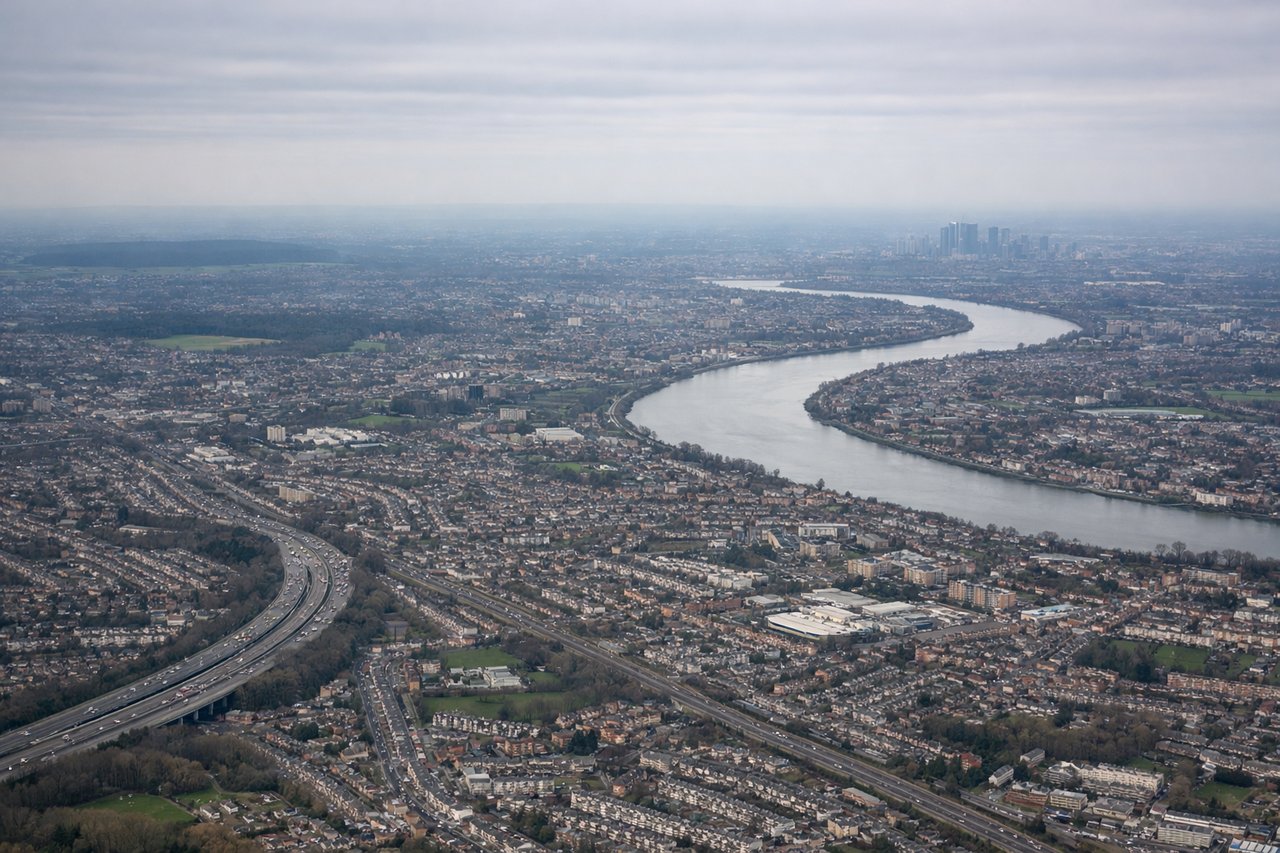
The left side offers a modest but real advantage: a glimpse of Düsseldorf and the Rhine at departure, plus the more distinctive Thames-and-Canary-Wharf view during the London approach, whereas the right side mostly overlooks flat Dutch farmland and open North Sea.
Flight Path
Flat lowlands of the Netherlands or Belgium, the southern North Sea crossing, and the low-lying English coastline near the Thames Estuary
Great circle distance and headings ›
.jpeg?width=600)
Phase by phase
Takeoff from DUS
LEFTDeparting DUS on runway 23 toward the southwest, the initial climb passes over the Rhine river and the Düsseldorf skyline before the aircraft turns onto its westbound track, giving left-side passengers a brief but clear view of the river bends and city below.
Landing at LHR
LEFTOn the easterly approach into Heathrow for runway 27L/27R, the descent path follows the Thames corridor through east London, giving left-side passengers views of Canary Wharf's towers, the river's distinctive bends, and the eastern edge of the City of London before landing.
Landmarks on this routeAll landmarks →
Will your flight be in sunlight?
See exactly which side of the plane gets sun and shade at your departure time.
About This Route
Which side of the plane should I sit on flying from Dusseldorf (DUS) to Heathrow (LHR)?
Sit on the Left side of the plane for the best views on flights from Duesseldorf to London. The left side offers a modest but real advantage: a glimpse of Düsseldorf and the Rhine at departure, plus the more distinctive Thames-and-Canary-Wharf view during the London approach, whereas the right side mostly overlooks flat Dutch farmland and open North Sea.
What can I see during takeoff from Dusseldorf in Duesseldorf?
During takeoff from Dusseldorf (DUS), sit on the Left side for the best views. Departing DUS on runway 23 toward the southwest, the initial climb passes over the Rhine river and the Düsseldorf skyline before the aircraft turns onto its westbound track, giving left-side passengers a brief but clear view of the river bends and city below. Notable sights include: Rhine River, Düsseldorf city center, Kennedydamm district.
What can I see when landing at Heathrow in London?
When landing at Heathrow (LHR), sit on the Left side for the best views. On the easterly approach into Heathrow for runway 27L/27R, the descent path follows the Thames corridor through east London, giving left-side passengers views of Canary Wharf's towers, the river's distinctive bends, and the eastern edge of the City of London before landing. Notable sights include: Thames River bends, Canary Wharf skyline, O2 Arena, Essex marshlands near the Thames Estuary.
How long is the flight from Duesseldorf to London?
The flight from Dusseldorf (DUS) to Heathrow (LHR) takes 1h25m.
What does the Duesseldorf to London flight path pass over?
Flat lowlands of the Netherlands or Belgium, the southern North Sea crossing, and the low-lying English coastline near the Thames Estuary