Right side scores higher due to the landing approach over the Western Ghats and Mumbai's dramatic coastal harbor, which provides significant visual variety and landmark density. While left side offers a scenic Dubai departure, the majority of the flight crosses featureless Arabian Sea and desert, whereas the right side's approach compensates with genuine topographic drama and urban complexity.
Flown DWC to BOM? Did we get it right?
Flight Path
Dubai to Bombay is 1,202 miles (1,934 km), a flight of about 2 hours 15 minutes.
Arabian Sea (open water dominates the cruise phase), Oman coastline briefly visible to the north (Muscat region), flat desert terrain inland from the UAE coast, gradual transition to Indian coastal waters as aircraft approaches the Western Ghats escarpment
Great circle distance and headings ›

Phase by phase
Takeoff from DWC
LEFTLeft side captures Dubai's coastal departure over the Persian Gulf, with the Jebel Ali port complex and Dubai's urban sprawl visible during climb-out. Right side shows inland desert with minimal visual interest during takeoff.
Landing at BOM
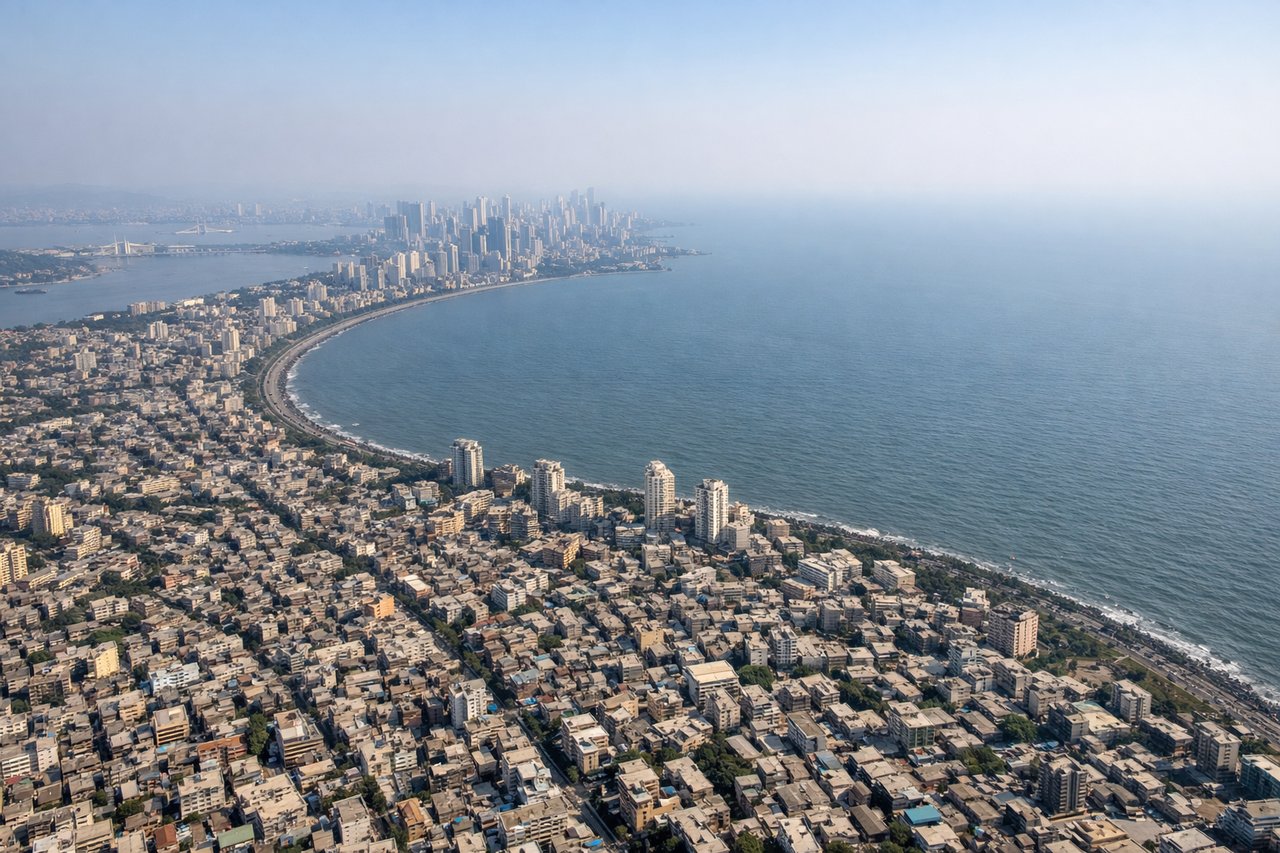
RIGHTRight side offers superior landing approach scenery: the Western Ghats mountain range becomes visible as the aircraft descends toward Mumbai, along with the dramatic coastal transition and Bombay Harbor. Left side shows only open Arabian Sea for the final descent.
Will your flight be in sunlight?
Pick a date and time in the Sun Map to watch the sun move across your whole flight.
About This Route
Which side of the plane should I sit on flying from Al Maktoum International Airport (DWC) to Chhatrapati Shivaji International (BOM)?
Sit on the Right side of the plane for the best views on flights from Dubai to Bombay. Right side scores higher due to the landing approach over the Western Ghats and Mumbai's dramatic coastal harbor, which provides significant visual variety and landmark density. While left side offers a scenic Dubai departure, the majority of the flight crosses featureless Arabian Sea and desert, whereas the right side's approach compensates with genuine topographic drama and urban complexity.
What can I see during takeoff from Al Maktoum International Airport in Dubai?
During takeoff from Al Maktoum International Airport (DWC), sit on the Left side for the best views. Left side captures Dubai's coastal departure over the Persian Gulf, with the Jebel Ali port complex and Dubai's urban sprawl visible during climb-out. Right side shows inland desert with minimal visual interest during takeoff. Notable sights include: Jebel Ali Port (massive container terminal), Dubai coastline and Palm Jumeirah artificial islands, Persian Gulf waters, inland desert plateau.
What can I see when landing at Chhatrapati Shivaji International in Bombay?
When landing at Chhatrapati Shivaji International (BOM), sit on the Right side for the best views. Right side offers superior landing approach scenery: the Western Ghats mountain range becomes visible as the aircraft descends toward Mumbai, along with the dramatic coastal transition and Bombay Harbor. Left side shows only open Arabian Sea for the final descent. Notable sights include: Western Ghats escarpment (distant but visible), Mumbai's coastal sprawl and harbor islands, Bombay Harbor with shipping traffic, Salsette Island and the city's dense urban grid.
How long is the flight from Dubai to Bombay?
The flight from Al Maktoum International Airport (DWC) to Chhatrapati Shivaji International (BOM) takes about 2 hours 15 minutes. The shortest flight path between them is 1,202 miles (1,934 km); winds and air traffic control usually add a few percent.
What does the Dubai to Bombay flight path pass over?
Arabian Sea (open water dominates the cruise phase), Oman coastline briefly visible to the north (Muscat region), flat desert terrain inland from the UAE coast, gradual transition to Indian coastal waters as aircraft approaches the Western Ghats escarpment