While both legs offer scenic value, the right-side takeoff view of the Pyrenees provides the most dramatic and distinctive scenery on this relatively short route. The landing approach is comparable on both sides, making the superior takeoff experience the deciding factor.
Flight Path
The flight path crosses the Mediterranean Sea between the Spanish mainland and Balearic Islands. Notable features include the Ebro River delta region (visible during initial climb), the transition from coastal Spain to open Mediterranean, and the approach to Mallorca's northern Tramuntana Mountains. The Balearic Sea itself offers minimal visual interest—primarily open water—but the dramatic transition from mainland terrain to island geography marks the midpoint of the route.
Great circle distance and headings ›

Phase by phase
Takeoff from EAS
RIGHTRight-side seats offer views of the Pyrenees as the aircraft climbs southeastward from San Sebastian. The mountain range forms a dramatic backdrop to the north and northeast, visible during the initial climb phase before the aircraft turns toward Mallorca.
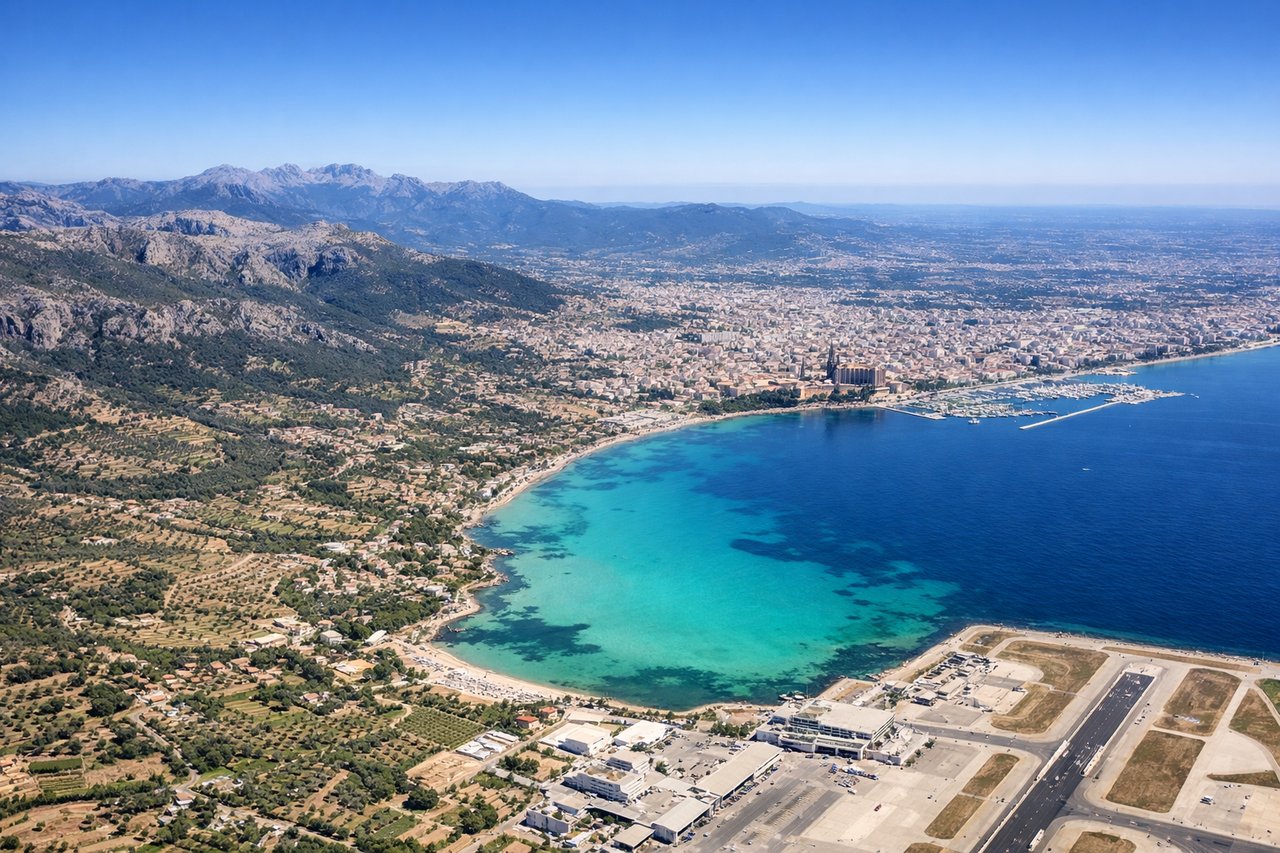
Landing at PMI
LEFTLeft-side seats provide excellent views during descent into Palma. As the aircraft approaches from the northwest, the left wing reveals the Tramuntana Mountains along Mallorca's northern coast, followed by the city of Palma and its harbor on the approach to PMI.
Landmarks on this routeAll landmarks →
Will your flight be in sunlight?
See exactly which side of the plane gets sun and shade at your departure time.
About This Route
Which side of the plane should I sit on flying from San Sebastian (EAS) to Palma De Mallorca (PMI)?
Sit on the Right side of the plane for the best views on flights from San Sebastian to Palma De Mallorca. While both legs offer scenic value, the right-side takeoff view of the Pyrenees provides the most dramatic and distinctive scenery on this relatively short route. The landing approach is comparable on both sides, making the superior takeoff experience the deciding factor.
What can I see during takeoff from San Sebastian in San Sebastian?
During takeoff from San Sebastian (EAS), sit on the Right side for the best views. Right-side seats offer views of the Pyrenees as the aircraft climbs southeastward from San Sebastian. The mountain range forms a dramatic backdrop to the north and northeast, visible during the initial climb phase before the aircraft turns toward Mallorca. Notable sights include: Pyrenees Mountains (northeast), Bay of Biscay coastline (north), Basque Country terrain (south and west).
What can I see when landing at Palma De Mallorca in Palma De Mallorca?
When landing at Palma De Mallorca (PMI), sit on the Left side for the best views. Left-side seats provide excellent views during descent into Palma. As the aircraft approaches from the northwest, the left wing reveals the Tramuntana Mountains along Mallorca's northern coast, followed by the city of Palma and its harbor on the approach to PMI. Notable sights include: Tramuntana Mountains (northern Mallorca coast), Palma city and harbor, Mediterranean Sea.
How long is the flight from San Sebastian to Palma De Mallorca?
The flight from San Sebastian (EAS) to Palma De Mallorca (PMI) takes 1h 15m.
What does the San Sebastian to Palma De Mallorca flight path pass over?
The flight path crosses the Mediterranean Sea between the Spanish mainland and Balearic Islands. Notable features include the Ebro River delta region (visible during initial climb), the transition from coastal Spain to open Mediterranean, and the approach to Mallorca's northern Tramuntana Mountains. The Balearic Sea itself offers minimal visual interest—primarily open water—but the dramatic transition from mainland terrain to island geography marks the midpoint of the route.