The takeoff from Entebbe offers more dramatic and varied scenery with Lake Victoria and surrounding terrain. While the Doha landing provides coastal interest, the overall flight path favors right-side seating for the most visually engaging departure sequence.
Flown EBB to DOH? Did we get it right?
Flight Path
Entebbe to Doha is 2,162 miles (3,480 km), a flight of about 5 hours 15 minutes.
The flight path crosses the Nile River valley and Sudan's terrain (visible around 2-3 hours into flight), then transitions over the Red Sea's northern reaches and the Sinai Peninsula. The Red Sea itself provides striking blue-water contrast against surrounding desert. The flight then crosses into Saudi Arabia's interior plateau before descending toward the Persian Gulf and Qatar. Notable midpoint landmarks include the Nile's broad valley (visible as a green ribbon through desert), the Red Sea's narrow waters (brilliant blue against tan mountains on both sides), and the transition from mountainous terrain to flat desert as the aircraft approaches the Gulf.
Great circle distance and headings ›


Phase by phase
Takeoff from EBB
RIGHTRight-side seats offer views of Lake Victoria as the aircraft climbs northwestward from Entebbe. The lake dominates the immediate landscape and provides striking contrast against the surrounding terrain.
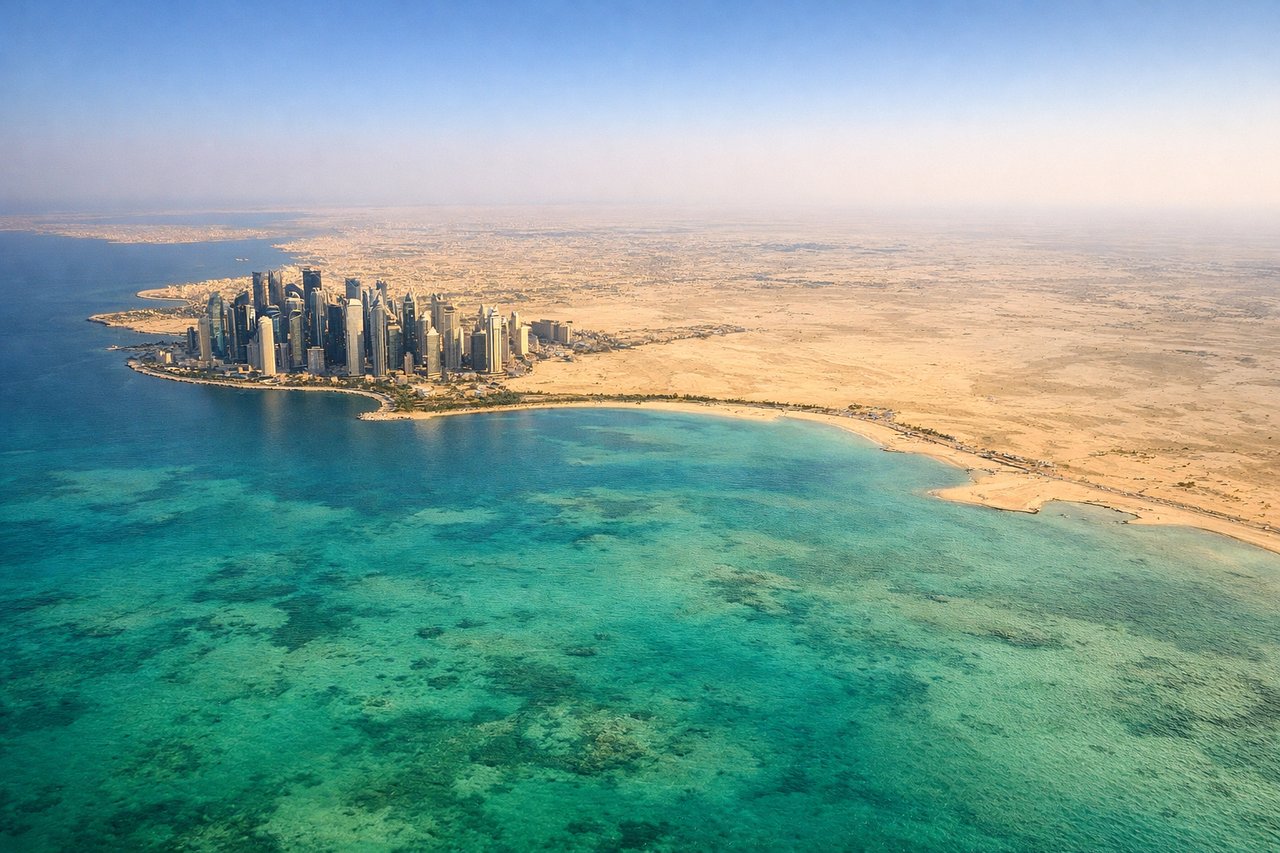
Landing at DOH
LEFTLeft-side seats provide views of the Persian Gulf and Doha's coastal development during descent. The contrast between the turquoise shallow waters and the desert interior creates a visually distinctive approach.
Will your flight be in sunlight?
Pick a date and time in the Sun Map to watch the sun move across your whole flight.
About This Route
Which side of the plane should I sit on flying from Entebbe International (EBB) to Hamad International Airport (DOH)?
Sit on the Right side of the plane for the best views on flights from Entebbe to Doha. The takeoff from Entebbe offers more dramatic and varied scenery with Lake Victoria and surrounding terrain. While the Doha landing provides coastal interest, the overall flight path favors right-side seating for the most visually engaging departure sequence.
What can I see during takeoff from Entebbe International in Entebbe?
During takeoff from Entebbe International (EBB), sit on the Right side for the best views. Right-side seats offer views of Lake Victoria as the aircraft climbs northwestward from Entebbe. The lake dominates the immediate landscape and provides striking contrast against the surrounding terrain. Notable sights include: Lake Victoria (immediate foreground), Kampala city district (visible to the northwest across the water), Rwenzori Mountains (distant horizon to the southwest, weather permitting).
What can I see when landing at Hamad International Airport in Doha?
When landing at Hamad International Airport (DOH), sit on the Left side for the best views. Left-side seats provide views of the Persian Gulf and Doha's coastal development during descent. The contrast between the turquoise shallow waters and the desert interior creates a visually distinctive approach. Notable sights include: Persian Gulf (immediate foreground), Doha waterfront and harbor (center), Qatar's interior desert plateau (background), Bahrain visible across the water (distant horizon to the left).
How long is the flight from Entebbe to Doha?
The flight from Entebbe International (EBB) to Hamad International Airport (DOH) takes about 5 hours 15 minutes. The shortest flight path between them is 2,162 miles (3,480 km); winds and air traffic control usually add a few percent.
What does the Entebbe to Doha flight path pass over?
The flight path crosses the Nile River valley and Sudan's terrain (visible around 2-3 hours into flight), then transitions over the Red Sea's northern reaches and the Sinai Peninsula. The Red Sea itself provides striking blue-water contrast against surrounding desert. The flight then crosses into Saudi Arabia's interior plateau before descending toward the Persian Gulf and Qatar. Notable midpoint landmarks include the Nile's broad valley (visible as a green ribbon through desert), the Red Sea's narrow waters (brilliant blue against tan mountains on both sides), and the transition from mountainous terrain to flat desert as the aircraft approaches the Gulf.