Edinburgh to El Paso is 4,888 miles (7,867 km), a flight of about 9 hours 15 minutes.
While the takeoff offers good Scottish scenery, the landing approach into El Paso provides more dramatic and visually distinctive views. The Franklin Mountains and desert landscape create stronger visual contrast than the relatively subtle terrain around Edinburgh. Right-side seats capture the most compelling portion of this transatlantic route.
Flight Path
The flight path crosses the Atlantic Ocean with no significant landmarks visible for roughly 6 hours. Over the North Atlantic, passengers may see the southern tip of Greenland or the Canadian Arctic islands depending on exact routing. Upon reaching North America, the flight passes over eastern Canada (Labrador/Newfoundland region), then crosses the interior of North America. Notable features include the Canadian Shield terrain, the Great Lakes region (if routed south), and eventually the Great Plains and Rocky Mountain foothills as the aircraft approaches the southwestern United States. The final approach into El Paso crosses the high desert plateau of New Mexico and Texas.
Great circle distance and headings ›

.jpg?width=600)
Phase by phase
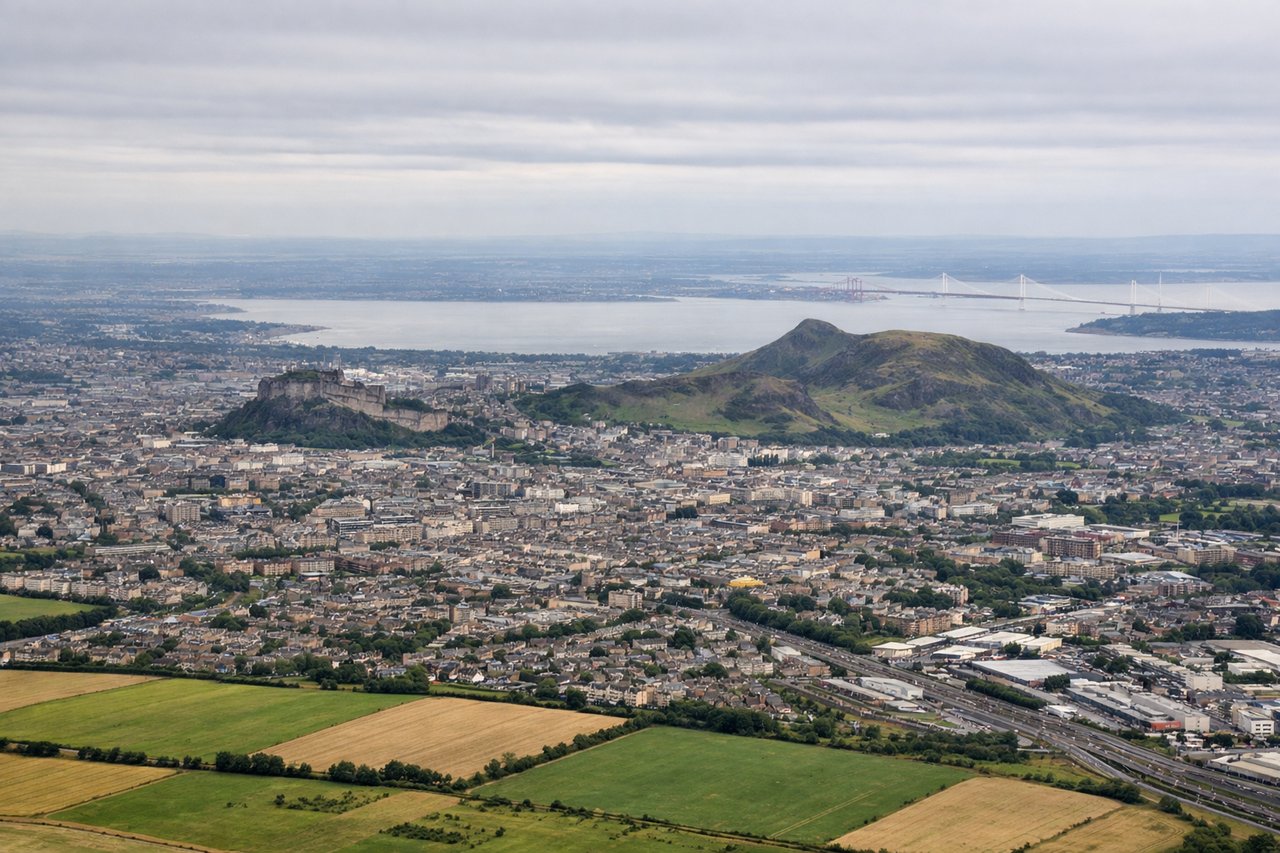
Takeoff from EDI
LEFTLeft-side seats offer views of the Pentland Hills and the Firth of Forth estuary as the aircraft climbs northwest from Edinburgh. Right-side views are dominated by inland terrain with fewer distinctive landmarks during the initial climb.
Landing at ELP
RIGHTRight-side seats provide views of the Franklin Mountains and the Rio Grande valley as the aircraft descends toward El Paso from the northeast. The mountains frame the approach and offer dramatic relief against the desert landscape.
Landmarks on this routeAll landmarks →
Will your flight be in sunlight?
Pick a date and time in the Sun Map to watch the sun move across your whole flight.
About This Route
Which side of the plane should I sit on flying from Edinburgh (EDI) to El Paso International (ELP)?
Sit on the Right side of the plane for the best views on flights from Edinburgh to El Paso. While the takeoff offers good Scottish scenery, the landing approach into El Paso provides more dramatic and visually distinctive views. The Franklin Mountains and desert landscape create stronger visual contrast than the relatively subtle terrain around Edinburgh. Right-side seats capture the most compelling portion of this transatlantic route.
What can I see during takeoff from Edinburgh in Edinburgh?
During takeoff from Edinburgh (EDI), sit on the Left side for the best views. Left-side seats offer views of the Pentland Hills and the Firth of Forth estuary as the aircraft climbs northwest from Edinburgh. Right-side views are dominated by inland terrain with fewer distinctive landmarks during the initial climb. Notable sights include: Pentland Hills, Firth of Forth, Edinburgh city center, Forth Road Bridge.
What can I see when landing at El Paso International in El Paso?
When landing at El Paso International (ELP), sit on the Right side for the best views. Right-side seats provide views of the Franklin Mountains and the Rio Grande valley as the aircraft descends toward El Paso from the northeast. The mountains frame the approach and offer dramatic relief against the desert landscape. Notable sights include: Franklin Mountains, Rio Grande valley, El Paso city lights, Chihuahuan Desert.
How long is the flight from Edinburgh to El Paso?
The flight from Edinburgh (EDI) to El Paso International (ELP) takes about 9 hours 15 minutes. The shortest flight path between them is 4,888 miles (7,867 km); winds and air traffic control usually add a few percent.
What does the Edinburgh to El Paso flight path pass over?
The flight path crosses the Atlantic Ocean with no significant landmarks visible for roughly 6 hours. Over the North Atlantic, passengers may see the southern tip of Greenland or the Canadian Arctic islands depending on exact routing. Upon reaching North America, the flight passes over eastern Canada (Labrador/Newfoundland region), then crosses the interior of North America. Notable features include the Canadian Shield terrain, the Great Lakes region (if routed south), and eventually the Great Plains and Rocky Mountain foothills as the aircraft approaches the southwestern United States. The final approach into El Paso crosses the high desert plateau of New Mexico and Texas.