Edinburgh to Cork is 352 miles (566 km), a flight of about 1 hour 15 minutes.
While landing offers good coastal views on the right, the takeoff from Edinburgh provides more dramatic and sustained scenery with the Firth of Forth and Pentland Hills. The flight path itself crosses the Irish Sea with limited mid-flight landmarks, making the departure experience the stronger choice overall.
Flight Path
The flight crosses the Irish Sea at altitude (typically 20,000-25,000 feet), offering views of the Scottish coastline receding eastward and the Irish coastline approaching from the southwest. The Isle of Man may be visible to the south depending on exact routing. The crossing itself shows open water with minimal distinguishing features at cruise altitude.
Great circle distance and headings ›Phase by phase
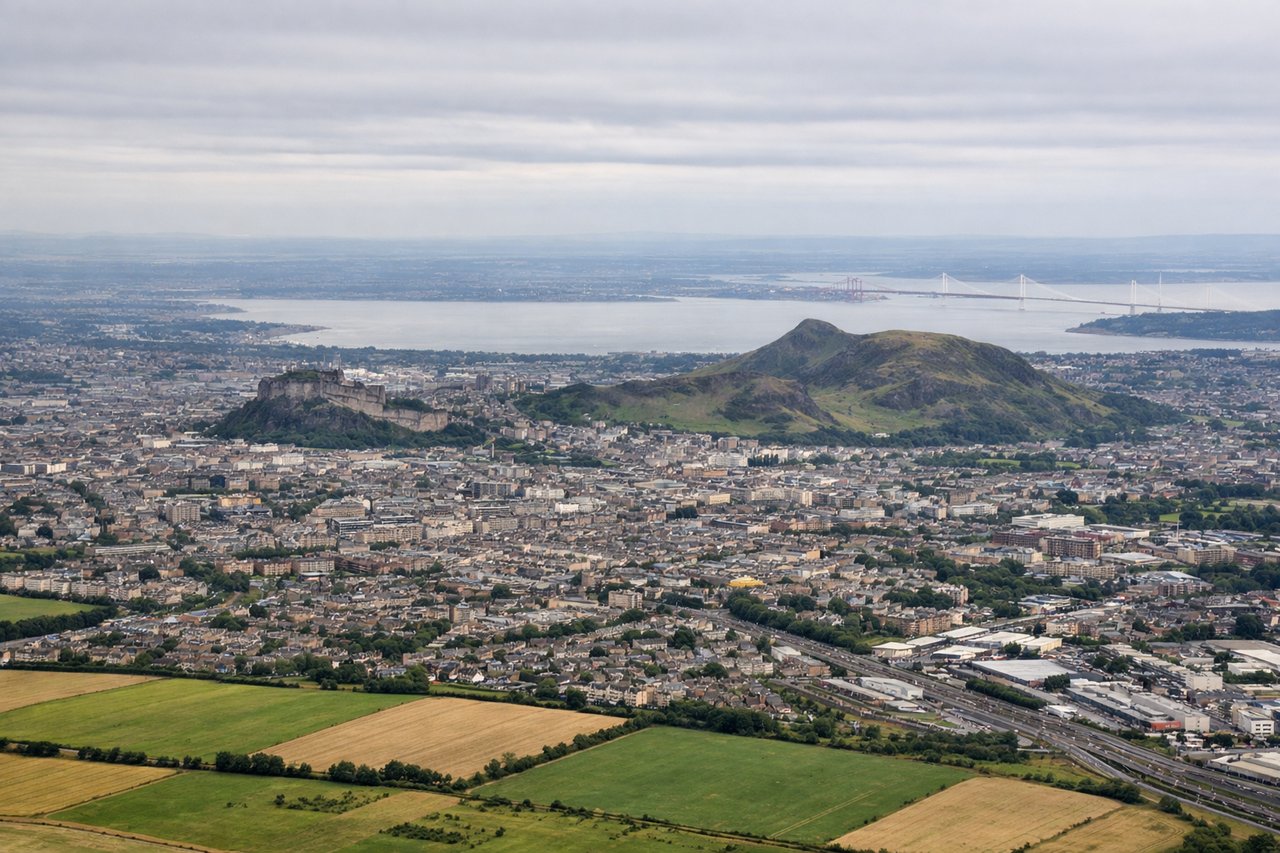
Takeoff from EDI
LEFTEdinburgh typically departs runway 06 or 24 depending on wind. Left seats offer views of the Firth of Forth estuary and the Pentland Hills to the south during initial climb. Right seats face inland toward the Lammermuir Hills with less dramatic scenery.
Landing at ORK
RIGHTCork typically lands runway 07 or 25. Right seats during descent offer views of the Irish coastline, Roaring Water Bay, and the approach over Cork Harbour. Left seats face inland over agricultural land with minimal visual interest.
Landmarks on this routeAll landmarks →
Will your flight be in sunlight?
Pick a date and time in the Sun Map to watch the sun move across your whole flight.
About This Route
Which side of the plane should I sit on flying from Edinburgh (EDI) to Cork (ORK)?
Sit on the Left side of the plane for the best views on flights from Edinburgh to Cork. While landing offers good coastal views on the right, the takeoff from Edinburgh provides more dramatic and sustained scenery with the Firth of Forth and Pentland Hills. The flight path itself crosses the Irish Sea with limited mid-flight landmarks, making the departure experience the stronger choice overall.
What can I see during takeoff from Edinburgh in Edinburgh?
During takeoff from Edinburgh (EDI), sit on the Left side for the best views. Edinburgh typically departs runway 06 or 24 depending on wind. Left seats offer views of the Firth of Forth estuary and the Pentland Hills to the south during initial climb. Right seats face inland toward the Lammermuir Hills with less dramatic scenery. Notable sights include: Firth of Forth (immediate water body), Pentland Hills (south), Forth Road Bridge and rail bridge (visible during climb-out), Bass Rock in the Firth (small but distinctive).
What can I see when landing at Cork in Cork?
When landing at Cork (ORK), sit on the Right side for the best views. Cork typically lands runway 07 or 25. Right seats during descent offer views of the Irish coastline, Roaring Water Bay, and the approach over Cork Harbour. Left seats face inland over agricultural land with minimal visual interest. Notable sights include: Cork Harbour (distinctive inlet), Roaring Water Bay (to the west), Sheep's Head Peninsula (western approach), Cork city center (visible on final approach).
How long is the flight from Edinburgh to Cork?
The flight from Edinburgh (EDI) to Cork (ORK) takes about 1 hour 15 minutes. The shortest flight path between them is 352 miles (566 km); winds and air traffic control usually add a few percent.
What does the Edinburgh to Cork flight path pass over?
The flight crosses the Irish Sea at altitude (typically 20,000-25,000 feet), offering views of the Scottish coastline receding eastward and the Irish coastline approaching from the southwest. The Isle of Man may be visible to the south depending on exact routing. The crossing itself shows open water with minimal distinguishing features at cruise altitude.