While takeoff offers striking tropical scenery, the landing approach into Detroit provides more sustained visual interest with the Detroit River, Great Lakes system, and downtown skyline. Left-side seats capture the most dramatic features during descent.
Flown EYW to DTW? Did we get it right?
Flight Path
Key West to Detroit is 1,223 miles (1,969 km), a flight of about 3 hours 15 minutes.
The flight path crosses central Florida, passing over or near the Florida peninsula's interior (visible: Lake Okeechobee, central Florida lakes and wetlands), then continues north over Georgia and Tennessee. Notable midpoint features include the Appalachian foothills appearing as subtle elevation changes on the horizon around Tennessee/Kentucky, and the Ohio River valley as the aircraft approaches the Great Lakes region. The transition from subtropical to temperate landscape is gradual but visible in vegetation and water features.
Great circle distance and headings ›Phase by phase
Takeoff from EYW
RIGHTRight-side seats offer immediate views of the Florida Keys archipelago stretching northwest, plus the shallow turquoise waters of the Gulf of Mexico and Atlantic meeting zones. The climb-out path typically heads north or northeast, positioning right-side passengers to see the island chain and reef systems.
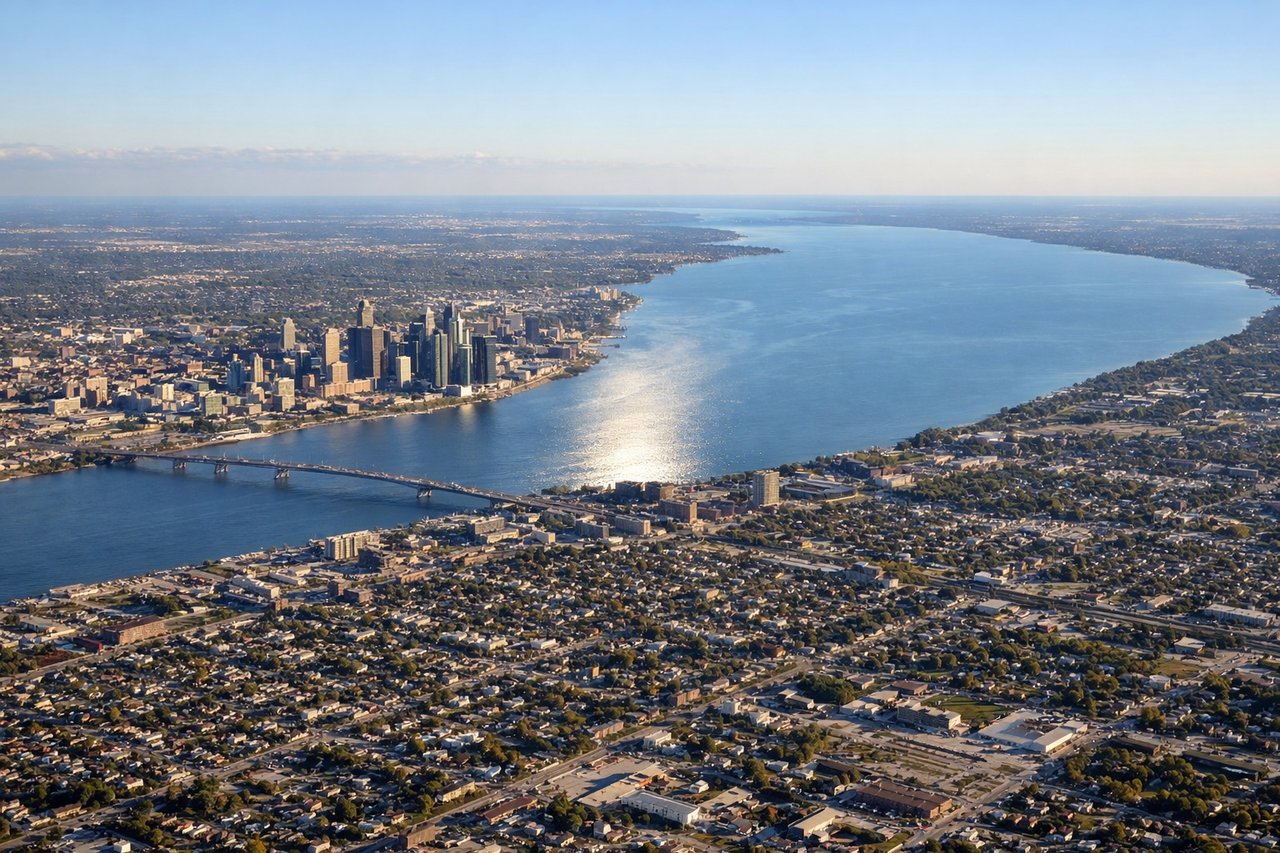
Landing at DTW
LEFTLeft-side seats provide excellent views during the descent approach into Detroit. The flight path typically brings aircraft in from the south or southeast, and left-side passengers will see the Detroit River, downtown Detroit skyline, and the broader Great Lakes shoreline. Lake St. Clair and Lake Erie are also visible on approach.
Will your flight be in sunlight?
Pick a date and time in the Sun Map to watch the sun move across your whole flight.
About This Route
Which side of the plane should I sit on flying from Key West International (EYW) to Detroit Metro Wayne Co (DTW)?
Sit on the Left side of the plane for the best views on flights from Key West to Detroit. While takeoff offers striking tropical scenery, the landing approach into Detroit provides more sustained visual interest with the Detroit River, Great Lakes system, and downtown skyline. Left-side seats capture the most dramatic features during descent.
What can I see during takeoff from Key West International in Key West?
During takeoff from Key West International (EYW), sit on the Right side for the best views. Right-side seats offer immediate views of the Florida Keys archipelago stretching northwest, plus the shallow turquoise waters of the Gulf of Mexico and Atlantic meeting zones. The climb-out path typically heads north or northeast, positioning right-side passengers to see the island chain and reef systems. Notable sights include: Florida Keys chain (Boca Chica, Big Pine Key, Marathon), shallow reef waters (turquoise shallows), Gulf of Mexico, Straits of Florida.
What can I see when landing at Detroit Metro Wayne Co in Detroit?
When landing at Detroit Metro Wayne Co (DTW), sit on the Left side for the best views. Left-side seats provide excellent views during the descent approach into Detroit. The flight path typically brings aircraft in from the south or southeast, and left-side passengers will see the Detroit River, downtown Detroit skyline, and the broader Great Lakes shoreline. Lake St. Clair and Lake Erie are also visible on approach. Notable sights include: Detroit River, downtown Detroit skyline, Lake St. Clair, Lake Erie shoreline.
How long is the flight from Key West to Detroit?
The flight from Key West International (EYW) to Detroit Metro Wayne Co (DTW) takes about 3 hours 15 minutes. The shortest flight path between them is 1,223 miles (1,969 km); winds and air traffic control usually add a few percent.
What does the Key West to Detroit flight path pass over?
The flight path crosses central Florida, passing over or near the Florida peninsula's interior (visible: Lake Okeechobee, central Florida lakes and wetlands), then continues north over Georgia and Tennessee. Notable midpoint features include the Appalachian foothills appearing as subtle elevation changes on the horizon around Tennessee/Kentucky, and the Ohio River valley as the aircraft approaches the Great Lakes region. The transition from subtropical to temperate landscape is gradual but visible in vegetation and water features.