Right-side seats win overall due to the superior takeoff experience over the Atlantic and Port Everglades, which is more visually distinctive than the landing approach. The landing views are comparable between sides, but the takeoff advantage tips the balance.
Flown FLL to CVG? Did we get it right?
Flight Path
Fort Lauderdale to Cincinnati is 934 miles (1,503 km), a flight of about 2 hours 30 minutes.
The flight path crosses central Georgia and Tennessee, passing east of the Appalachian Mountains. Notable features include the Chattahoochee River valley near Atlanta, the Tennessee River valley, and the transition from coastal plain to Appalachian foothills. The Great Smoky Mountains remain visible to the east at altitude, but the flight path typically passes west of the highest peaks.
Great circle distance and headings ›Phase by phase
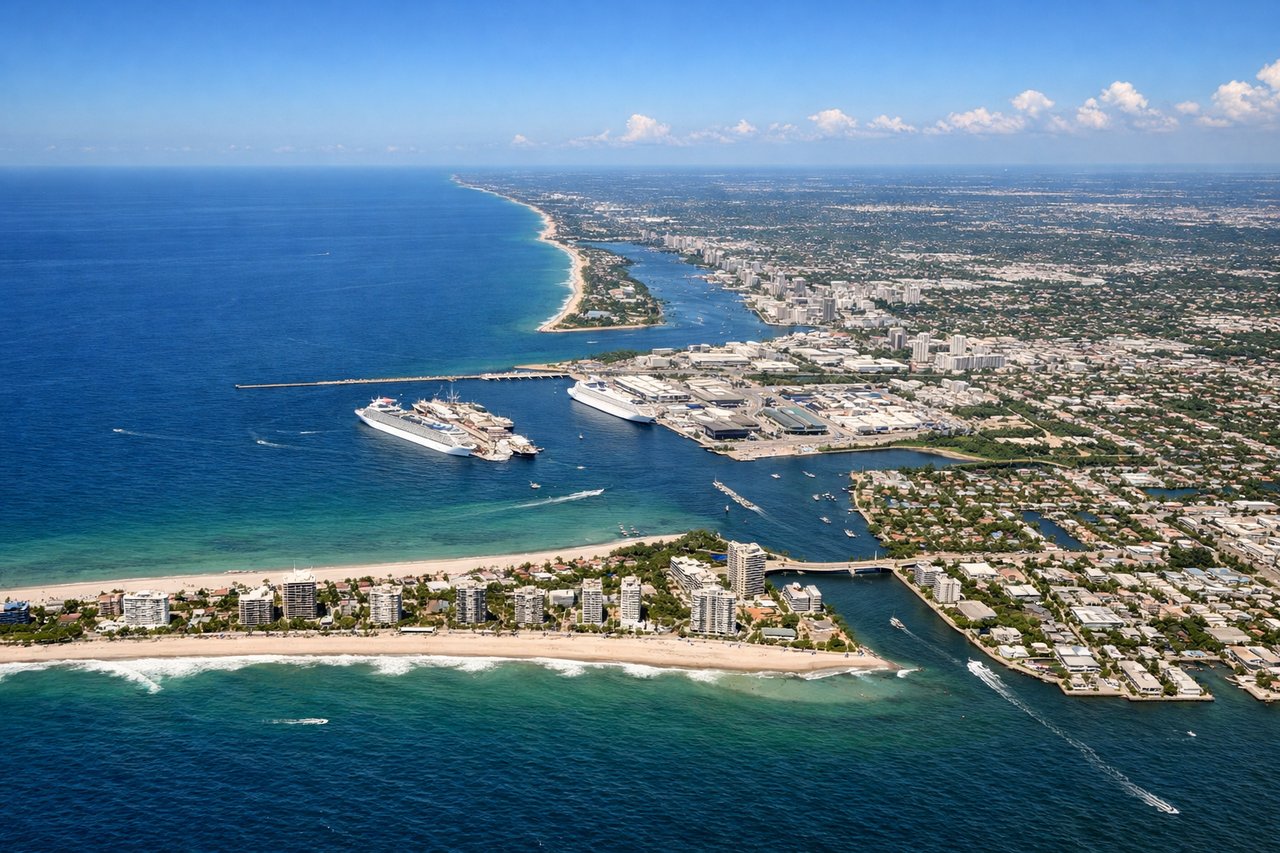
Takeoff from FLL
RIGHTRight-side seats capture the Atlantic coastline and Port Everglades immediately after departure. FLL typically departs eastbound over water before turning north, giving right-side passengers a clear view of the Florida coast, barrier islands, and the shipping channels of Port Everglades.
Landing at CVG
LEFTLeft-side seats offer the best approach views into CVG. Northern Kentucky International typically uses runways aligned north-south, and left-side passengers descending from the south will see the Ohio River valley, the Cincinnati skyline across the river, and the distinctive terrain of the Appalachian foothills as the aircraft descends into the airport.
Will your flight be in sunlight?
Pick a date and time in the Sun Map to watch the sun move across your whole flight.
About This Route
Which side of the plane should I sit on flying from Fort Lauderdale Hollywood International (FLL) to Cincinnati Northern Kentucky International (CVG)?
Sit on the Right side of the plane for the best views on flights from Fort Lauderdale to Cincinnati. Right-side seats win overall due to the superior takeoff experience over the Atlantic and Port Everglades, which is more visually distinctive than the landing approach. The landing views are comparable between sides, but the takeoff advantage tips the balance.
What can I see during takeoff from Fort Lauderdale Hollywood International in Fort Lauderdale?
During takeoff from Fort Lauderdale Hollywood International (FLL), sit on the Right side for the best views. Right-side seats capture the Atlantic coastline and Port Everglades immediately after departure. FLL typically departs eastbound over water before turning north, giving right-side passengers a clear view of the Florida coast, barrier islands, and the shipping channels of Port Everglades. Notable sights include: Atlantic Ocean, Port Everglades shipping channels, Intracoastal Waterway, barrier island chain.
What can I see when landing at Cincinnati Northern Kentucky International in Cincinnati?
When landing at Cincinnati Northern Kentucky International (CVG), sit on the Left side for the best views. Left-side seats offer the best approach views into CVG. Northern Kentucky International typically uses runways aligned north-south, and left-side passengers descending from the south will see the Ohio River valley, the Cincinnati skyline across the river, and the distinctive terrain of the Appalachian foothills as the aircraft descends into the airport. Notable sights include: Ohio River, Cincinnati skyline, Appalachian foothills, CVG airport grounds and surrounding Northern Kentucky terrain.
How long is the flight from Fort Lauderdale to Cincinnati?
The flight from Fort Lauderdale Hollywood International (FLL) to Cincinnati Northern Kentucky International (CVG) takes about 2 hours 30 minutes. The shortest flight path between them is 934 miles (1,503 km); winds and air traffic control usually add a few percent.
What does the Fort Lauderdale to Cincinnati flight path pass over?
The flight path crosses central Georgia and Tennessee, passing east of the Appalachian Mountains. Notable features include the Chattahoochee River valley near Atlanta, the Tennessee River valley, and the transition from coastal plain to Appalachian foothills. The Great Smoky Mountains remain visible to the east at altitude, but the flight path typically passes west of the highest peaks.