Right-side seats capture the most significant views: the Florida coast and Port Everglades on departure, then the open Caribbean crossing, and finally the approach to Santo Domingo's coastline and river delta on descent. The flight path itself trends southeast, favoring the right side for continuous engagement with geography.
Flown FLL to SDQ? Did we get it right?
Flight Path
Fort Lauderdale to Santo Domingo is 853 miles (1,372 km), a flight of about 2 hours 20 minutes.
The flight crosses the Bahama Banks (shallow turquoise waters visible from altitude), then open Caribbean waters. The Turks and Caicos Islands lie south of the direct track but may be visible on clear days. The Mona Passage (deep water channel between Puerto Rico and Dominican Republic) is crossed at altitude but not visually distinctive. The approach to SDQ brings views of the northern Dominican coast, including the Cordillera Septentrional mountain range as a distant ridge on the horizon during descent.
Great circle distance and headings ›Phase by phase
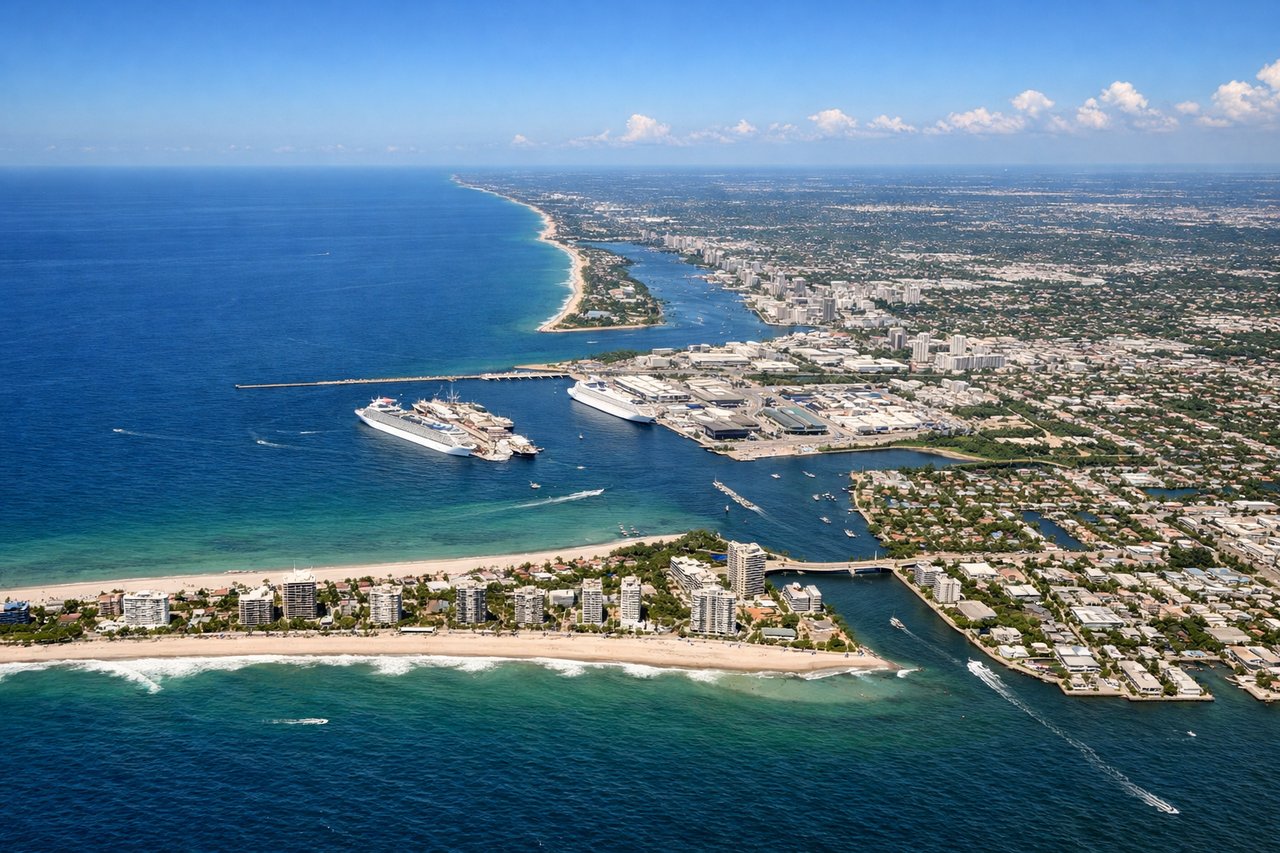
Takeoff from FLL
RIGHTFLL typically departs eastbound (runways 08L/08R or 09L/09R). Right-side seats face south over the Atlantic initially, then bank southeast toward the Dominican Republic. You'll see the Florida coast receding and the open ocean ahead on your actual flight path.
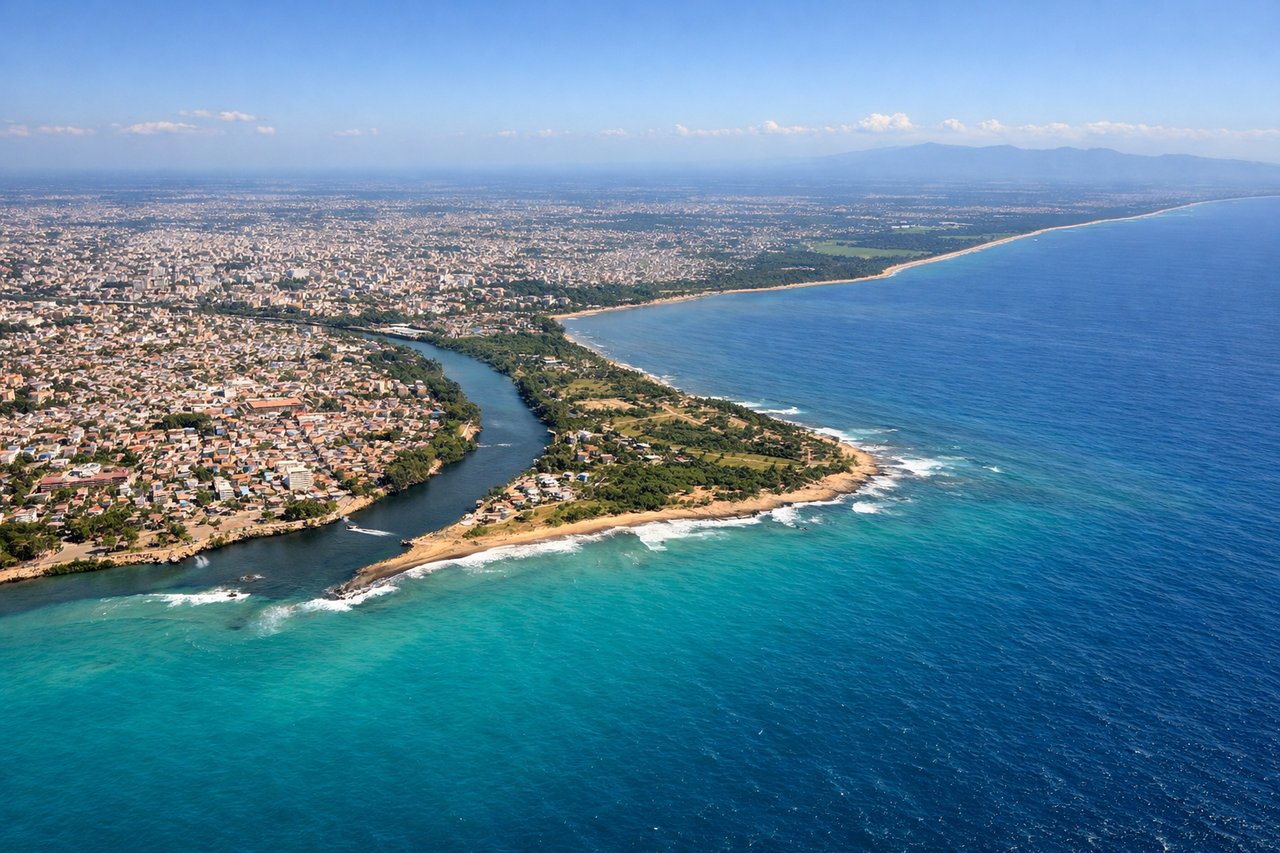
Landing at SDQ
LEFTSDQ uses runways 01/19 (north-south orientation). Approach typically comes from the northwest over the Caribbean. Left-side seats face the Dominican coastline, Ozama River estuary, and Santo Domingo city as you descend. Right-side passengers see mostly ocean and the approach path.
Will your flight be in sunlight?
Pick a date and time in the Sun Map to watch the sun move across your whole flight.
About This Route
Which side of the plane should I sit on flying from Fort Lauderdale Hollywood International (FLL) to Las Americas International (SDQ)?
Sit on the Right side of the plane for the best views on flights from Fort Lauderdale to Santo Domingo. Right-side seats capture the most significant views: the Florida coast and Port Everglades on departure, then the open Caribbean crossing, and finally the approach to Santo Domingo's coastline and river delta on descent. The flight path itself trends southeast, favoring the right side for continuous engagement with geography.
What can I see during takeoff from Fort Lauderdale Hollywood International in Fort Lauderdale?
During takeoff from Fort Lauderdale Hollywood International (FLL), sit on the Right side for the best views. FLL typically departs eastbound (runways 08L/08R or 09L/09R). Right-side seats face south over the Atlantic initially, then bank southeast toward the Dominican Republic. You'll see the Florida coast receding and the open ocean ahead on your actual flight path. Notable sights include: Port Everglades shipping channel and cruise terminals, New River waterway cutting inland, Atlantic Ocean horizon, Bahama Banks shallow waters (turquoise color visible at altitude).
What can I see when landing at Las Americas International in Santo Domingo?
When landing at Las Americas International (SDQ), sit on the Left side for the best views. SDQ uses runways 01/19 (north-south orientation). Approach typically comes from the northwest over the Caribbean. Left-side seats face the Dominican coastline, Ozama River estuary, and Santo Domingo city as you descend. Right-side passengers see mostly ocean and the approach path. Notable sights include: Ozama River estuary and its delta, Santo Domingo's urban grid and Alcázar fortress district, Caribbean coastline with beach development, Las Americas Airport's runway complex.
How long is the flight from Fort Lauderdale to Santo Domingo?
The flight from Fort Lauderdale Hollywood International (FLL) to Las Americas International (SDQ) takes about 2 hours 20 minutes. The shortest flight path between them is 853 miles (1,372 km); winds and air traffic control usually add a few percent.
What does the Fort Lauderdale to Santo Domingo flight path pass over?
The flight crosses the Bahama Banks (shallow turquoise waters visible from altitude), then open Caribbean waters. The Turks and Caicos Islands lie south of the direct track but may be visible on clear days. The Mona Passage (deep water channel between Puerto Rico and Dominican Republic) is crossed at altitude but not visually distinctive. The approach to SDQ brings views of the northern Dominican coast, including the Cordillera Septentrional mountain range as a distant ridge on the horizon during descent.