Fort Lauderdale to New Orleans is 668 miles (1,076 km), a flight of about 2 hours 15 minutes.
While takeoff favors the right for Port Everglades views, the landing approach over Lake Pontchartrain and the Mississippi River is more visually distinctive and geographically significant. The left side captures the defining geographic features of the New Orleans region.
Flight Path
The flight path crosses the Gulf of Mexico for roughly 100 nautical miles. At cruise altitude (around 15,000-25,000 feet), the Gulf appears as open blue-gray water with occasional ship traffic visible as small white dots. The Louisiana coastline becomes visible during descent—a low, flat landscape with bayous, barrier islands, and the Mississippi River delta's branching waterways. The Atchafalaya River basin and its extensive swampland are visible to the west of the direct approach path.
Great circle distance and headings ›
Phase by phase
Takeoff from FXE
RIGHTFXE typically departs runway 9 or 27 depending on wind. Right-side seats offer views of the New River, Port Everglades shipping channel, and the Atlantic coastline immediately after departure. Left side shows inland suburban sprawl with less distinctive features.
Landing at MSY
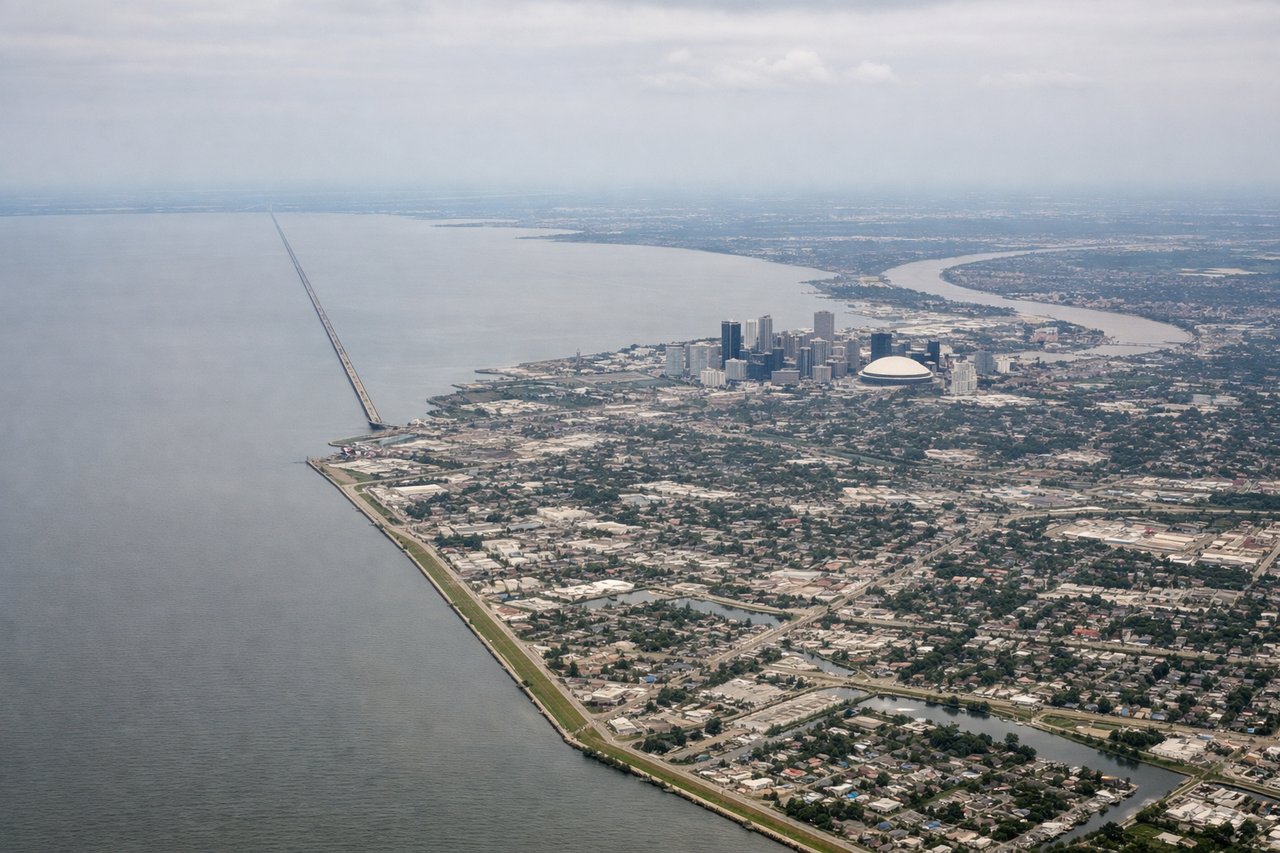
LEFTApproaching MSY typically uses runways 10L/10R or 28L/28R. Left-side seats during descent offer views of Lake Pontchartrain's vast expanse, the Mississippi River's distinctive meanders near New Orleans, and the city's crescent-shaped urban core. Right side shows mostly swampland and industrial areas with less geographic drama.
Landmarks on this routeAll landmarks →
Will your flight be in sunlight?
Pick a date and time in the Sun Map to watch the sun move across your whole flight.
About This Route
Which side of the plane should I sit on flying from Fort Lauderdale Executive (FXE) to Louis Armstrong New Orleans International (MSY)?
Sit on the Left side of the plane for the best views on flights from Fort Lauderdale to New Orleans. While takeoff favors the right for Port Everglades views, the landing approach over Lake Pontchartrain and the Mississippi River is more visually distinctive and geographically significant. The left side captures the defining geographic features of the New Orleans region.
What can I see during takeoff from Fort Lauderdale Executive in Fort Lauderdale?
During takeoff from Fort Lauderdale Executive (FXE), sit on the Right side for the best views. FXE typically departs runway 9 or 27 depending on wind. Right-side seats offer views of the New River, Port Everglades shipping channel, and the Atlantic coastline immediately after departure. Left side shows inland suburban sprawl with less distinctive features. Notable sights include: Port Everglades container terminal and cruise ship docks, New River waterway, Atlantic Ocean horizon, Fort Lauderdale Beach barrier island.
What can I see when landing at Louis Armstrong New Orleans International in New Orleans?
When landing at Louis Armstrong New Orleans International (MSY), sit on the Left side for the best views. Approaching MSY typically uses runways 10L/10R or 28L/28R. Left-side seats during descent offer views of Lake Pontchartrain's vast expanse, the Mississippi River's distinctive meanders near New Orleans, and the city's crescent-shaped urban core. Right side shows mostly swampland and industrial areas with less geographic drama. Notable sights include: Lake Pontchartrain (massive freshwater lake), Mississippi River with its characteristic sharp bends, New Orleans French Quarter and downtown skyline, Crescent City Connection bridge.
How long is the flight from Fort Lauderdale to New Orleans?
The flight from Fort Lauderdale Executive (FXE) to Louis Armstrong New Orleans International (MSY) takes about 2 hours 15 minutes. The shortest flight path between them is 668 miles (1,076 km); winds and air traffic control usually add a few percent.
What does the Fort Lauderdale to New Orleans flight path pass over?
The flight path crosses the Gulf of Mexico for roughly 100 nautical miles. At cruise altitude (around 15,000-25,000 feet), the Gulf appears as open blue-gray water with occasional ship traffic visible as small white dots. The Louisiana coastline becomes visible during descent—a low, flat landscape with bayous, barrier islands, and the Mississippi River delta's branching waterways. The Atchafalaya River basin and its extensive swampland are visible to the west of the direct approach path.