Both sides spend most of the roughly 12-hour flight over open ocean with little to see, but the right side's Sydney Harbour approach — with the Bridge, Opera House, and CBD skyline sliding past just before landing — outweighs the modest Johannesburg skyline view on departure.
Flight Path
Vast open expanse of the southern Indian Ocean with no landmarks visible for several hours, followed by the West Australian coastline near Cape Leeuwin, the Nullarbor Plain and Great Australian Bight, and finally the Blue Mountains as the route approaches New South Wales.
Great circle distance and headings ›.jpg?width=600)

.jpg?width=600)
Phase by phase
Takeoff from GCJ
LEFTDeparting Grand Central under typical southerly-wind operations (runway 35), the climb-out curves east toward Australia, giving the left side a view back over the Johannesburg CBD skyline, Soweto, and the distant ridgeline of the Magaliesberg to the northwest before the aircraft settles onto its easterly heading.
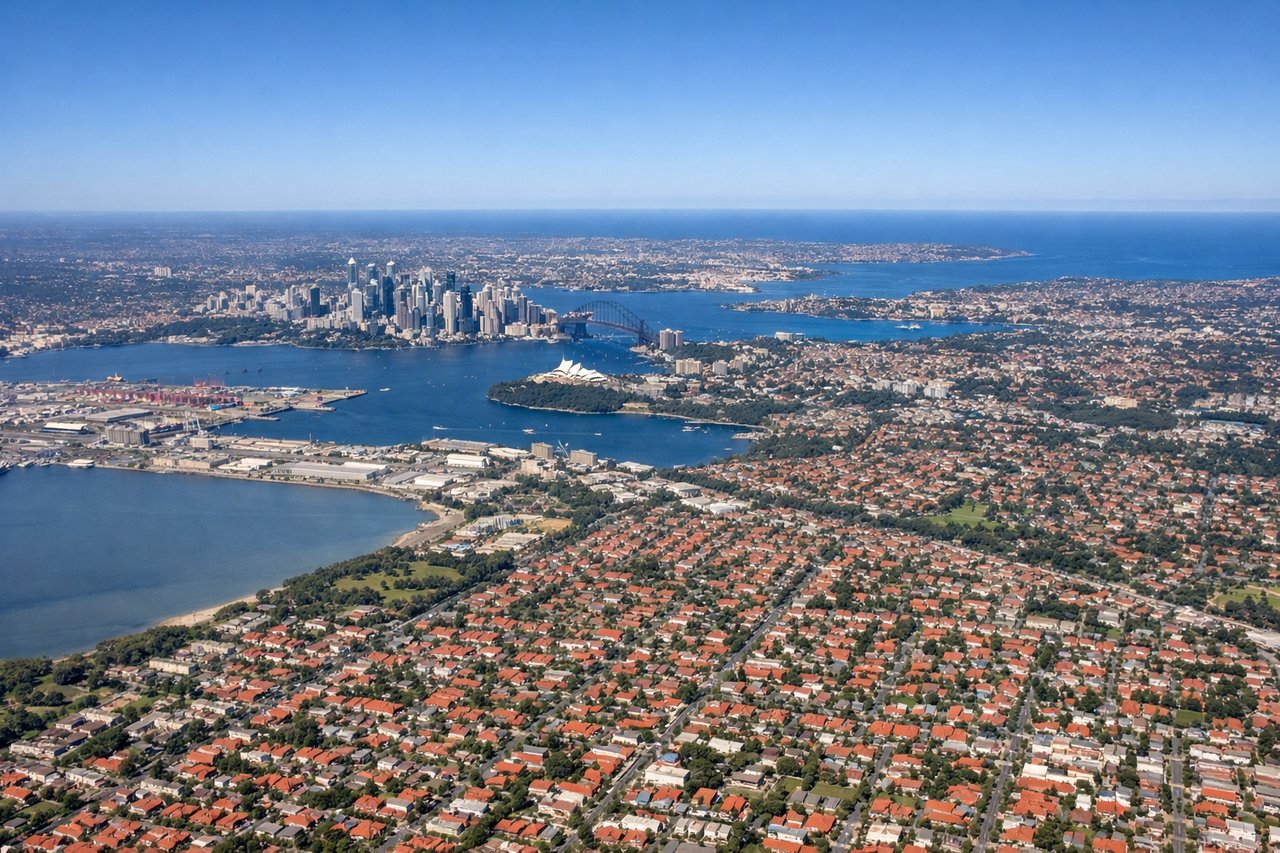
Landing at SYD
RIGHTUnder typical South Plan operations, the arrival into Sydney comes from the north and flies south down the harbour approach, putting Sydney Harbour Bridge, the Opera House, and the CBD skyline on the right side of the aircraft just before touchdown.
Landmarks on this routeAll landmarks →
Will your flight be in sunlight?
See exactly which side of the plane gets sun and shade at your departure time.
About This Route
Which side of the plane should I sit on flying from Grand Central (GCJ) to Kingsford Smith International Airport (SYD)?
Sit on the Right side of the plane for the best views on flights from Johannesburg to Sydney. Both sides spend most of the roughly 12-hour flight over open ocean with little to see, but the right side's Sydney Harbour approach — with the Bridge, Opera House, and CBD skyline sliding past just before landing — outweighs the modest Johannesburg skyline view on departure.
What can I see during takeoff from Grand Central in Johannesburg?
During takeoff from Grand Central (GCJ), sit on the Left side for the best views. Departing Grand Central under typical southerly-wind operations (runway 35), the climb-out curves east toward Australia, giving the left side a view back over the Johannesburg CBD skyline, Soweto, and the distant ridgeline of the Magaliesberg to the northwest before the aircraft settles onto its easterly heading. Notable sights include: Johannesburg CBD skyline, Soweto, Magaliesberg range, Highveld plains.
What can I see when landing at Kingsford Smith International Airport in Sydney?
When landing at Kingsford Smith International Airport (SYD), sit on the Right side for the best views. Under typical South Plan operations, the arrival into Sydney comes from the north and flies south down the harbour approach, putting Sydney Harbour Bridge, the Opera House, and the CBD skyline on the right side of the aircraft just before touchdown. Notable sights include: Sydney Harbour Bridge, Sydney Opera House, CBD skyline, Botany Bay.
How long is the flight from Johannesburg to Sydney?
The flight from Grand Central (GCJ) to Kingsford Smith International Airport (SYD) takes 12h 45m.
What does the Johannesburg to Sydney flight path pass over?
Vast open expanse of the southern Indian Ocean with no landmarks visible for several hours, followed by the West Australian coastline near Cape Leeuwin, the Nullarbor Plain and Great Australian Bight, and finally the Blue Mountains as the route approaches New South Wales.