Left side wins both ends of the flight. During the transatlantic crossing the left side also faces south, giving occasional views of Greenland's ice cap and Labrador's coastline as the great circle route arcs over the North Atlantic. Right side has little to offer on either end.
Flight Path
The great circle route tracks northwest from Scotland over the Hebrides, then across the North Atlantic passing south of Iceland, over the southern tip of Greenland where the ice sheet edge may be visible, then across the Labrador Sea and into Labrador and Quebec. Hudson Bay may be visible to the north on clear days. The route then crosses Ontario's boreal forest and lakes before descending into Toronto.
Great circle distance and headings ›

Phase by phase
Takeoff from GLA
LEFTGlasgow Airport typically departs westbound on runway 23, so a left (south-facing) seat gives you views over the Clyde estuary and the hills of Renfrewshire before the aircraft turns northwest. You'll see the River Clyde snaking toward the Firth of Clyde and the Arran hills on the horizon.
Landing at YYZ
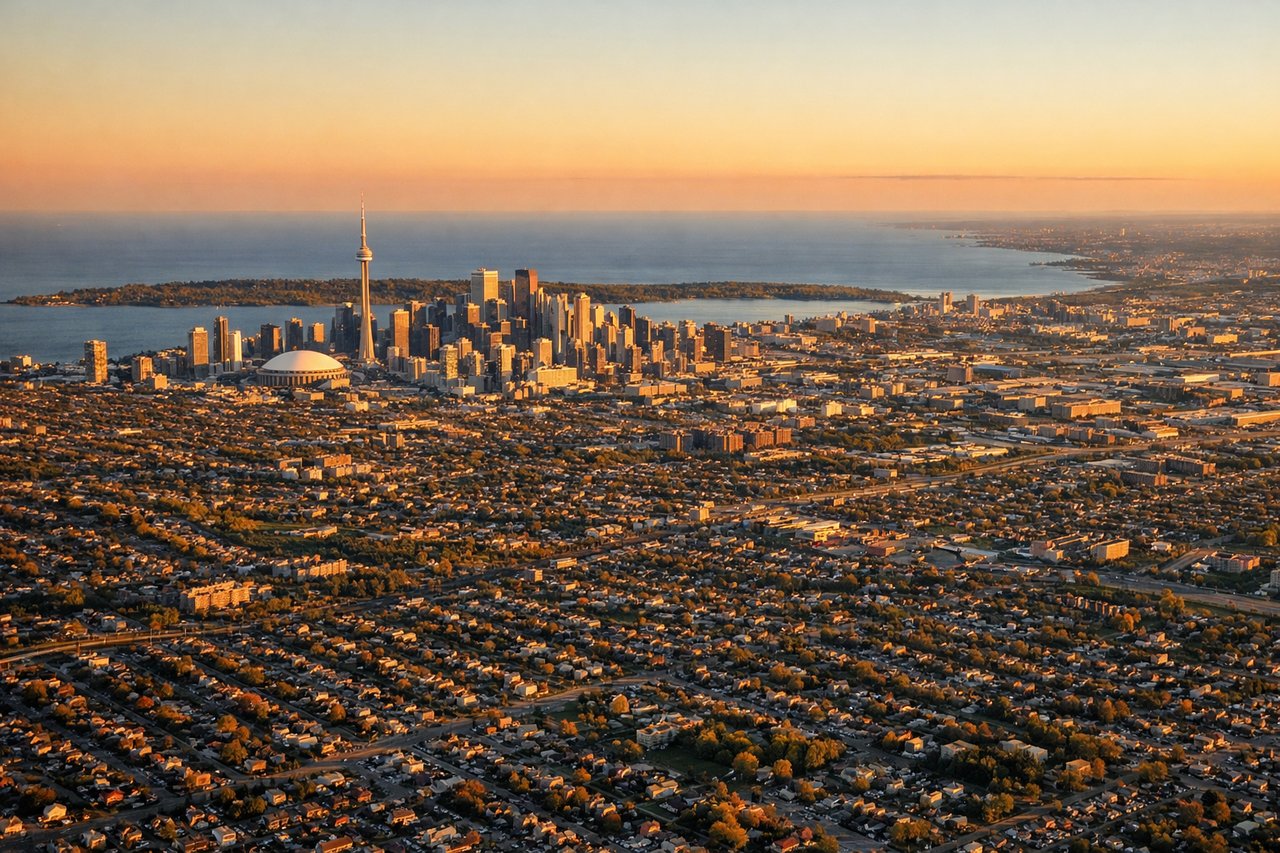
LEFTPearson typically lands on runways 23 or 24L/24R in westerly winds, with the approach coming in from the northeast over the city. A left (south-facing) seat on approach gives you the Toronto skyline, Lake Ontario, and the downtown core laid out clearly below and to your left.
Landmarks on this routeAll landmarks →
Will your flight be in sunlight?
See exactly which side of the plane gets sun and shade at your departure time.
About This Route
Which side of the plane should I sit on flying from Glasgow (GLA) to Lester B Pearson International (YYZ)?
Sit on the Left side of the plane for the best views on flights from Glasgow to Toronto. Left side wins both ends of the flight. During the transatlantic crossing the left side also faces south, giving occasional views of Greenland's ice cap and Labrador's coastline as the great circle route arcs over the North Atlantic. Right side has little to offer on either end.
What can I see during takeoff from Glasgow in Glasgow?
During takeoff from Glasgow (GLA), sit on the Left side for the best views. Glasgow Airport typically departs westbound on runway 23, so a left (south-facing) seat gives you views over the Clyde estuary and the hills of Renfrewshire before the aircraft turns northwest. You'll see the River Clyde snaking toward the Firth of Clyde and the Arran hills on the horizon. Notable sights include: Firth of Clyde, Isle of Arran, River Clyde, Renfrewshire hills.
What can I see when landing at Lester B Pearson International in Toronto?
When landing at Lester B Pearson International (YYZ), sit on the Left side for the best views. Pearson typically lands on runways 23 or 24L/24R in westerly winds, with the approach coming in from the northeast over the city. A left (south-facing) seat on approach gives you the Toronto skyline, Lake Ontario, and the downtown core laid out clearly below and to your left. Notable sights include: Toronto downtown skyline with CN Tower, Lake Ontario, Toronto Islands, Humber Bay.
How long is the flight from Glasgow to Toronto?
The flight from Glasgow (GLA) to Lester B Pearson International (YYZ) takes Approximately 8 to 8.5 hours.
What does the Glasgow to Toronto flight path pass over?
The great circle route tracks northwest from Scotland over the Hebrides, then across the North Atlantic passing south of Iceland, over the southern tip of Greenland where the ice sheet edge may be visible, then across the Labrador Sea and into Labrador and Quebec. Hudson Bay may be visible to the north on clear days. The route then crosses Ontario's boreal forest and lakes before descending into Toronto.