Seoul to Brussels is 5,398 miles (8,687 km), a flight of about 11 hours.
Right-side seats offer superior viewing for the entire flight. Takeoff provides Seoul's urban and river scenery, and the westbound routing over China and Central Asia means right-side passengers see the Himalayas, Tibetan plateau, and Central Asian mountain ranges during the long cruise phase—far more dramatic than left-side views of Russia's interior.
Flight Path
The flight path crosses the Korean Peninsula, then traverses China (passing south of Beijing), crosses the Gobi Desert and Mongolian plateau, continues over the Altai Mountains and Kazakhstan, then crosses the Ural Mountains and European Russia before descending into Belgium. Right-side passengers will see the Himalayas and Tibetan plateau during the China crossing phase; left-side passengers will see primarily the Russian interior plains and taiga. The Ural Mountains are visible to both sides during the European approach phase.
Great circle distance and headings ›

Phase by phase
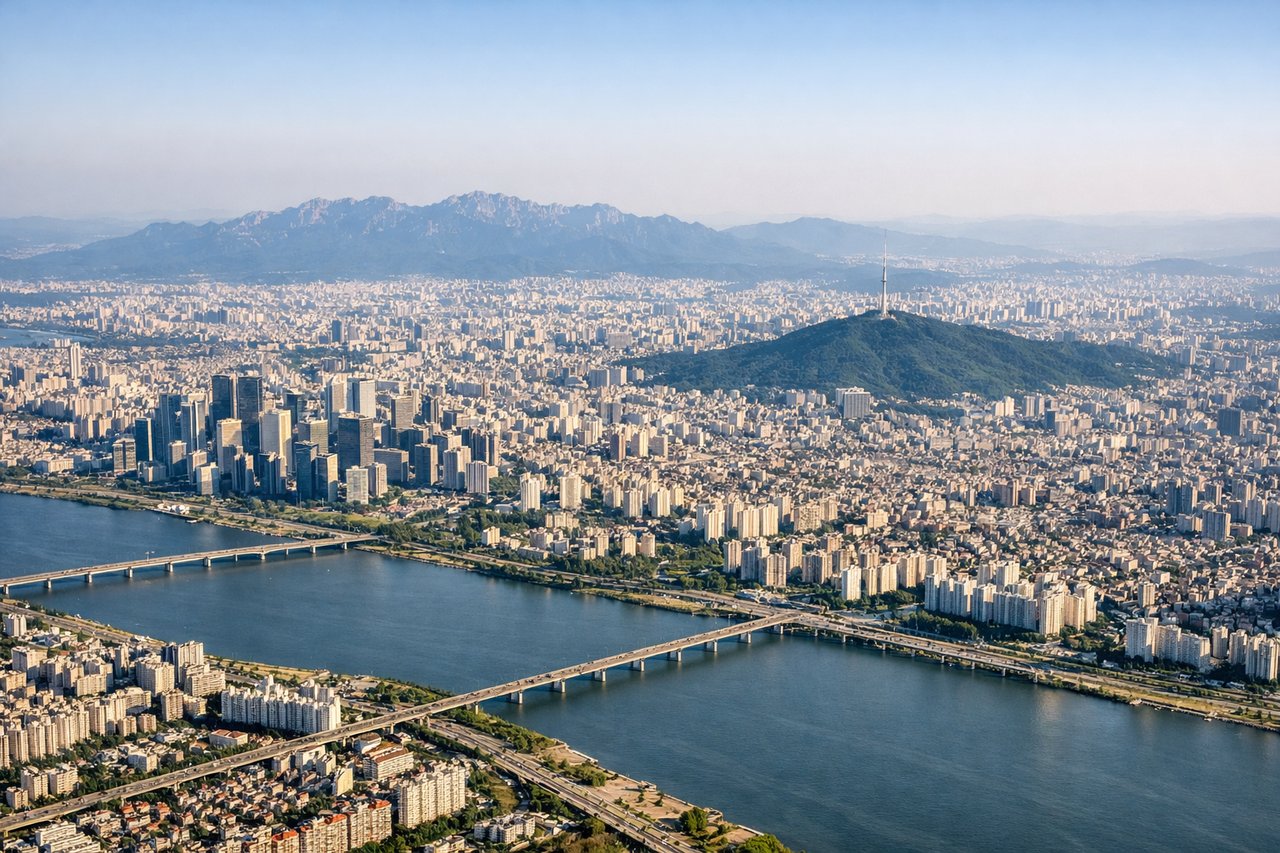
Takeoff from GMP
RIGHTRight-side seats offer views of Seoul's urban sprawl and the Han River as the aircraft climbs northwest. You'll see the city grid and water features clearly during the initial climb-out phase.
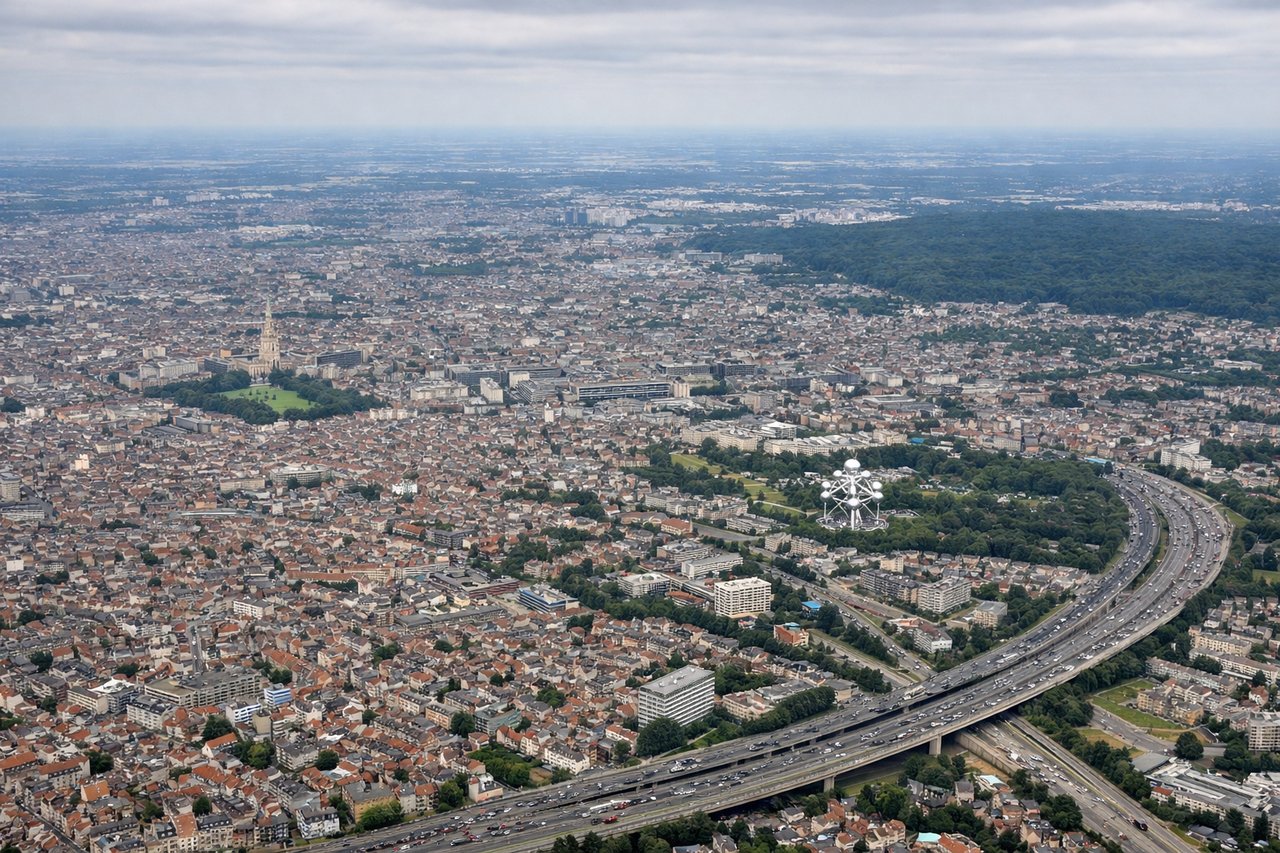
Landing at BRU
LEFTLeft-side seats provide excellent views during the descent approach to Brussels. You'll see the Meuse River valley, Belgian farmland patterns, and the approach corridor over the Flemish plains before landing.
Landmarks on this routeAll landmarks →
Will your flight be in sunlight?
Pick a date and time in the Sun Map to watch the sun move across your whole flight.
About This Route
Which side of the plane should I sit on flying from Gimpo (GMP) to Brussels Natl (BRU)?
Sit on the Right side of the plane for the best views on flights from Seoul to Brussels. Right-side seats offer superior viewing for the entire flight. Takeoff provides Seoul's urban and river scenery, and the westbound routing over China and Central Asia means right-side passengers see the Himalayas, Tibetan plateau, and Central Asian mountain ranges during the long cruise phase—far more dramatic than left-side views of Russia's interior.
What can I see during takeoff from Gimpo in Seoul?
During takeoff from Gimpo (GMP), sit on the Right side for the best views. Right-side seats offer views of Seoul's urban sprawl and the Han River as the aircraft climbs northwest. You'll see the city grid and water features clearly during the initial climb-out phase. Notable sights include: Han River (Hangang), Seoul metropolitan area grid, Gimpo Airport runways, Western Seoul districts.
What can I see when landing at Brussels Natl in Brussels?
When landing at Brussels Natl (BRU), sit on the Left side for the best views. Left-side seats provide excellent views during the descent approach to Brussels. You'll see the Meuse River valley, Belgian farmland patterns, and the approach corridor over the Flemish plains before landing. Notable sights include: Meuse River valley, Flemish agricultural patchwork, Brussels metropolitan area, Belgian canal systems.
How long is the flight from Seoul to Brussels?
The flight from Gimpo (GMP) to Brussels Natl (BRU) takes about 11 hours. The shortest flight path between them is 5,398 miles (8,687 km); winds and air traffic control usually add a few percent.
What does the Seoul to Brussels flight path pass over?
The flight path crosses the Korean Peninsula, then traverses China (passing south of Beijing), crosses the Gobi Desert and Mongolian plateau, continues over the Altai Mountains and Kazakhstan, then crosses the Ural Mountains and European Russia before descending into Belgium. Right-side passengers will see the Himalayas and Tibetan plateau during the China crossing phase; left-side passengers will see primarily the Russian interior plains and taiga. The Ural Mountains are visible to both sides during the European approach phase.