Fort Lewis to Taipei is 6,067 miles (9,764 km), a flight of about 12 hours.
While left wins takeoff, right dominates the longer flight segment. The trans-Pacific routing crosses the North Pacific with minimal landmarks until approaching Taiwan, where right-side seats capture the final descent views over the Taiwan Strait and Taipei Basin—the most visually rewarding portion of the flight.
Flight Path
The flight path crosses the North Pacific Ocean with no significant landmarks visible for roughly 8-9 hours. Passengers may observe the Aleutian Islands chain (Alaska) if flying a northern great-circle route, though these typically pass well north of the standard flight corridor. The approach to Taiwan brings views of the Ryukyu Islands (Okinawa region) and eventually the Taiwan Strait, with the northern tip of Taiwan and its volcanic peaks becoming visible during descent.
Great circle distance and headings ›Phase by phase
Takeoff from GRF
LEFTGray AAF typically departs northbound or northeastbound. Left-side seats offer views of the Cascade Range and Mount Rainier during initial climb, while right side faces inland terrain with less dramatic relief.
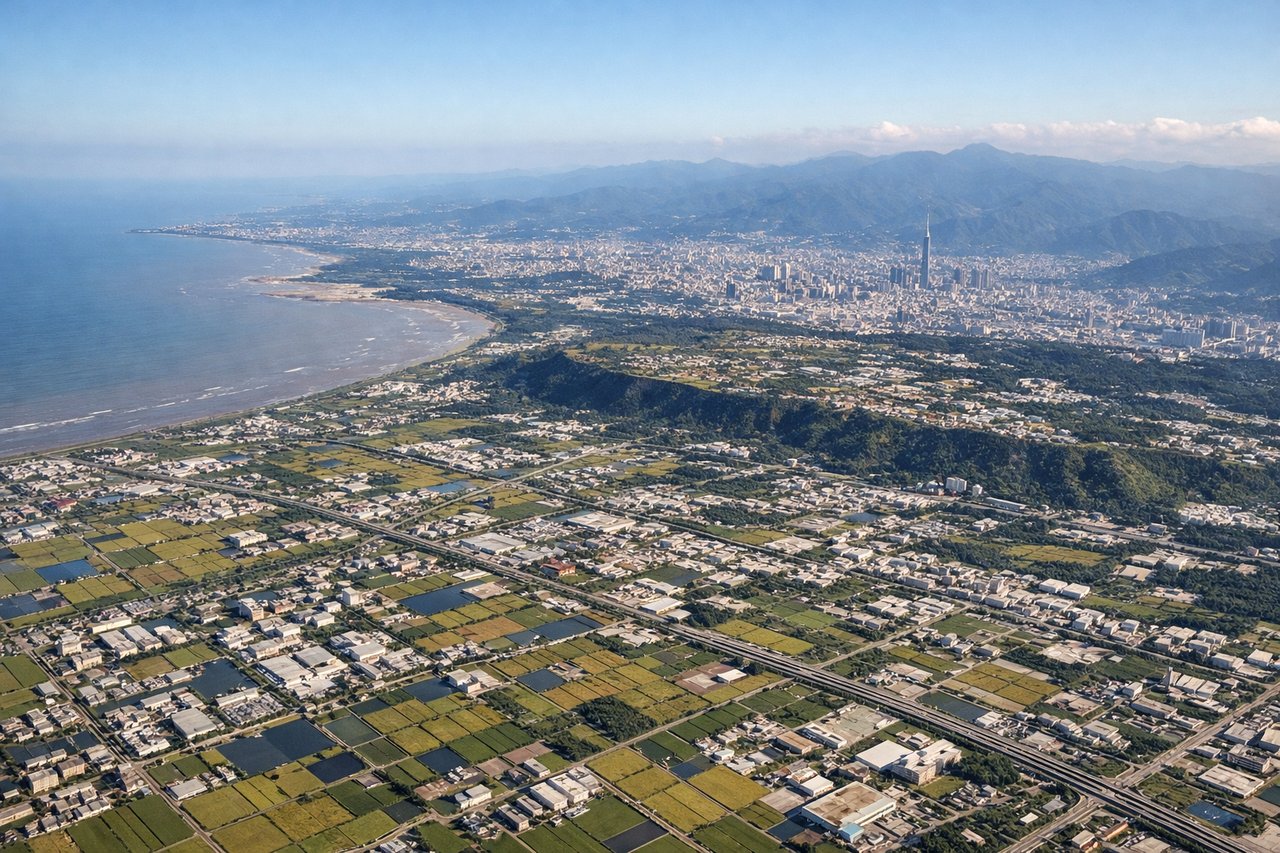
Landing at TPE
RIGHTTaipei's main runways (05L/23R and 05R/23L) typically favor eastbound approaches from the Pacific. Right-side seats during descent offer views of the Taiwan Strait, northern Taiwan's coastal plains, and the approach path over the Taipei Basin with the city visible below.
Will your flight be in sunlight?
Pick a date and time in the Sun Map to watch the sun move across your whole flight.
About This Route
Which side of the plane should I sit on flying from Gray Aaf (GRF) to Chiang Kai Shek International (TPE)?
Sit on the Right side of the plane for the best views on flights from Fort Lewis to Taipei. While left wins takeoff, right dominates the longer flight segment. The trans-Pacific routing crosses the North Pacific with minimal landmarks until approaching Taiwan, where right-side seats capture the final descent views over the Taiwan Strait and Taipei Basin—the most visually rewarding portion of the flight.
What can I see during takeoff from Gray Aaf in Fort Lewis?
During takeoff from Gray Aaf (GRF), sit on the Left side for the best views. Gray AAF typically departs northbound or northeastbound. Left-side seats offer views of the Cascade Range and Mount Rainier during initial climb, while right side faces inland terrain with less dramatic relief. Notable sights include: Mount Rainier (14,410 ft, visible 40+ miles away on clear days), Puget Sound to the west, Cascade Range ridgeline, foothills of the Olympic Mountains.
What can I see when landing at Chiang Kai Shek International in Taipei?
When landing at Chiang Kai Shek International (TPE), sit on the Right side for the best views. Taipei's main runways (05L/23R and 05R/23L) typically favor eastbound approaches from the Pacific. Right-side seats during descent offer views of the Taiwan Strait, northern Taiwan's coastal plains, and the approach path over the Taipei Basin with the city visible below. Notable sights include: Taiwan Strait (body of water to the west), Taipei Basin and urban sprawl, Yangmingshan volcanic peaks to the north, Taoyuan Plateau to the south.
How long is the flight from Fort Lewis to Taipei?
The flight from Gray Aaf (GRF) to Chiang Kai Shek International (TPE) takes about 12 hours. The shortest flight path between them is 6,067 miles (9,764 km); winds and air traffic control usually add a few percent.
What does the Fort Lewis to Taipei flight path pass over?
The flight path crosses the North Pacific Ocean with no significant landmarks visible for roughly 8-9 hours. Passengers may observe the Aleutian Islands chain (Alaska) if flying a northern great-circle route, though these typically pass well north of the standard flight corridor. The approach to Taiwan brings views of the Ryukyu Islands (Okinawa region) and eventually the Taiwan Strait, with the northern tip of Taiwan and its volcanic peaks becoming visible during descent.