The takeoff from GRR offers more scenic variety with the Grand River valley and Grand Rapids urban core, while the landing into DTW is primarily industrial and suburban sprawl. Left seats provide the better overall experience for this short route.
Flown GRR to DTW? Did we get it right?
Flight Path
Grand Rapids to Detroit is 120 miles (193 km), a flight of about 35 minutes.
The flight path crosses central Michigan's agricultural belt and the Kalamazoo River valley. At cruise altitude, you'll see the transition from western Michigan's farmland and scattered lakes to the increasingly urbanized landscape approaching the Detroit metropolitan area. The terrain remains flat throughout with no significant elevation changes.
Great circle distance and headings ›Phase by phase
Takeoff from GRR
LEFTLeft side offers views of the Grand River valley and the urban sprawl of Grand Rapids itself during climb-out. The right side faces open farmland with less visual interest.
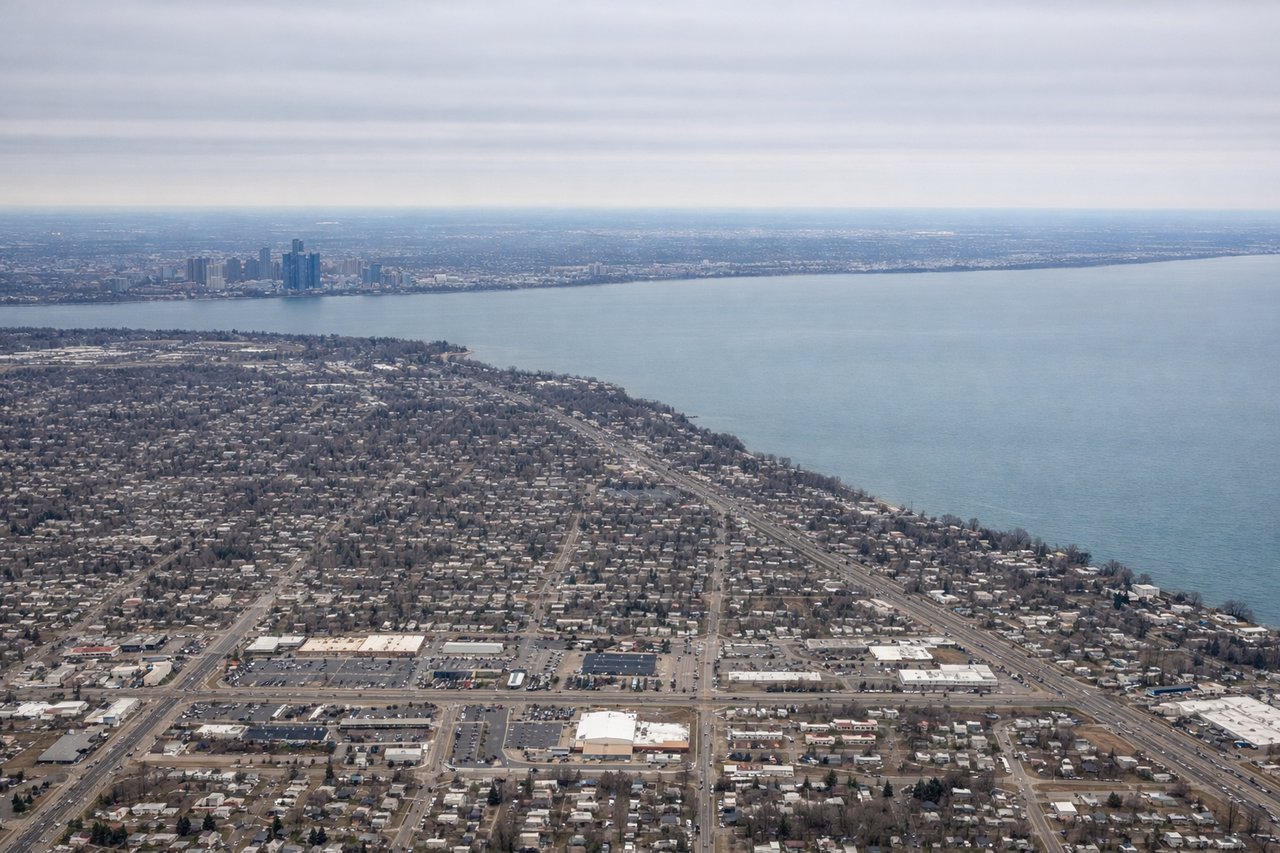
Landing at DTW
RIGHTRight side provides views of the Detroit metropolitan area and the approach corridor over the Rouge River valley. You'll see the city's industrial waterfront and suburban sprawl as you descend into DTW.
Will your flight be in sunlight?
Pick a date and time in the Sun Map to watch the sun move across your whole flight.
About This Route
Which side of the plane should I sit on flying from Gerald R Ford International (GRR) to Detroit Metro Wayne Co (DTW)?
Sit on the Left side of the plane for the best views on flights from Grand Rapids to Detroit. The takeoff from GRR offers more scenic variety with the Grand River valley and Grand Rapids urban core, while the landing into DTW is primarily industrial and suburban sprawl. Left seats provide the better overall experience for this short route.
What can I see during takeoff from Gerald R Ford International in Grand Rapids?
During takeoff from Gerald R Ford International (GRR), sit on the Left side for the best views. Left side offers views of the Grand River valley and the urban sprawl of Grand Rapids itself during climb-out. The right side faces open farmland with less visual interest. Notable sights include: Grand River, Grand Rapids downtown corridor, Lake Michigan (distant western horizon), agricultural patchwork of western Michigan.
What can I see when landing at Detroit Metro Wayne Co in Detroit?
When landing at Detroit Metro Wayne Co (DTW), sit on the Right side for the best views. Right side provides views of the Detroit metropolitan area and the approach corridor over the Rouge River valley. You'll see the city's industrial waterfront and suburban sprawl as you descend into DTW. Notable sights include: Detroit River, Rouge River industrial corridor, suburban Detroit sprawl, Lake St. Clair (visible on clear days).
How long is the flight from Grand Rapids to Detroit?
The flight from Gerald R Ford International (GRR) to Detroit Metro Wayne Co (DTW) takes about 35 minutes. The shortest flight path between them is 120 miles (193 km); winds and air traffic control usually add a few percent.
What does the Grand Rapids to Detroit flight path pass over?
The flight path crosses central Michigan's agricultural belt and the Kalamazoo River valley. At cruise altitude, you'll see the transition from western Michigan's farmland and scattered lakes to the increasingly urbanized landscape approaching the Detroit metropolitan area. The terrain remains flat throughout with no significant elevation changes.