Right-side seats capture the most dramatic geography: the Red River Delta's intricate waterways on departure, then the flight path crosses the Gulf of Tonkin and the Vietnamese coast (limestone karsts near Haiphong visible on clear days), before approaching the Korean peninsula's western coast and Busan's harbor complex on descent. Left seats miss the delta detail and offer less during the mid-flight ocean crossing.
Flown HAN to PUS? Did we get it right?
Flight Path
Hanoi to Kimhae is 1,700 miles (2,736 km), a flight of about 3 hours 55 minutes.
Gulf of Tonkin (open water, 1.5 hours into flight); Vietnamese coastline with Haiphong's limestone karst landscape (around 1 hour 20 minutes); transition to Korean airspace over the Yellow Sea; approach to the Korean peninsula's southern coast with Busan's sprawling metropolitan area and harbor infrastructure
Great circle distance and headings ›


Phase by phase
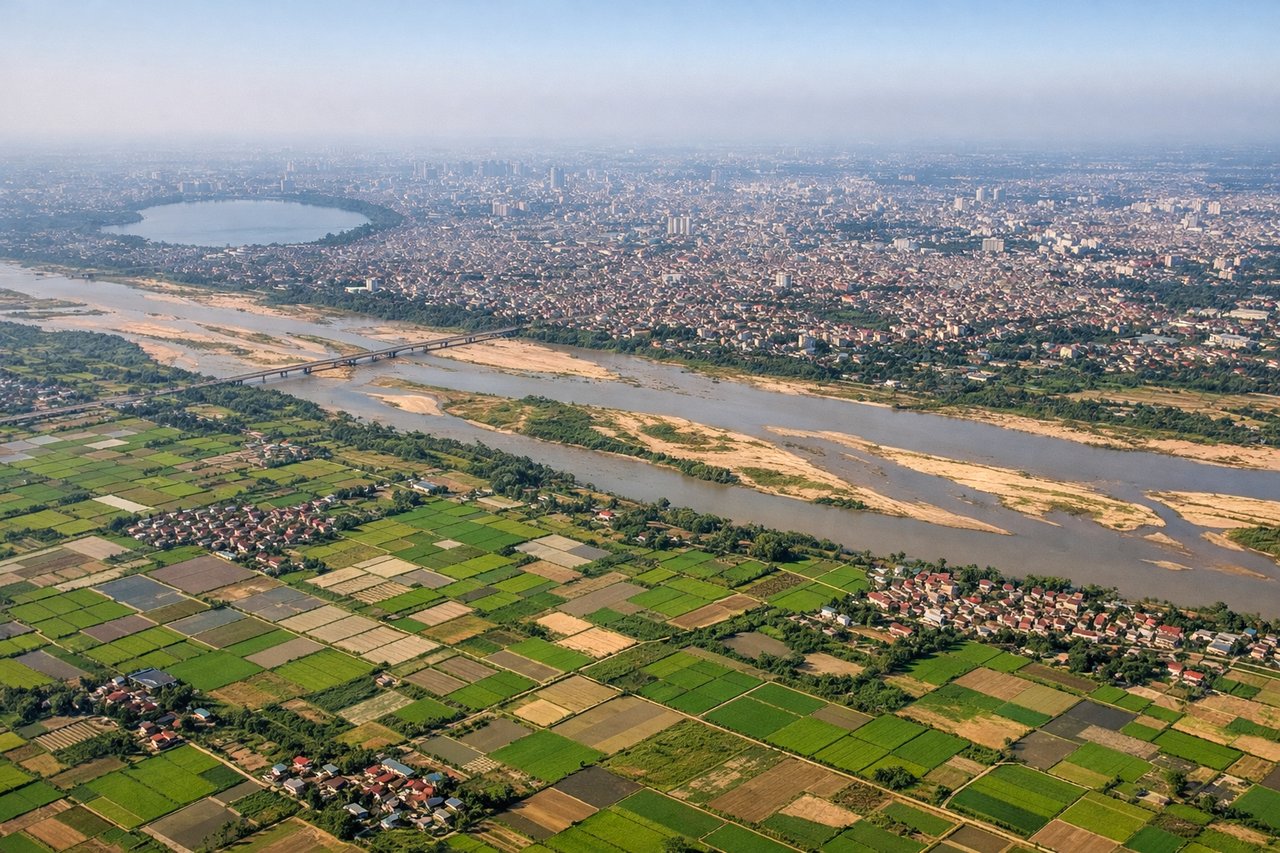
Takeoff from HAN
RIGHTNoibai typically departs runways 01L/01R (northbound) or 19L/19R (southbound). Right-side seats on northbound departures capture the Red River Delta's intricate waterway network and the transition from Hanoi's urban sprawl to agricultural plains. Southbound departures favor right seats for views of Halong Bay's limestone karsts in the distance.
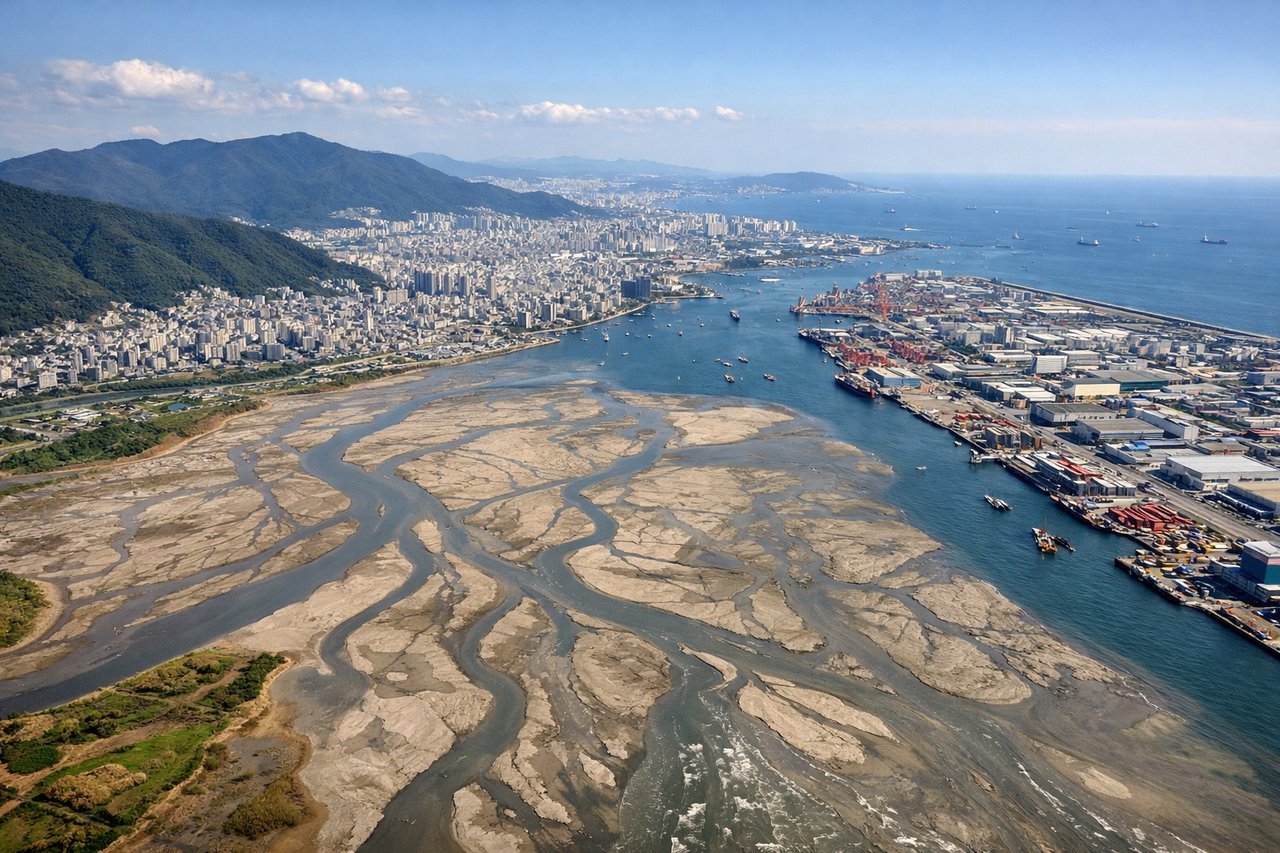
Landing at PUS
LEFTGimhae typically lands on runways 18L/18R (southbound) or 36L/36R (northbound). Left-side seats on southbound approaches offer unobstructed views of the Nakdong River estuary, Busan's harbor, and the Geoje Island shipyards. Northbound approaches also favor left seats for views of the Korea Strait and Tsushima Island (Japan) on exceptionally clear days.
Will your flight be in sunlight?
Pick a date and time in the Sun Map to watch the sun move across your whole flight.
About This Route
Which side of the plane should I sit on flying from Noibai International (HAN) to Gimhae International (PUS)?
Sit on the Right side of the plane for the best views on flights from Hanoi to Kimhae. Right-side seats capture the most dramatic geography: the Red River Delta's intricate waterways on departure, then the flight path crosses the Gulf of Tonkin and the Vietnamese coast (limestone karsts near Haiphong visible on clear days), before approaching the Korean peninsula's western coast and Busan's harbor complex on descent. Left seats miss the delta detail and offer less during the mid-flight ocean crossing.
What can I see during takeoff from Noibai International in Hanoi?
During takeoff from Noibai International (HAN), sit on the Right side for the best views. Noibai typically departs runways 01L/01R (northbound) or 19L/19R (southbound). Right-side seats on northbound departures capture the Red River Delta's intricate waterway network and the transition from Hanoi's urban sprawl to agricultural plains. Southbound departures favor right seats for views of Halong Bay's limestone karsts in the distance. Notable sights include: Red River (Sông Hồng) winding through the delta in braided channels; Hanoi's urban grid fading into rice paddies; limestone hills of the northern delta rim; Halong Bay karst formations (visible on clear days, 80+ km northeast).
What can I see when landing at Gimhae International in Kimhae?
When landing at Gimhae International (PUS), sit on the Left side for the best views. Gimhae typically lands on runways 18L/18R (southbound) or 36L/36R (northbound). Left-side seats on southbound approaches offer unobstructed views of the Nakdong River estuary, Busan's harbor, and the Geoje Island shipyards. Northbound approaches also favor left seats for views of the Korea Strait and Tsushima Island (Japan) on exceptionally clear days. Notable sights include: Nakdong River estuary with its distinctive delta and tidal flats; Busan's urban waterfront and harbor; Geoje Island's industrial shipyard facilities; Korea Strait (visible as open water on the southern horizon).
How long is the flight from Hanoi to Kimhae?
The flight from Noibai International (HAN) to Gimhae International (PUS) takes about 3 hours 55 minutes. The shortest flight path between them is 1,700 miles (2,736 km); winds and air traffic control usually add a few percent.
What does the Hanoi to Kimhae flight path pass over?
Gulf of Tonkin (open water, 1.5 hours into flight); Vietnamese coastline with Haiphong's limestone karst landscape (around 1 hour 20 minutes); transition to Korean airspace over the Yellow Sea; approach to the Korean peninsula's southern coast with Busan's sprawling metropolitan area and harbor infrastructure