While the right side offers excellent takeoff views of the Red River Delta, the left side provides superior landing scenery with the Tonle Sap Lake—Southeast Asia's most visually distinctive freshwater body. The lake's scale and color contrast make it the flight's most memorable geographic feature.
Flown HAN to SAI? Did we get it right?
Flight Path
Hanoi to Siem Reap is 552 miles (889 km), a flight of about 1 hour 25 minutes.
The flight path crosses central Vietnam and Cambodia, passing over the Mekong River's upper reaches, transitioning from Vietnamese highlands and the Mekong Delta region into Cambodia's flat plains. You'll see the landscape shift from Vietnam's more densely populated river valleys to Cambodia's more forested and agricultural terrain. The Mekong River itself may be visible as a brown ribbon during portions of the flight, particularly as you approach Cambodian airspace. The terrain gradually flattens from the Vietnamese highlands into the Cambodian plains that surround Tonle Sap Lake.
Great circle distance and headings ›

Phase by phase
Takeoff from HAN
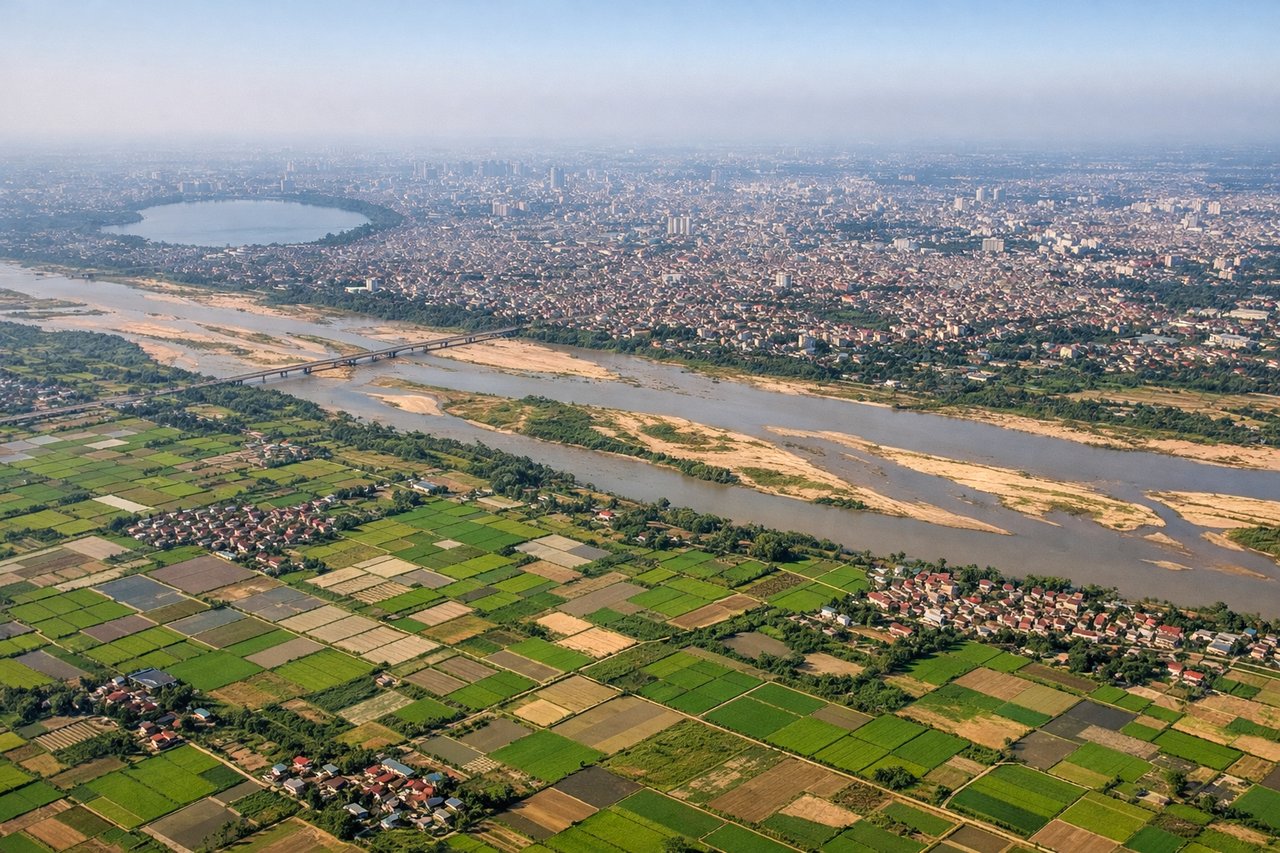
RIGHTRight-side seats offer views of the Red River Delta and Hanoi's urban sprawl as the aircraft climbs southwestward. The delta's intricate waterways and patchwork of rice paddies are distinctive from altitude, and you'll see the city grid fade into agricultural landscape.
Landing at SAI
LEFTLeft-side seats provide excellent views of the Tonle Sap Lake and surrounding Cambodian landscape during descent into Siem Reap. The lake's massive seasonal water body and the forested terrain around it are striking visual markers as you approach from the northeast.
Will your flight be in sunlight?
Pick a date and time in the Sun Map to watch the sun move across your whole flight.
About This Route
Which side of the plane should I sit on flying from Noibai International (HAN) to Siem Reap-Angkor International Airport (SAI)?
Sit on the Left side of the plane for the best views on flights from Hanoi to Siem Reap. While the right side offers excellent takeoff views of the Red River Delta, the left side provides superior landing scenery with the Tonle Sap Lake—Southeast Asia's most visually distinctive freshwater body. The lake's scale and color contrast make it the flight's most memorable geographic feature.
What can I see during takeoff from Noibai International in Hanoi?
During takeoff from Noibai International (HAN), sit on the Right side for the best views. Right-side seats offer views of the Red River Delta and Hanoi's urban sprawl as the aircraft climbs southwestward. The delta's intricate waterways and patchwork of rice paddies are distinctive from altitude, and you'll see the city grid fade into agricultural landscape. Notable sights include: Red River Delta, Hanoi city center and suburbs, Thai Nguyen Province highlands to the northwest, Tonkin Gulf coastline to the east.
What can I see when landing at Siem Reap-Angkor International Airport in Siem Reap?
When landing at Siem Reap-Angkor International Airport (SAI), sit on the Left side for the best views. Left-side seats provide excellent views of the Tonle Sap Lake and surrounding Cambodian landscape during descent into Siem Reap. The lake's massive seasonal water body and the forested terrain around it are striking visual markers as you approach from the northeast. Notable sights include: Tonle Sap Lake (Southeast Asia's largest freshwater lake), Phnom Penh region to the south, Cardamom Mountains to the southwest, Siem Reap Province's flat agricultural plains.
How long is the flight from Hanoi to Siem Reap?
The flight from Noibai International (HAN) to Siem Reap-Angkor International Airport (SAI) takes about 1 hour 25 minutes. The shortest flight path between them is 552 miles (889 km); winds and air traffic control usually add a few percent.
What does the Hanoi to Siem Reap flight path pass over?
The flight path crosses central Vietnam and Cambodia, passing over the Mekong River's upper reaches, transitioning from Vietnamese highlands and the Mekong Delta region into Cambodia's flat plains. You'll see the landscape shift from Vietnam's more densely populated river valleys to Cambodia's more forested and agricultural terrain. The Mekong River itself may be visible as a brown ribbon during portions of the flight, particularly as you approach Cambodian airspace. The terrain gradually flattens from the Vietnamese highlands into the Cambodian plains that surround Tonle Sap Lake.