While takeoff offers good views of Havana and the Straits, the landing approach into Cancun provides more dramatic and colorful scenery—the turquoise Caribbean waters and the stark contrast between sea and the flat Yucatan Peninsula are more visually distinctive than the departure views.
Flown HAV to CUN? Did we get it right?
Flight Path
Havana to Cancun is 316 miles (509 km), a flight of about 1 hour 10 minutes.
The flight path crosses the Straits of Florida heading west-northwest, then turns southwest over open Caribbean waters. The Yucatan Channel (between Cuba's northern coast and Mexico's Yucatan Peninsula) dominates the midpoint of the route. At cruise altitude, you'll see only open water for most of the journey—the Caribbean appears as a uniform blue expanse with occasional whitecaps and rare ship traffic visible. The Yucatan Peninsula's flat, low profile becomes visible on the horizon approximately 20 minutes before landing, appearing as a thin tan line where vegetation meets water.
Great circle distance and headings ›Phase by phase
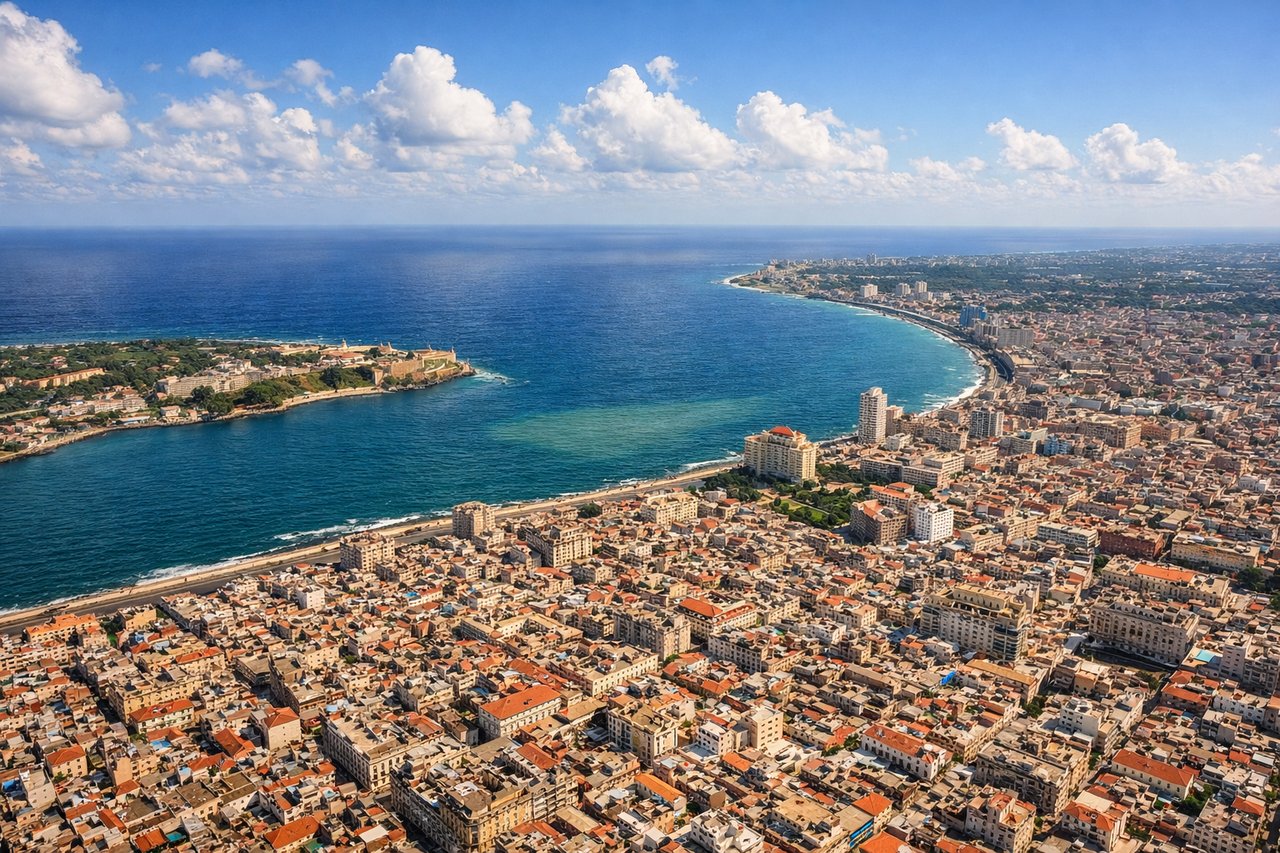
Takeoff from HAV
RIGHTRight-side seats capture the northern coastline of Havana and the Straits of Florida as the aircraft climbs westbound. You'll see the city grid and harbor receding below, then the open water that separates Cuba from Florida.
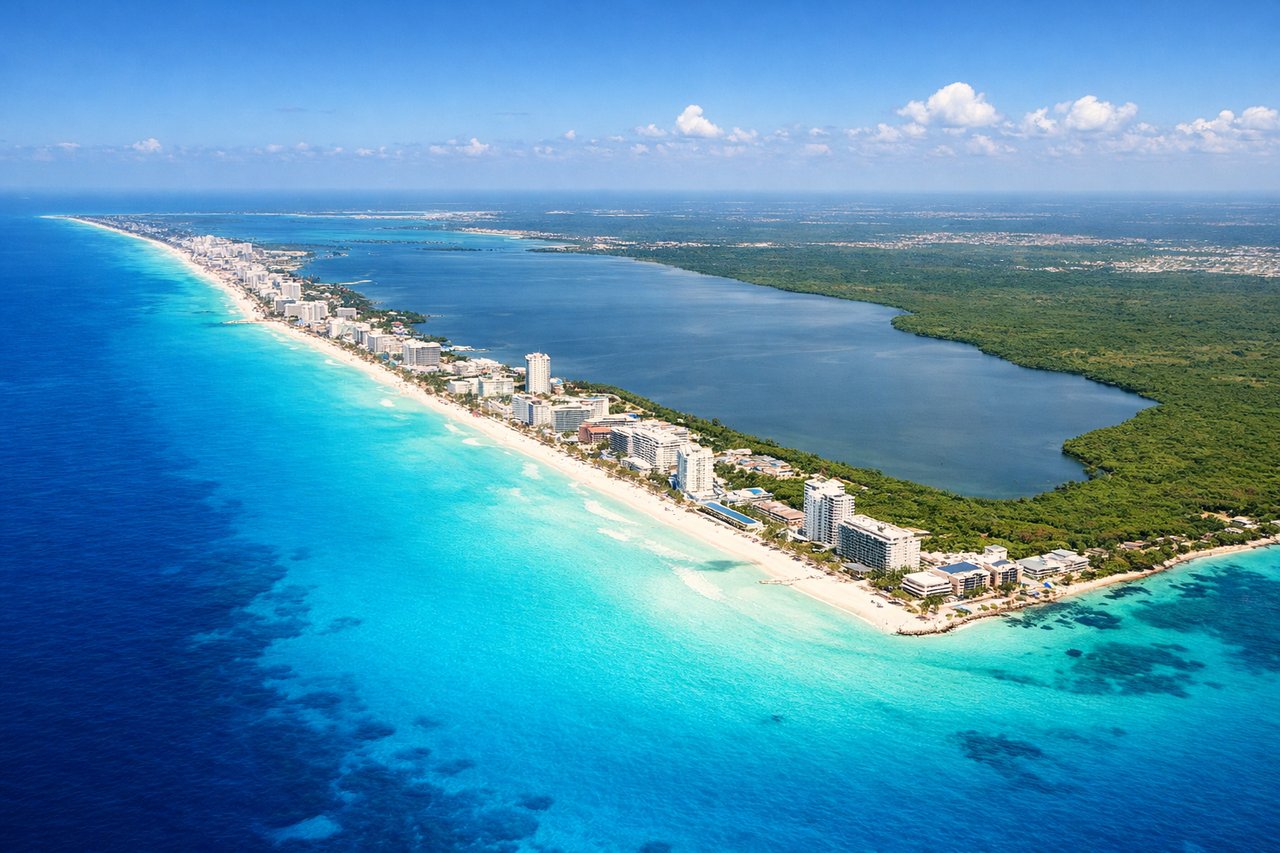
Landing at CUN
LEFTLeft-side seats offer the best view during descent into Cancun. You'll see the Yucatan Peninsula's distinctive flat terrain, the turquoise Caribbean waters, and Cancun's hotel zone along the coast as you approach from the east.
Will your flight be in sunlight?
Pick a date and time in the Sun Map to watch the sun move across your whole flight.
About This Route
Which side of the plane should I sit on flying from Jose Marti International (HAV) to Cancun International (CUN)?
Sit on the Left side of the plane for the best views on flights from Havana to Cancun. While takeoff offers good views of Havana and the Straits, the landing approach into Cancun provides more dramatic and colorful scenery—the turquoise Caribbean waters and the stark contrast between sea and the flat Yucatan Peninsula are more visually distinctive than the departure views.
What can I see during takeoff from Jose Marti International in Havana?
During takeoff from Jose Marti International (HAV), sit on the Right side for the best views. Right-side seats capture the northern coastline of Havana and the Straits of Florida as the aircraft climbs westbound. You'll see the city grid and harbor receding below, then the open water that separates Cuba from Florida. Notable sights include: Havana Harbor (Bahía de La Habana), the Malecón waterfront promenade, Straits of Florida, northern Cuban coastline.
What can I see when landing at Cancun International in Cancun?
When landing at Cancun International (CUN), sit on the Left side for the best views. Left-side seats offer the best view during descent into Cancun. You'll see the Yucatan Peninsula's distinctive flat terrain, the turquoise Caribbean waters, and Cancun's hotel zone along the coast as you approach from the east. Notable sights include: Caribbean Sea (turquoise shallow waters), Cancun Hotel Zone (Zona Hotelera), Yucatan Peninsula coastline, Laguna Nichupté (inland lagoon).
How long is the flight from Havana to Cancun?
The flight from Jose Marti International (HAV) to Cancun International (CUN) takes about 1 hour 10 minutes. The shortest flight path between them is 316 miles (509 km); winds and air traffic control usually add a few percent.
What does the Havana to Cancun flight path pass over?
The flight path crosses the Straits of Florida heading west-northwest, then turns southwest over open Caribbean waters. The Yucatan Channel (between Cuba's northern coast and Mexico's Yucatan Peninsula) dominates the midpoint of the route. At cruise altitude, you'll see only open water for most of the journey—the Caribbean appears as a uniform blue expanse with occasional whitecaps and rare ship traffic visible. The Yucatan Peninsula's flat, low profile becomes visible on the horizon approximately 20 minutes before landing, appearing as a thin tan line where vegetation meets water.