While takeoff offers good island scenery on the left, the landing approach to Cape Town on the right provides the most dramatic and iconic views: Table Mountain and the Cape Peninsula are world-renowned landmarks with exceptional visual impact from altitude.
Flight Path
The flight path crosses the South Atlantic between Saint Helena and the African mainland. At cruise altitude (typically 31,000-35,000 ft), the open ocean dominates the view with no significant landmarks visible. As the aircraft approaches the African coast near the Western Cape, the coastline becomes visible, followed by the Hottentots Holland Mountains and eventually Table Mountain and the Cape Peninsula on final approach.
Great circle distance and headings ›

Phase by phase
Takeoff from HLE
LEFTSaint Helena is a remote volcanic island with steep cliffs on its western and northern shores. Left-side seats face toward the Atlantic Ocean and capture the island's dramatic escarpments and the open ocean as you climb out.
Landing at CPT
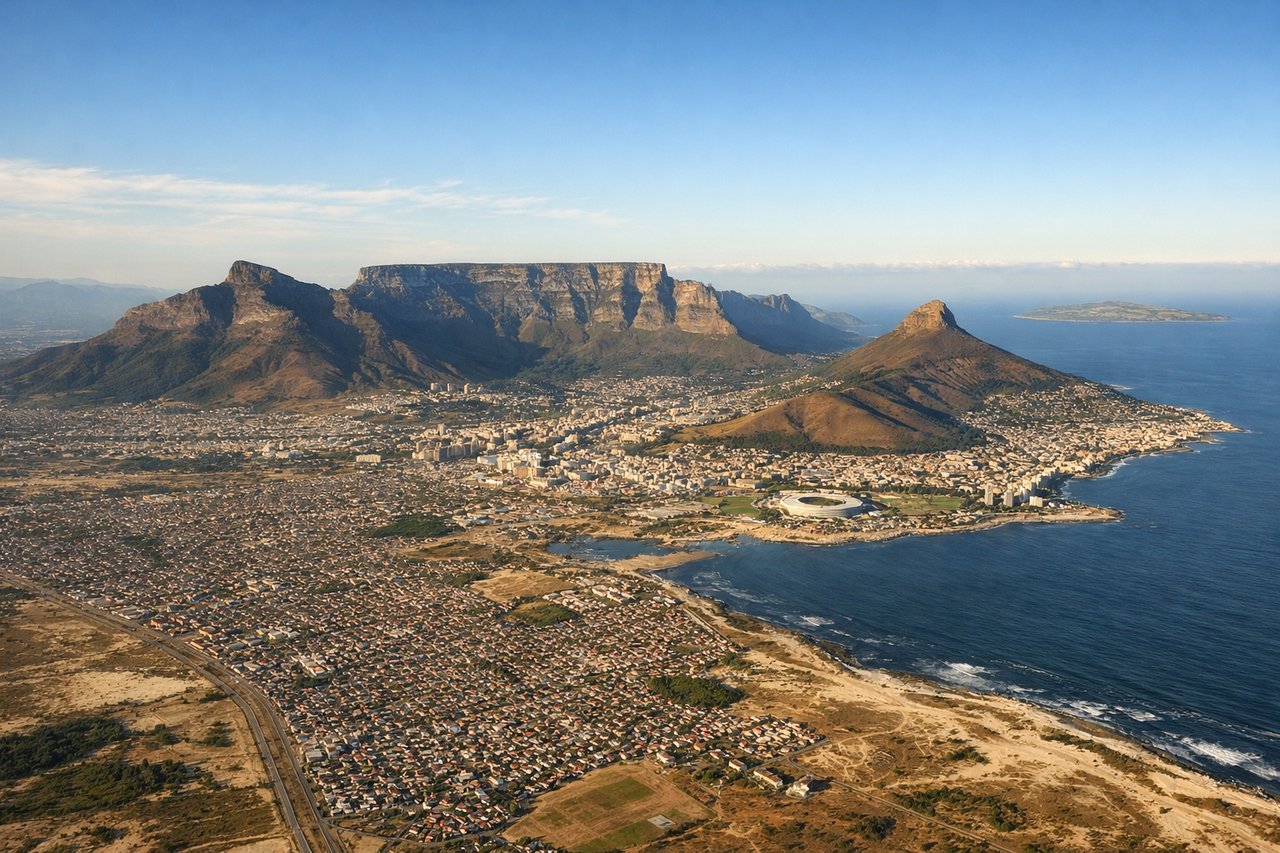
RIGHTThe approach to Cape Town from the northeast brings the Table Mountain massif and the Cape Peninsula into view on the right side. Right-side seats offer the best perspective of Table Mountain's distinctive flat-topped profile, the Twelve Apostles ridge line, and the city sprawl of Cape Town below.
Landmarks on this routeAll landmarks →
Will your flight be in sunlight?
See exactly which side of the plane gets sun and shade at your departure time.
About This Route
Which side of the plane should I sit on flying from Saint Helena International Airport (HLE) to Cape Town International (CPT)?
Sit on the Right side of the plane for the best views on flights from Jamestown to Cape Town. While takeoff offers good island scenery on the left, the landing approach to Cape Town on the right provides the most dramatic and iconic views: Table Mountain and the Cape Peninsula are world-renowned landmarks with exceptional visual impact from altitude.
What can I see during takeoff from Saint Helena International Airport in Jamestown?
During takeoff from Saint Helena International Airport (HLE), sit on the Left side for the best views. Saint Helena is a remote volcanic island with steep cliffs on its western and northern shores. Left-side seats face toward the Atlantic Ocean and capture the island's dramatic escarpments and the open ocean as you climb out. Notable sights include: Saint Helena's volcanic peaks (Diana Peak at 2,680 ft), the northern sea cliffs, Jamestown settlement in Rupert's Valley, the Atlantic coastline.
What can I see when landing at Cape Town International in Cape Town?
When landing at Cape Town International (CPT), sit on the Right side for the best views. The approach to Cape Town from the northeast brings the Table Mountain massif and the Cape Peninsula into view on the right side. Right-side seats offer the best perspective of Table Mountain's distinctive flat-topped profile, the Twelve Apostles ridge line, and the city sprawl of Cape Town below. Notable sights include: Table Mountain (3,563 ft) with its iconic flat summit, the Twelve Apostles peaks along the spine of the Cape Peninsula, False Bay to the southeast, the Atlantic coastline of the western Cape.
How long is the flight from Jamestown to Cape Town?
The flight from Saint Helena International Airport (HLE) to Cape Town International (CPT) takes 5h 45m.
What does the Jamestown to Cape Town flight path pass over?
The flight path crosses the South Atlantic between Saint Helena and the African mainland. At cruise altitude (typically 31,000-35,000 ft), the open ocean dominates the view with no significant landmarks visible. As the aircraft approaches the African coast near the Western Cape, the coastline becomes visible, followed by the Hottentots Holland Mountains and eventually Table Mountain and the Cape Peninsula on final approach.