The left side wins overall because it captures both a strong departure view (Tokyo skyline and possible Mt. Fuji sighting) and, more importantly, several hours of dramatic mountain scenery during cruise as the great-circle route swings up past the Gulf of Alaska and down the Alaska/Cascade mountain corridor. The right side spends most of the 10+ hour flight over open ocean, only gaining a scenic edge briefly during the final LA coastal approach.
Flight Path
Open North Pacific Ocean, with the flight path curving north of the direct line to pass south of the Aleutian Islands and through the Gulf of Alaska region; no land is directly visible at the exact midpoint, though the route later closes in on the Alaskan and Canadian coastline.
Great circle distance and headings ›
.jpg?width=600)
Phase by phase
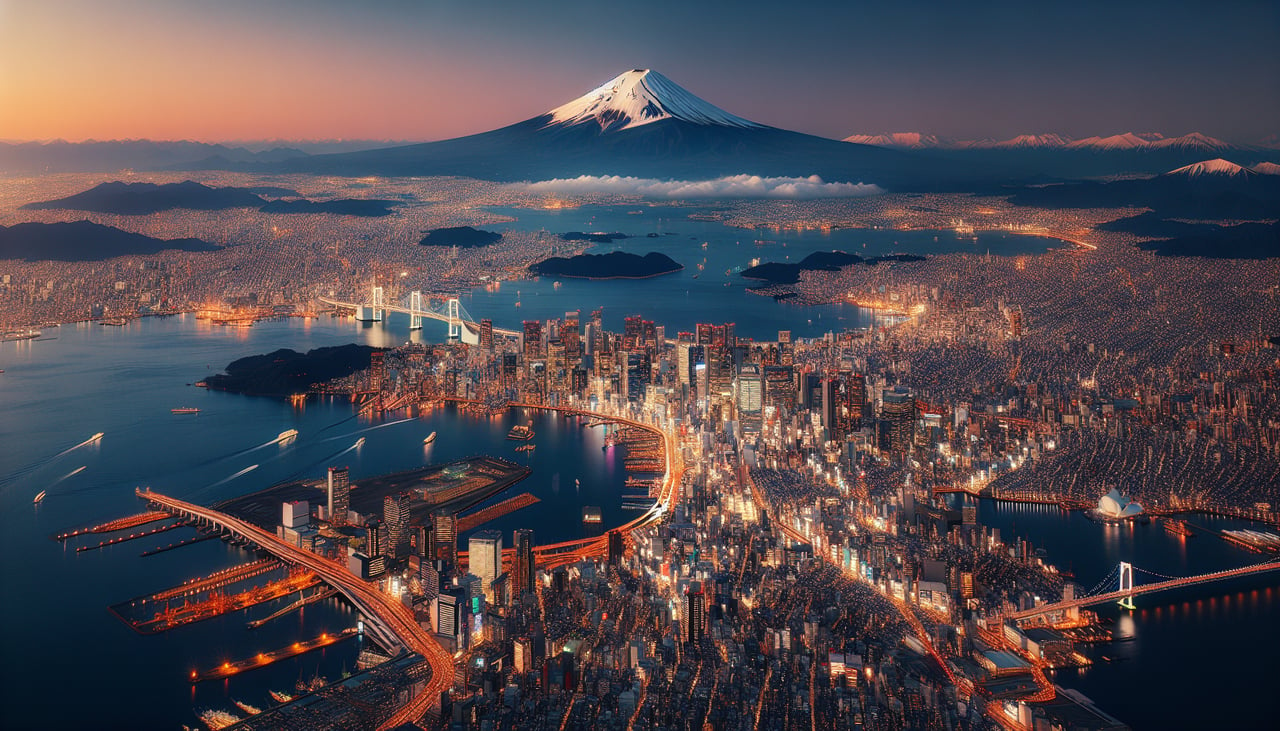
Takeoff from HND
LEFTDeparting Haneda over Tokyo Bay, the flight typically turns north to parallel the Honshu coast before heading out across the Pacific, giving the left side a sweeping view of the Tokyo skyline and, on clear days, a distant glimpse of Mt. Fuji to the southwest. The right side mostly shows the bay waters and industrial Kawasaki-Yokohama waterfront, which is less visually distinctive.
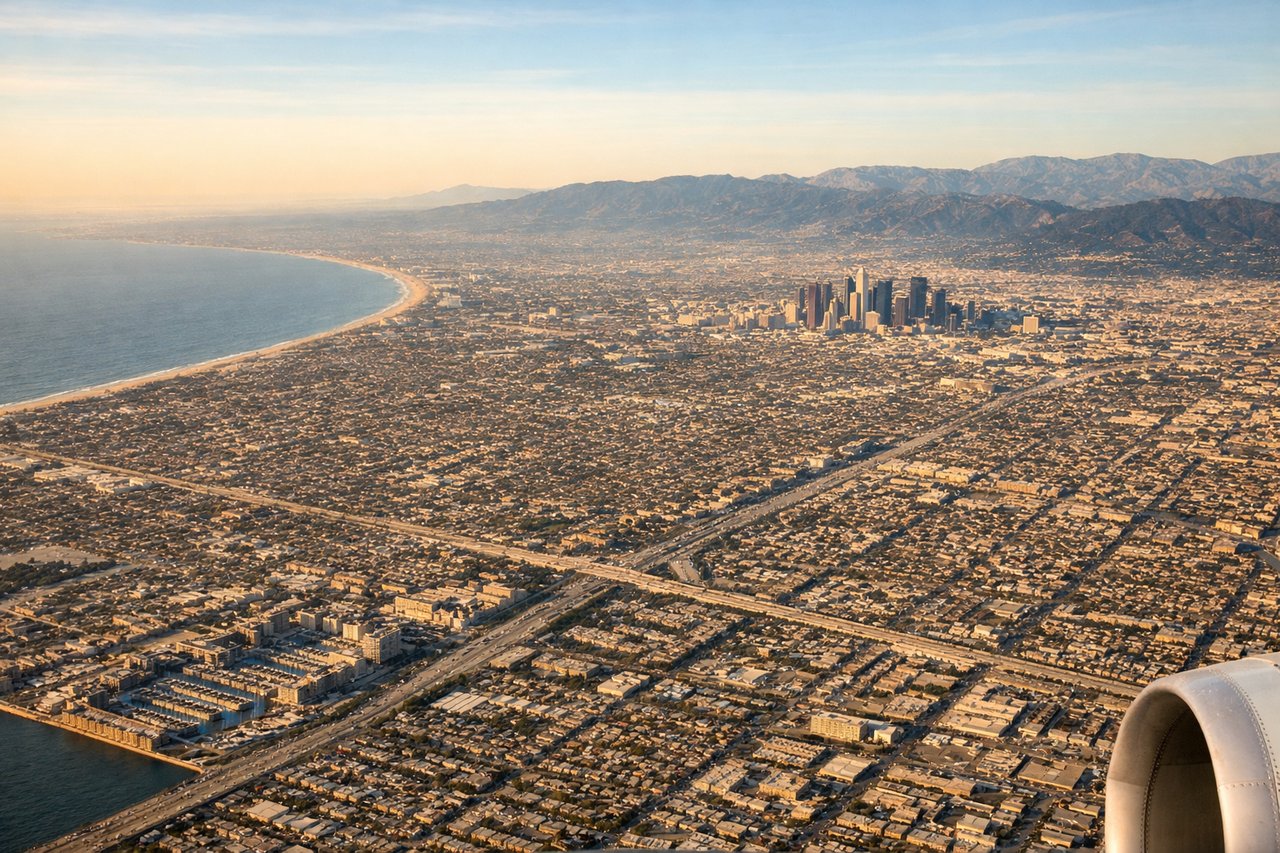
Landing at LAX
RIGHTOn approach into LAX under the typical west-flow pattern, arriving flights from the north swing out over Santa Monica Bay before turning to line up for the westbound runways, giving right-side passengers a clear view of the Downtown LA skyline, Hollywood Hills, and Griffith Park just before the final turn. The left side mainly shows the South Bay and Palos Verdes Peninsula, which is scenic but less iconic.
Landmarks on this routeAll landmarks →
Will your flight be in sunlight?
See exactly which side of the plane gets sun and shade at your departure time.
About This Route
Which side of the plane should I sit on flying from Tokyo International (HND) to Los Angeles International (LAX)?
Sit on the Left side of the plane for the best views on flights from Tokyo to Los Angeles. The left side wins overall because it captures both a strong departure view (Tokyo skyline and possible Mt. Fuji sighting) and, more importantly, several hours of dramatic mountain scenery during cruise as the great-circle route swings up past the Gulf of Alaska and down the Alaska/Cascade mountain corridor. The right side spends most of the 10+ hour flight over open ocean, only gaining a scenic edge briefly during the final LA coastal approach.
What can I see during takeoff from Tokyo International in Tokyo?
During takeoff from Tokyo International (HND), sit on the Left side for the best views. Departing Haneda over Tokyo Bay, the flight typically turns north to parallel the Honshu coast before heading out across the Pacific, giving the left side a sweeping view of the Tokyo skyline and, on clear days, a distant glimpse of Mt. Fuji to the southwest. The right side mostly shows the bay waters and industrial Kawasaki-Yokohama waterfront, which is less visually distinctive. Notable sights include: Tokyo Tower and Skytree skyline, Tokyo Bay shoreline, Mt. Fuji (distant, weather permitting), Boso Peninsula coastline.
What can I see when landing at Los Angeles International in Los Angeles?
When landing at Los Angeles International (LAX), sit on the Right side for the best views. On approach into LAX under the typical west-flow pattern, arriving flights from the north swing out over Santa Monica Bay before turning to line up for the westbound runways, giving right-side passengers a clear view of the Downtown LA skyline, Hollywood Hills, and Griffith Park just before the final turn. The left side mainly shows the South Bay and Palos Verdes Peninsula, which is scenic but less iconic. Notable sights include: Downtown Los Angeles skyline, Hollywood Hills and Griffith Observatory, Santa Monica Bay coastline, Palos Verdes Peninsula in the distance.
How long is the flight from Tokyo to Los Angeles?
The flight from Tokyo International (HND) to Los Angeles International (LAX) takes 10h 30m.
What does the Tokyo to Los Angeles flight path pass over?
Open North Pacific Ocean, with the flight path curving north of the direct line to pass south of the Aleutian Islands and through the Gulf of Alaska region; no land is directly visible at the exact midpoint, though the route later closes in on the Alaskan and Canadian coastline.