While takeoff offers coastal views, the landing approach provides more dramatic and sustained scenery with the Dallas-Fort Worth metropolitan area, river valleys, and terrain transitions. Right-side seats capture the approach descent with excellent city views.
Flight Path
The flight path crosses central Texas prairie and grassland. Notable features include the Brazos River valley (visible during mid-flight), transition from coastal plains to rolling prairie, scattered lakes and reservoirs in the Waxahachie area, and the gradual rise toward the DFW plateau. No major mountain ranges are visible on this route—the terrain is predominantly flat to gently rolling throughout.
Great circle distance and headings ›Phase by phase
Takeoff from HOU
LEFTLeft side offers views of Galveston Bay and the Texas Gulf Coast as you climb out from Hobby. The bay's distinctive shape and coastal barrier islands are clearly visible during the initial climb to cruising altitude.
Landing at DFW
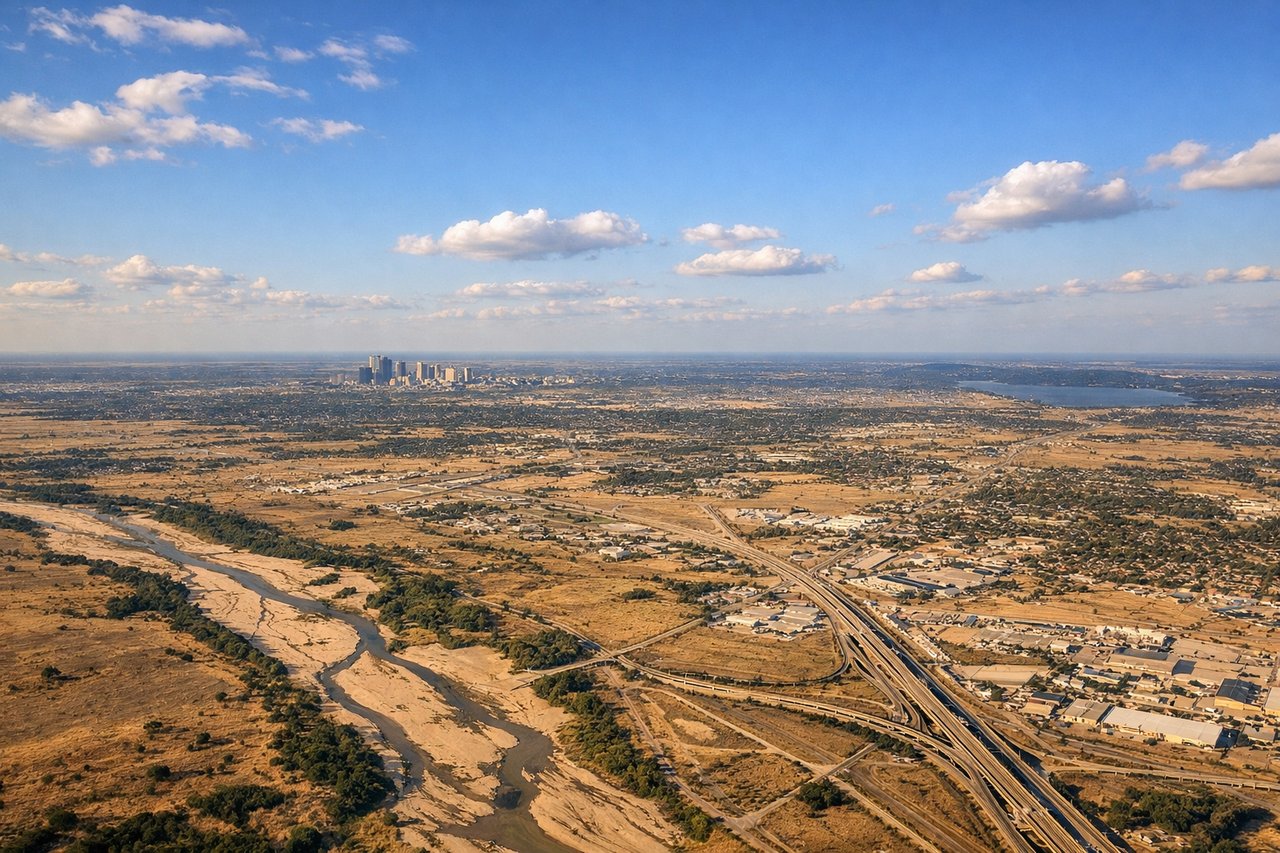
RIGHTRight side provides excellent views of the Dallas-Fort Worth metropolis and the Trinity River valley during descent. You'll see the distinctive urban sprawl of both cities and the terrain transitions from prairie to the more developed DFW corridor.
Will your flight be in sunlight?
See exactly which side of the plane gets sun and shade at your departure time.
About This Route
Which side of the plane should I sit on flying from William P Hobby (HOU) to Dallas Fort Worth International (DFW)?
Sit on the Right side of the plane for the best views on flights from Houston to Dallas-Fort Worth. While takeoff offers coastal views, the landing approach provides more dramatic and sustained scenery with the Dallas-Fort Worth metropolitan area, river valleys, and terrain transitions. Right-side seats capture the approach descent with excellent city views.
What can I see during takeoff from William P Hobby in Houston?
During takeoff from William P Hobby (HOU), sit on the Left side for the best views. Left side offers views of Galveston Bay and the Texas Gulf Coast as you climb out from Hobby. The bay's distinctive shape and coastal barrier islands are clearly visible during the initial climb to cruising altitude. Notable sights include: Galveston Bay, Galveston Island, Trinity Bay, Buffalo Bayou corridor.
What can I see when landing at Dallas Fort Worth International in Dallas-Fort Worth?
When landing at Dallas Fort Worth International (DFW), sit on the Right side for the best views. Right side provides excellent views of the Dallas-Fort Worth metropolis and the Trinity River valley during descent. You'll see the distinctive urban sprawl of both cities and the terrain transitions from prairie to the more developed DFW corridor. Notable sights include: Dallas skyline, Fort Worth urban area, Trinity River, Lake Lewisville (north of approach path).
How long is the flight from Houston to Dallas-Fort Worth?
The flight from William P Hobby (HOU) to Dallas Fort Worth International (DFW) takes 1h 15m.
What does the Houston to Dallas-Fort Worth flight path pass over?
The flight path crosses central Texas prairie and grassland. Notable features include the Brazos River valley (visible during mid-flight), transition from coastal plains to rolling prairie, scattered lakes and reservoirs in the Waxahachie area, and the gradual rise toward the DFW plateau. No major mountain ranges are visible on this route—the terrain is predominantly flat to gently rolling throughout.