Right-side seats capture the most dramatic scenery: Ibiza's Mediterranean coastline during departure is visually superior to the English countryside on approach. While the landing view is pleasant, the takeoff panorama of rocky cliffs and turquoise sea offers more memorable window-seat photography.
Flown IBZ to LGW? Did we get it right?
Flight Path
Ibiza to London is 852 miles (1,370 km), a flight of about 2 hours 15 minutes.
The flight path crosses the Bay of Biscay and the English Channel. Midway, passengers may glimpse the Pyrenees as a distant ridge on the southern horizon (visible from higher altitudes around 25,000-30,000 feet), though these are typically too far south to be prominent. The flight primarily crosses open water and cloud cover over the Bay. As the aircraft approaches the UK, the Cornish and Devon coastlines become visible on the left (west) side, with the English Channel narrowing toward the Strait of Dover. The South Downs and North Downs become visible during the final descent phase over southern England.
Great circle distance and headings ›

Phase by phase
Takeoff from IBZ
RIGHTRight-side seats offer views of Ibiza's northern coastline and the Balearic Sea immediately after departure. The aircraft typically climbs northwestward, giving right-side passengers clear sightlines of the island's rocky coves and the Mediterranean before turning toward the UK.
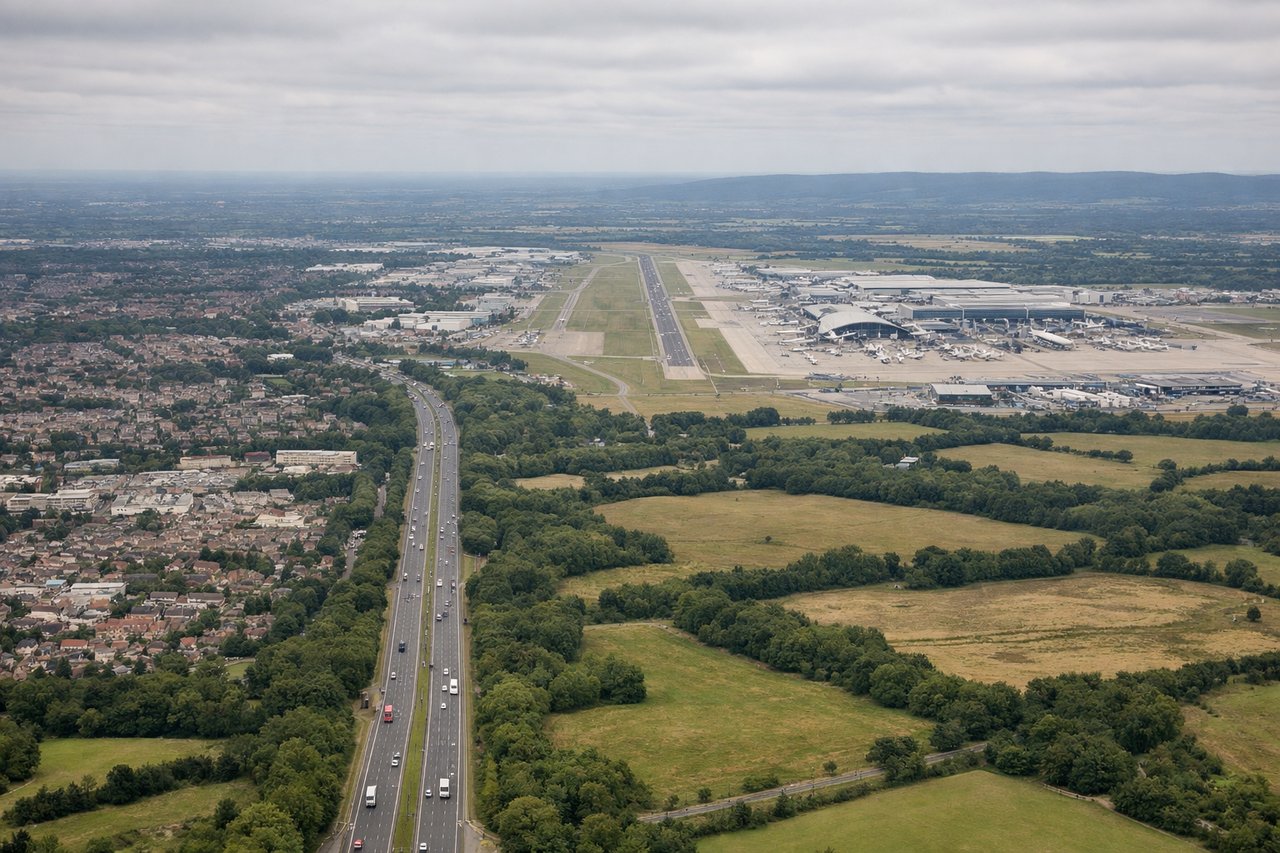
Landing at LGW
LEFTLeft-side seats provide views of the English countryside and the approach to Gatwick from the south. Aircraft descend over the Surrey and Sussex landscape, with the North Downs visible on the left before final approach over the airport's southern runway area.
Will your flight be in sunlight?
Pick a date and time in the Sun Map to watch the sun move across your whole flight.
About This Route
Which side of the plane should I sit on flying from Ibiza (IBZ) to Gatwick (LGW)?
Sit on the Right side of the plane for the best views on flights from Ibiza to London. Right-side seats capture the most dramatic scenery: Ibiza's Mediterranean coastline during departure is visually superior to the English countryside on approach. While the landing view is pleasant, the takeoff panorama of rocky cliffs and turquoise sea offers more memorable window-seat photography.
What can I see during takeoff from Ibiza in Ibiza?
During takeoff from Ibiza (IBZ), sit on the Right side for the best views. Right-side seats offer views of Ibiza's northern coastline and the Balearic Sea immediately after departure. The aircraft typically climbs northwestward, giving right-side passengers clear sightlines of the island's rocky coves and the Mediterranean before turning toward the UK. Notable sights include: Ibiza's northern rocky coastline, Balearic Sea, Formentera island (visible to the south on the horizon during initial climb), Mediterranean coastal cliffs.
What can I see when landing at Gatwick in London?
When landing at Gatwick (LGW), sit on the Left side for the best views. Left-side seats provide views of the English countryside and the approach to Gatwick from the south. Aircraft descend over the Surrey and Sussex landscape, with the North Downs visible on the left before final approach over the airport's southern runway area. Notable sights include: North Downs ridge, Surrey countryside (patchwork fields and woodland), River Mole valley, Gatwick airport complex.
How long is the flight from Ibiza to London?
The flight from Ibiza (IBZ) to Gatwick (LGW) takes about 2 hours 15 minutes. The shortest flight path between them is 852 miles (1,370 km); winds and air traffic control usually add a few percent.
What does the Ibiza to London flight path pass over?
The flight path crosses the Bay of Biscay and the English Channel. Midway, passengers may glimpse the Pyrenees as a distant ridge on the southern horizon (visible from higher altitudes around 25,000-30,000 feet), though these are typically too far south to be prominent. The flight primarily crosses open water and cloud cover over the Bay. As the aircraft approaches the UK, the Cornish and Devon coastlines become visible on the left (west) side, with the English Channel narrowing toward the Strait of Dover. The South Downs and North Downs become visible during the final descent phase over southern England.