Izmir to Dublin is 1,875 miles (3,018 km), a flight of about 4 hours 15 minutes.
While the takeoff offers good Aegean views, the landing approach into Dublin provides more dramatic and varied scenery—Dublin Bay, Howth Peninsula, and the River Liffey estuary are all visually distinctive. The right side captures the arrival experience more memorably.
Flight Path
The flight path crosses the Mediterranean toward the Tyrrhenian Sea, then over southern Italy (Sicily visible on the left side of the route), across the central Mediterranean, then over southern France and the Bay of Biscay. Notable midpoint landmarks include the Italian coastline near Calabria, the Balearic Islands region (south of the typical flight path), and the Pyrenees on the France-Spain border (visible on the left/north side during the westbound leg). The Bay of Biscay crossing offers open ocean views with occasional cloud formations. As the aircraft approaches Ireland, the Welsh coastline and Irish Sea become visible before the final descent into Dublin.
Great circle distance and headings ›


.jpeg?width=600)
Phase by phase
Takeoff from IGL
LEFTLeft side offers immediate views of Izmir Bay and the Aegean coastline as the aircraft climbs northwest. You'll see the city sprawl of Izmir itself and the distinctive coastal geography that defines this region.
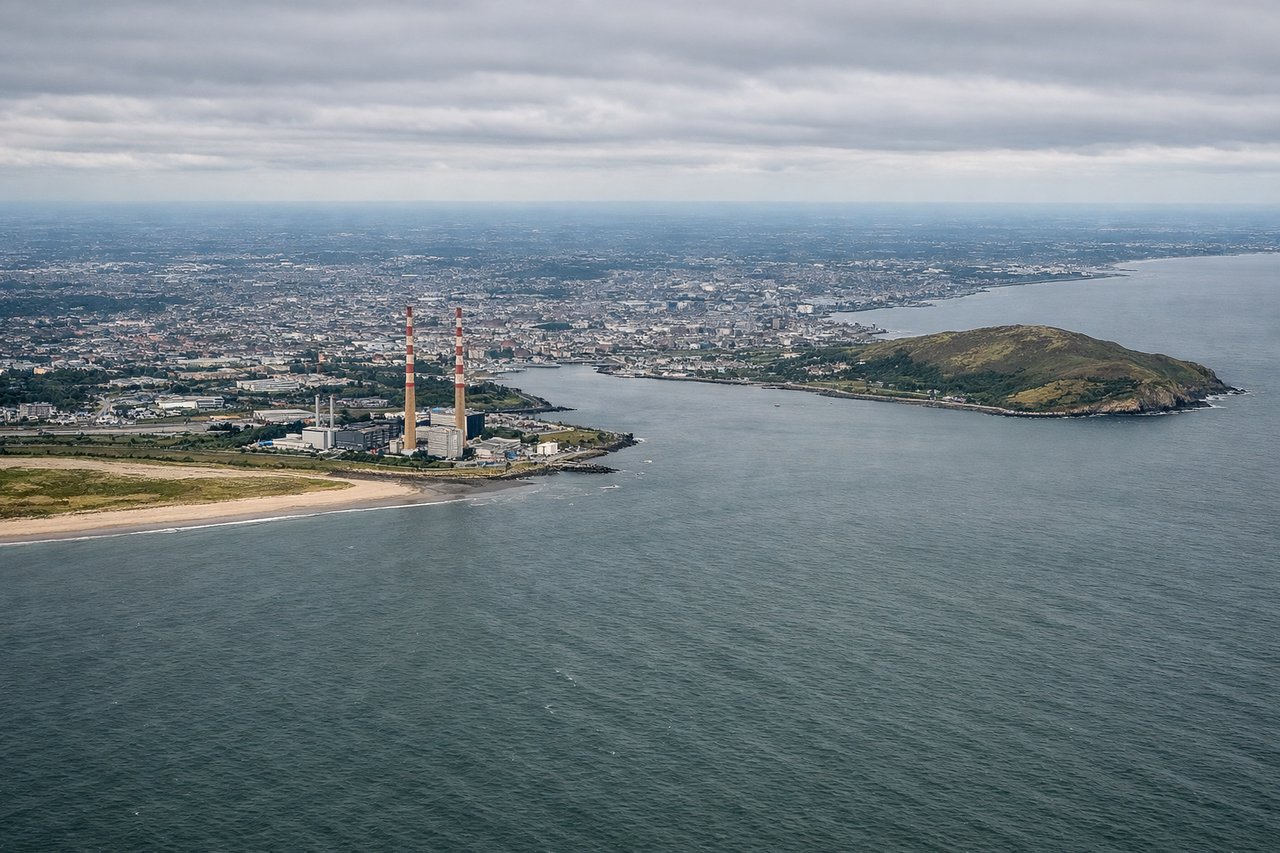
Landing at DUB
RIGHTRight side provides excellent views during the final approach into Dublin. You'll see the Irish coastline, Dublin Bay, and the city's geography as you descend toward the runway on a westerly approach.
Landmarks on this routeAll landmarks →
Will your flight be in sunlight?
Pick a date and time in the Sun Map to watch the sun move across your whole flight.
About This Route
Which side of the plane should I sit on flying from Cigli (IGL) to Dublin (DUB)?
Sit on the Right side of the plane for the best views on flights from Izmir to Dublin. While the takeoff offers good Aegean views, the landing approach into Dublin provides more dramatic and varied scenery—Dublin Bay, Howth Peninsula, and the River Liffey estuary are all visually distinctive. The right side captures the arrival experience more memorably.
What can I see during takeoff from Cigli in Izmir?
During takeoff from Cigli (IGL), sit on the Left side for the best views. Left side offers immediate views of Izmir Bay and the Aegean coastline as the aircraft climbs northwest. You'll see the city sprawl of Izmir itself and the distinctive coastal geography that defines this region. Notable sights include: Izmir Bay, Aegean Sea coastline, Mount Pagus (Kadifekale), Alsancak district waterfront.
What can I see when landing at Dublin in Dublin?
When landing at Dublin (DUB), sit on the Right side for the best views. Right side provides excellent views during the final approach into Dublin. You'll see the Irish coastline, Dublin Bay, and the city's geography as you descend toward the runway on a westerly approach. Notable sights include: Dublin Bay, Howth Peninsula, River Liffey estuary, Dublin city center and Docklands.
How long is the flight from Izmir to Dublin?
The flight from Cigli (IGL) to Dublin (DUB) takes about 4 hours 15 minutes. The shortest flight path between them is 1,875 miles (3,018 km); winds and air traffic control usually add a few percent.
What does the Izmir to Dublin flight path pass over?
The flight path crosses the Mediterranean toward the Tyrrhenian Sea, then over southern Italy (Sicily visible on the left side of the route), across the central Mediterranean, then over southern France and the Bay of Biscay. Notable midpoint landmarks include the Italian coastline near Calabria, the Balearic Islands region (south of the typical flight path), and the Pyrenees on the France-Spain border (visible on the left/north side during the westbound leg). The Bay of Biscay crossing offers open ocean views with occasional cloud formations. As the aircraft approaches Ireland, the Welsh coastline and Irish Sea become visible before the final descent into Dublin.