Right-side seats capture the most dramatic scenery: the Taurus Mountains at takeoff are visually striking and immediately prominent. While the landing approach offers good Danube views on the left, the mountainous terrain visible from the right during the first two hours of flight—including the Taurus range and the transition across Anatolia—provides more sustained visual interest than the relatively flat approach into Vienna.
Flown ISE to VIE? Did we get it right?
Flight Path
Isparta to Vienna is 991 miles (1,595 km), a flight of about 3 hours 15 minutes.
The flight path crosses central Anatolia (relatively flat, sparse settlements), then transitions over the Anatolian plateau toward the Balkans. Notable midpoint features include the Konya Plain (flat agricultural region), the transition zone into the Balkans near the Turkish-Bulgarian border, the Rhodope Mountains on the Bulgaria-Greece border, and the Danube River valley as the aircraft descends into Austria. The route generally follows a northwest trajectory, crossing from Mediterranean climate zones into temperate European terrain.
Great circle distance and headings ›Phase by phase
Takeoff from ISE
RIGHTRight-side seats offer views of the Taurus Mountains (Toros Dağları) immediately after departure, rising dramatically to the north and northwest. The climb-out path from Isparta typically heads northwest, positioning these peaks perfectly on the right side of the aircraft.
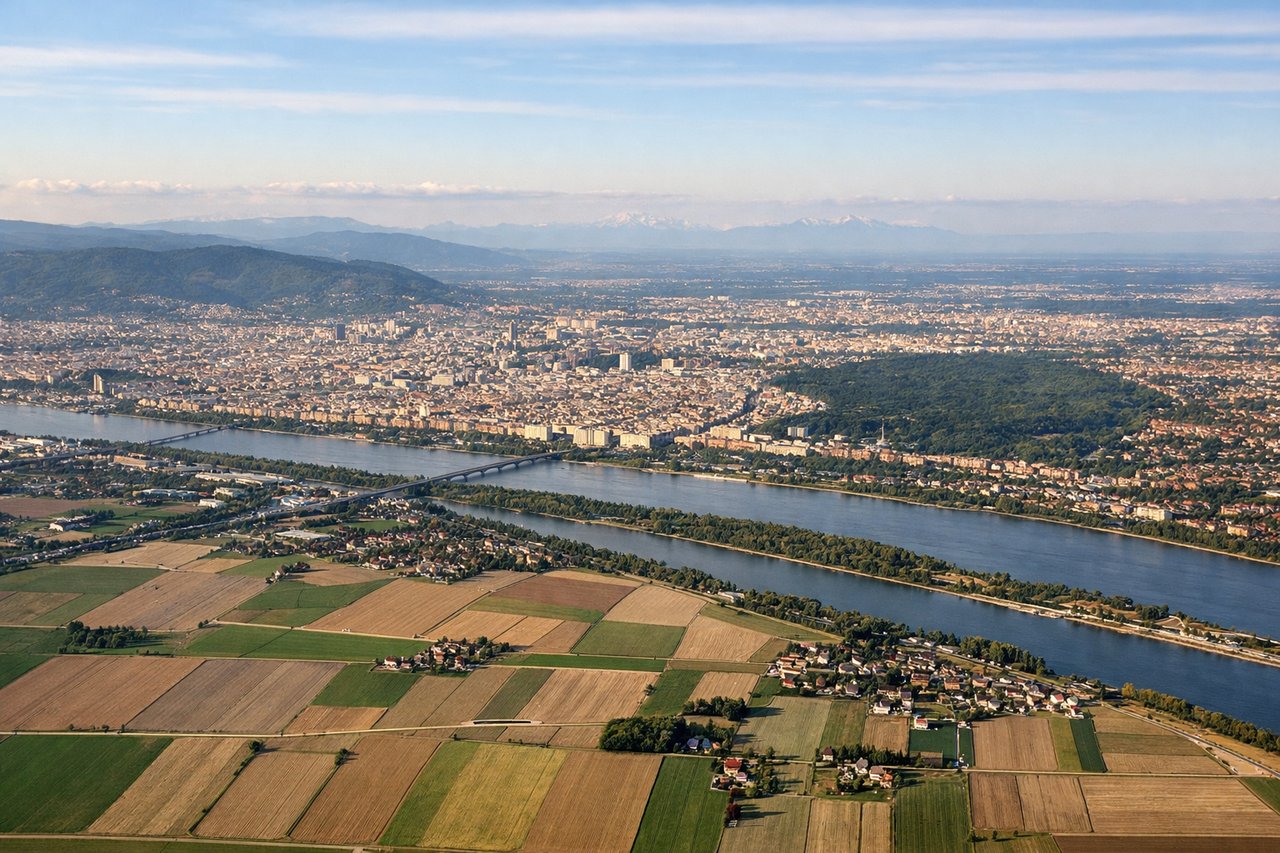
Landing at VIE
LEFTLeft-side seats provide excellent views during the descent into Vienna. The approach typically brings the aircraft over the Danube River valley and the Alpine foothills, with the Carpathian Mountains visible to the east and the Danube's distinctive meanders clearly visible on the left side during final approach.
Will your flight be in sunlight?
Pick a date and time in the Sun Map to watch the sun move across your whole flight.
About This Route
Which side of the plane should I sit on flying from Süleyman Demirel International Airport (ISE) to Schwechat (VIE)?
Sit on the Right side of the plane for the best views on flights from Isparta to Vienna. Right-side seats capture the most dramatic scenery: the Taurus Mountains at takeoff are visually striking and immediately prominent. While the landing approach offers good Danube views on the left, the mountainous terrain visible from the right during the first two hours of flight—including the Taurus range and the transition across Anatolia—provides more sustained visual interest than the relatively flat approach into Vienna.
What can I see during takeoff from Süleyman Demirel International Airport in Isparta?
During takeoff from Süleyman Demirel International Airport (ISE), sit on the Right side for the best views. Right-side seats offer views of the Taurus Mountains (Toros Dağları) immediately after departure, rising dramatically to the north and northwest. The climb-out path from Isparta typically heads northwest, positioning these peaks perfectly on the right side of the aircraft. Notable sights include: Taurus Mountains (Toros Dağları), Lake Eğirdir (Eğirdir Gölü) to the northwest, Isparta city and surrounding Anatolian plateau, foothills of the western Taurus range.
What can I see when landing at Schwechat in Vienna?
When landing at Schwechat (VIE), sit on the Left side for the best views. Left-side seats provide excellent views during the descent into Vienna. The approach typically brings the aircraft over the Danube River valley and the Alpine foothills, with the Carpathian Mountains visible to the east and the Danube's distinctive meanders clearly visible on the left side during final approach. Notable sights include: Danube River (Donau) and its floodplain, Alpine foothills to the south, Carpathian Mountains on the distant eastern horizon, Vienna city sprawl and the Schwechat airport area.
How long is the flight from Isparta to Vienna?
The flight from Süleyman Demirel International Airport (ISE) to Schwechat (VIE) takes about 3 hours 15 minutes. The shortest flight path between them is 991 miles (1,595 km); winds and air traffic control usually add a few percent.
What does the Isparta to Vienna flight path pass over?
The flight path crosses central Anatolia (relatively flat, sparse settlements), then transitions over the Anatolian plateau toward the Balkans. Notable midpoint features include the Konya Plain (flat agricultural region), the transition zone into the Balkans near the Turkish-Bulgarian border, the Rhodope Mountains on the Bulgaria-Greece border, and the Danube River valley as the aircraft descends into Austria. The route generally follows a northwest trajectory, crossing from Mediterranean climate zones into temperate European terrain.