Istanbul to Manila is 5,677 miles (9,137 km), a flight of about 10 hours 45 minutes.
The left side edges ahead thanks to a dramatic landing sequence over Manila Bay and Corregidor, combined with likely cruise-phase views of the Hindu Kush and Himalayan foothills along the route through Pakistan and northern India, giving it more varied high-altitude drama than the right side's ocean-heavy southern stretch.
Flight Path
Route crosses the Zagros Mountains of Iran, the arid plateaus of Afghanistan and Pakistan, the western Himalayan foothills near Kashmir, then continues over the Bay of Bengal, the Malay Peninsula, and the South China Sea before reaching Luzon.
Great circle distance and headings ›_in_Istanbul.jpg?width=600)
.jpg?width=600)


.jpg?width=600)

.jpg?width=600)
Phase by phase
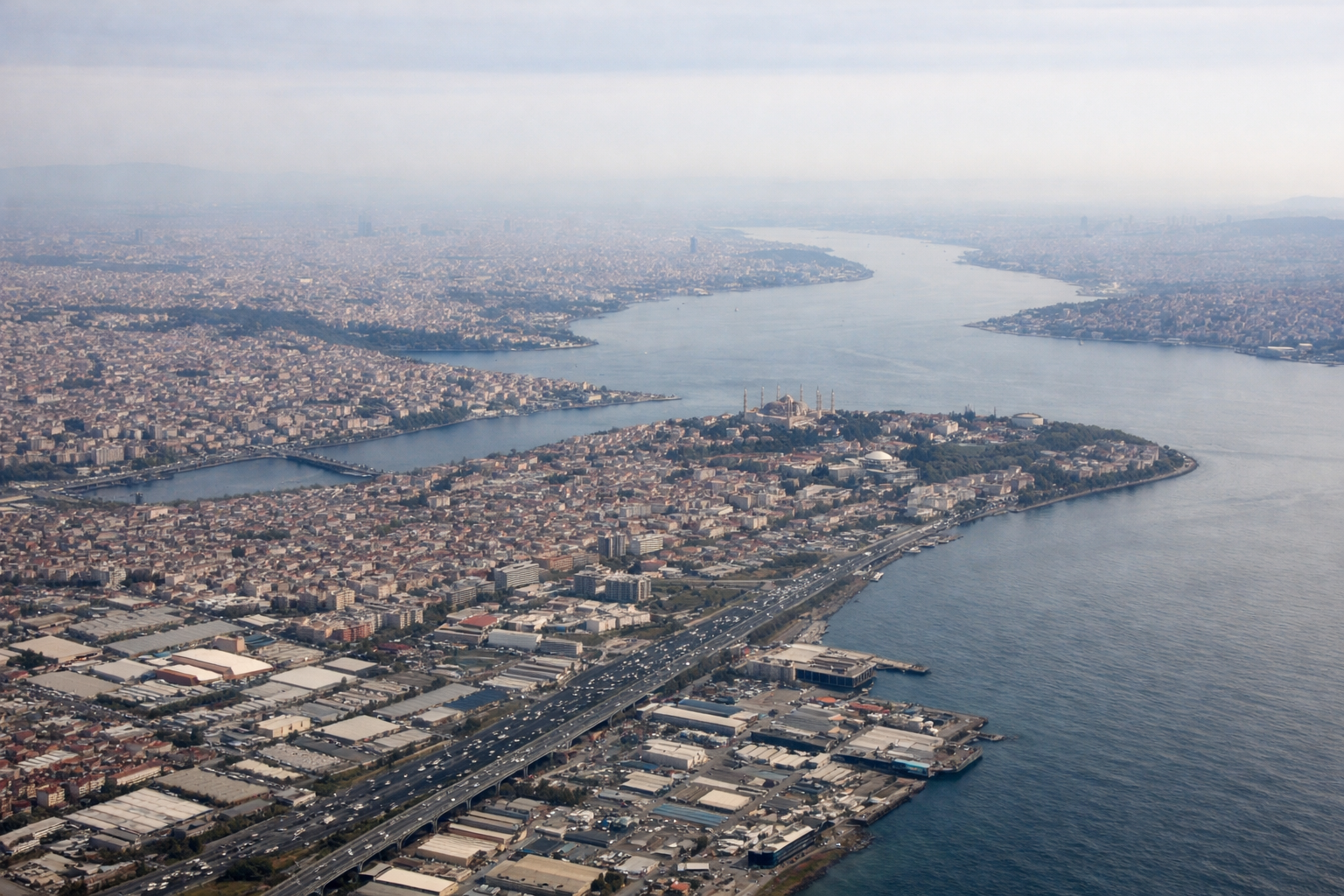
Takeoff from IST
RIGHTDeparting IST to the east, the initial turn typically banks south over the Bosphorus, giving right-side passengers a sweeping view of Istanbul's historic peninsula, the Sea of Marmara, and the Princes' Islands before the climb continues over Anatolia. Left-side passengers mostly see the flatter Black Sea coastal plain.
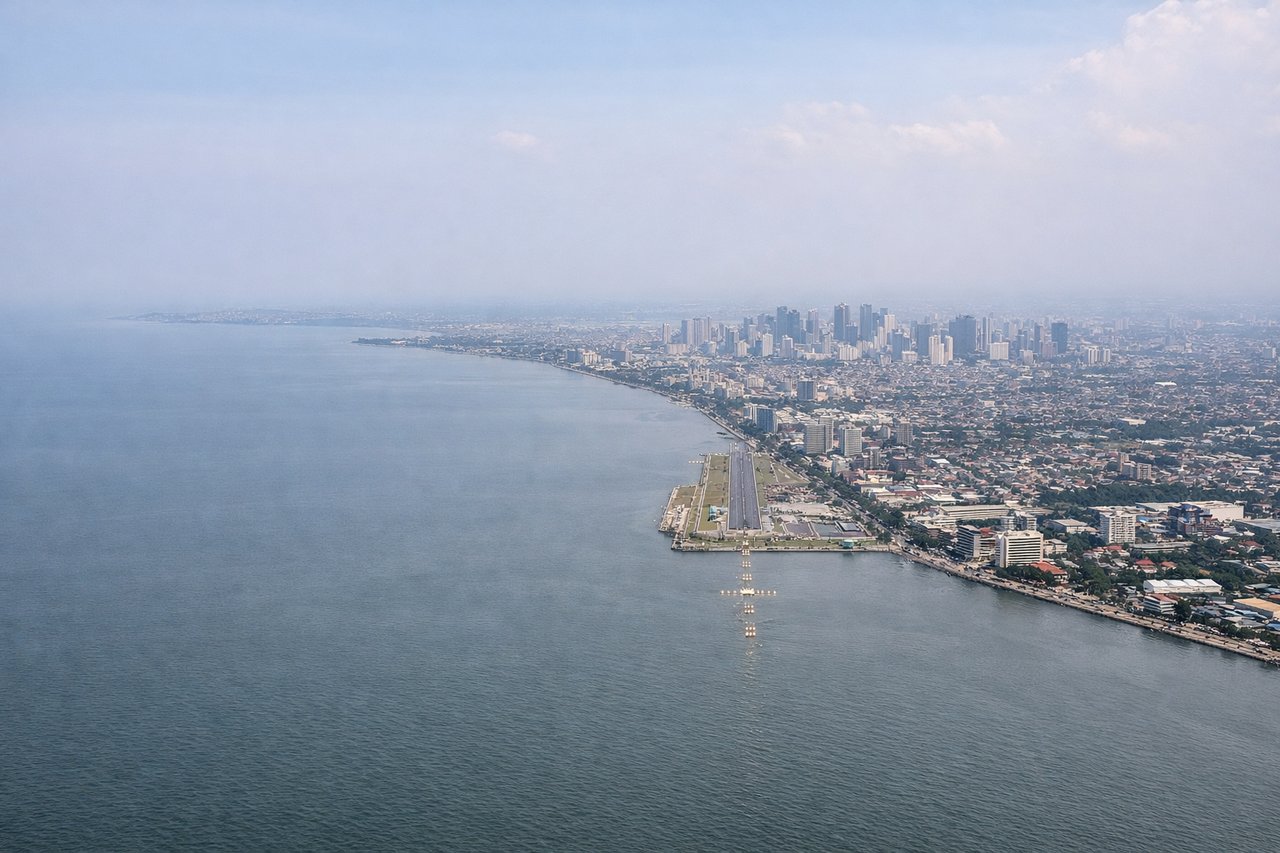
Landing at MNL
LEFTOn approach into Manila during the Amihan season, arrivals often track in from the south over Manila Bay before turning onto final for runway 06, putting the bay, Corregidor Island, and the Bataan Peninsula on the left side. The right side mostly faces inland toward flatter Laguna lowlands.
Landmarks on this routeAll landmarks →
Will your flight be in sunlight?
Pick a date and time in the Sun Map to watch the sun move across your whole flight.
About This Route
Which side of the plane should I sit on flying from İstanbul Airport (IST) to Ninoy Aquino International (MNL)?
Sit on the Left side of the plane for the best views on flights from Istanbul to Manila. The left side edges ahead thanks to a dramatic landing sequence over Manila Bay and Corregidor, combined with likely cruise-phase views of the Hindu Kush and Himalayan foothills along the route through Pakistan and northern India, giving it more varied high-altitude drama than the right side's ocean-heavy southern stretch.
What can I see during takeoff from İstanbul Airport in Istanbul?
During takeoff from İstanbul Airport (IST), sit on the Right side for the best views. Departing IST to the east, the initial turn typically banks south over the Bosphorus, giving right-side passengers a sweeping view of Istanbul's historic peninsula, the Sea of Marmara, and the Princes' Islands before the climb continues over Anatolia. Left-side passengers mostly see the flatter Black Sea coastal plain. Notable sights include: Bosphorus Strait, Historic Peninsula (Hagia Sophia/Topkapi area), Sea of Marmara, Princes' Islands.
What can I see when landing at Ninoy Aquino International in Manila?
When landing at Ninoy Aquino International (MNL), sit on the Left side for the best views. On approach into Manila during the Amihan season, arrivals often track in from the south over Manila Bay before turning onto final for runway 06, putting the bay, Corregidor Island, and the Bataan Peninsula on the left side. The right side mostly faces inland toward flatter Laguna lowlands. Notable sights include: Manila Bay, Corregidor Island, Bataan Peninsula, Manila city skyline.
How long is the flight from Istanbul to Manila?
The flight from İstanbul Airport (IST) to Ninoy Aquino International (MNL) takes about 10 hours 45 minutes. The shortest flight path between them is 5,677 miles (9,137 km); winds and air traffic control usually add a few percent.
What does the Istanbul to Manila flight path pass over?
Route crosses the Zagros Mountains of Iran, the arid plateaus of Afghanistan and Pakistan, the western Himalayan foothills near Kashmir, then continues over the Bay of Bengal, the Malay Peninsula, and the South China Sea before reaching Luzon.